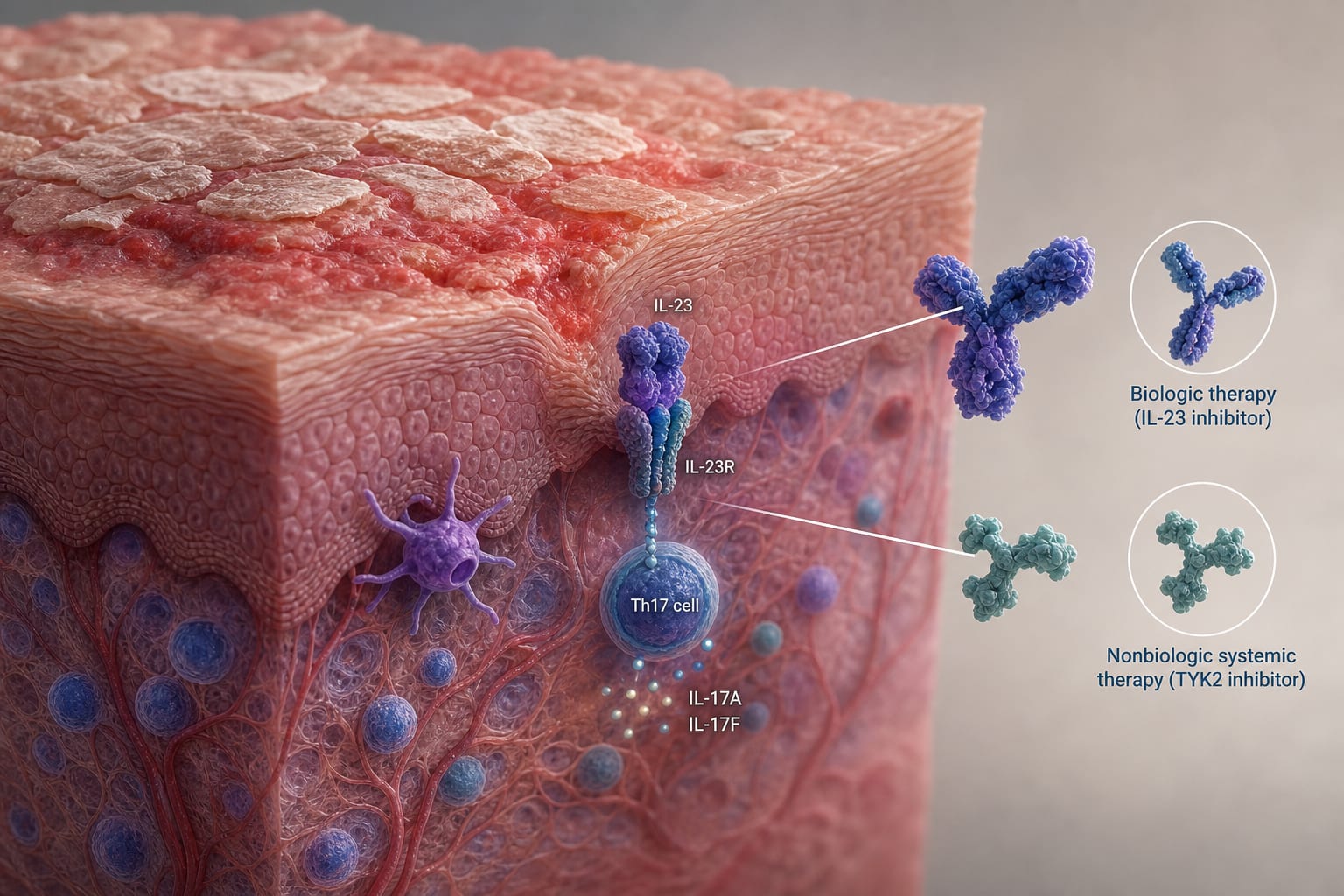
To evaluate obesity management strategies in patients with psoriasis and their impact on treatment outcomes, emphasizing the critical link between obesity and psoriasis severity.
Key Findings:
Up to 50% of psoriasis patients are obese, increasing cardiovascular risk and disease severity, which complicates treatment.
GLP-1 RAs and tirzepatide lead to significant weight loss and improved metabolic health, positively influencing psoriasis treatment outcomes.
Obesity negatively impacts the efficacy of biologic treatments for psoriasis, necessitating integrated management strategies.
Interpretation:
A multidisciplinary, patient-centered approach is essential for optimizing dermatological, metabolic, and cardiovascular outcomes in psoriasis patients with obesity, highlighting the need for collaboration among healthcare providers.
Limitations:
No specific guidelines exist for managing obesity in psoriasis patients, which limits effective treatment.
Current obesity guidelines do not address dermatologic comorbidities, potentially overlooking critical aspects of patient care.
Conclusion:
There is a critical need for practical management guidelines focusing on obesity in psoriasis patients to improve overall health outcomes, emphasizing the urgency of addressing this gap.