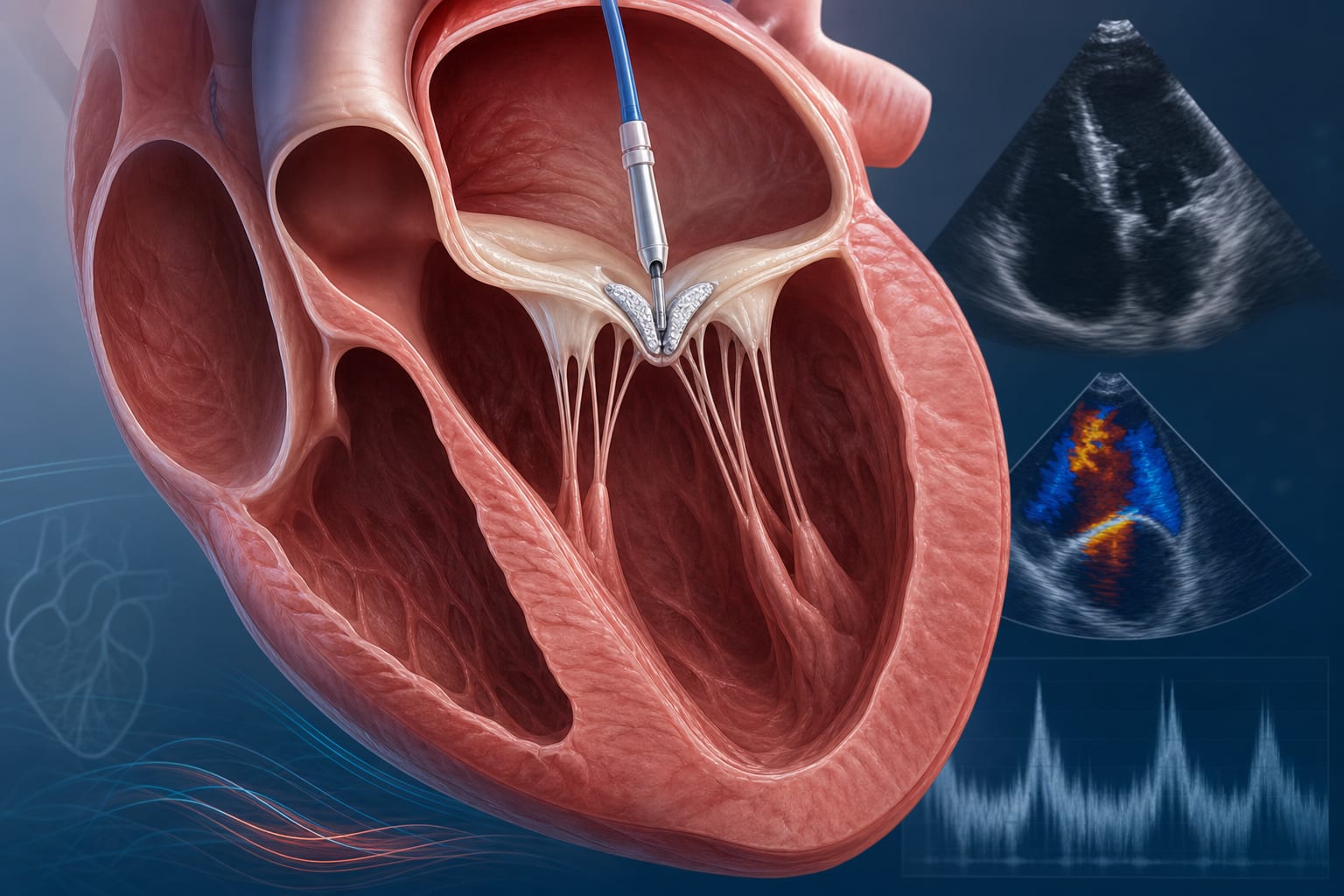
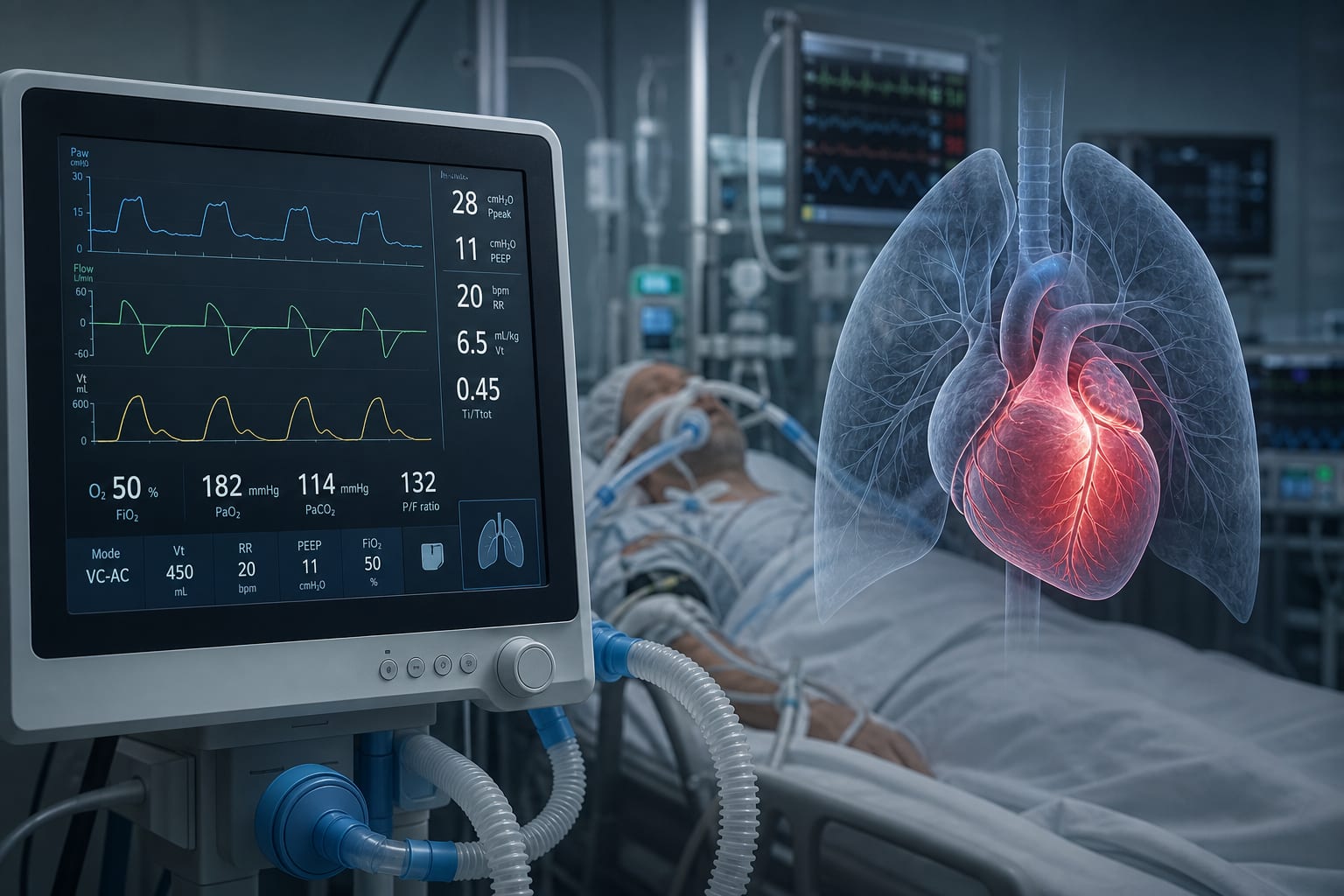
To investigate the early effect of M-TEER on forward stroke volume (FSV) in patients with symptomatic moderate-to-severe or severe secondary mitral regurgitation, and to examine whether changes in FSV predict outcomes regarding all-cause mortality and heart failure hospitalization.
Key Findings:
M-TEER is recommended for patients with severe secondary MR at high surgical risk, with FSV potentially serving as a more accurate marker for assessing LV dysfunction compared to LVEF, which may underestimate LV dysfunction.
Atrial MR is recognized as a distinct phenotype with limited evidence for M-TEER, but recent studies suggest potential clinical benefits, warranting further investigation.
Interpretation:
The study aims to clarify the impact of M-TEER on FSV and its predictive value for patient outcomes in different types of secondary MR.
Limitations:
Retrospective design may introduce selection bias and confounding factors.
Single-center study limits generalizability of findings.
Potential variability in echocardiographic assessments and their interpretation.
Conclusion:
The study seeks to enhance understanding of M-TEER's effects on FSV and its implications for patient outcomes in secondary MR, highlighting the need for further research in atrial MR.
by Franziska Grewe, Luise Ulrich, Moritz Haus, Philippe Felfeli, Christian Schach, Andreas Luchner, Christoph Birner, Lars S. Maier, Bernhard Unsöld, Christine Meindl, Kurt Debl, Michael Paulus