Combined interventional and craniotomy surgery for meningioma apoplexy complicated by acute subdural hematoma: a case report and literature review - Summary - MDSpire
Advertisement
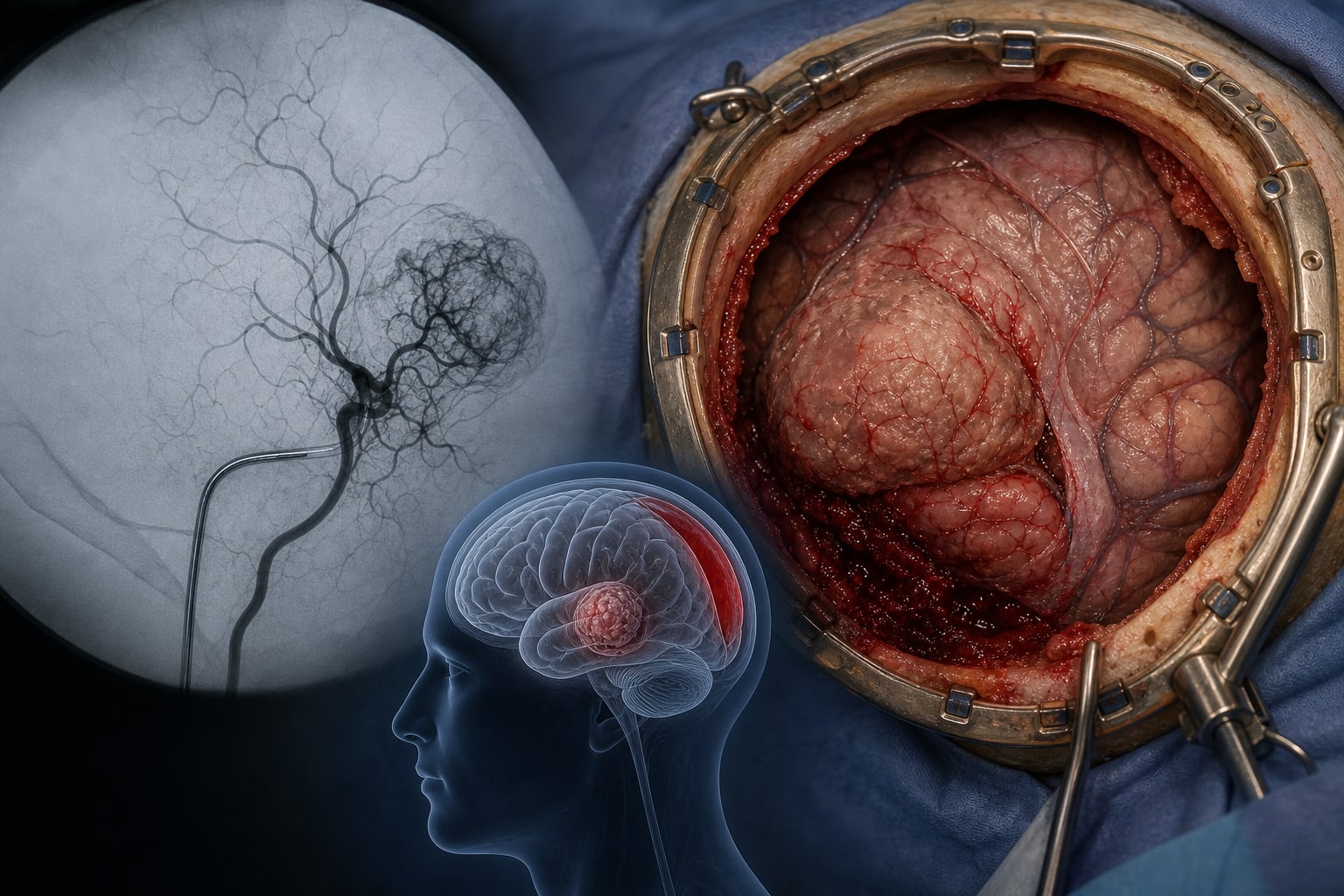
Combined interventional and craniotomy surgery for meningioma apoplexy complicated by acute subdural hematoma: a case report and literature review
To present a case of meningioma apoplexy complicated by acute subdural hematoma and to review the existing literature on this rare condition, highlighting its clinical significance.
Key Findings:
Spontaneous hemorrhage from meningiomas is rare, occurring in 1%-2% of cases, which underscores the need for awareness in clinical settings.
Concurrent acute subdural hematoma is even rarer, highlighting the complexity of such cases.
The patient underwent successful gross total resection of the tumor and evacuation of the hematoma, demonstrating the effectiveness of the hybrid approach.
Interpretation:
The hybrid surgical approach allows for integrated diagnosis and treatment, enhancing management efficiency for meningioma-related complications, particularly when compared to traditional methods.
Limitations:
The case study is based on a single patient, limiting generalizability and highlighting the need for further research.
Potential risks associated with preoperative embolization were not fully explored, indicating a gap in understanding.
Conclusion:
The combined endovascular-craniotomy approach effectively improves patient prognosis in cases of meningioma apoplexy with ASDH, emphasizing its importance in the broader context of meningioma treatment.
For hepatologists and other physicians who treat patients with advanced liver disease, the gap between the number of patients who need transplant and the number of available organs is a familiar challenge.