Longitudinal Phenotypic Trajectories in GNAO1-Related Disorders: Defining Disease Progression and Clinical Profiles - Summary - MDSpire
Coming Soon: Introducing MDSpire News. Learn more
Conexiant’s news site is now MDSpire News. Learn more

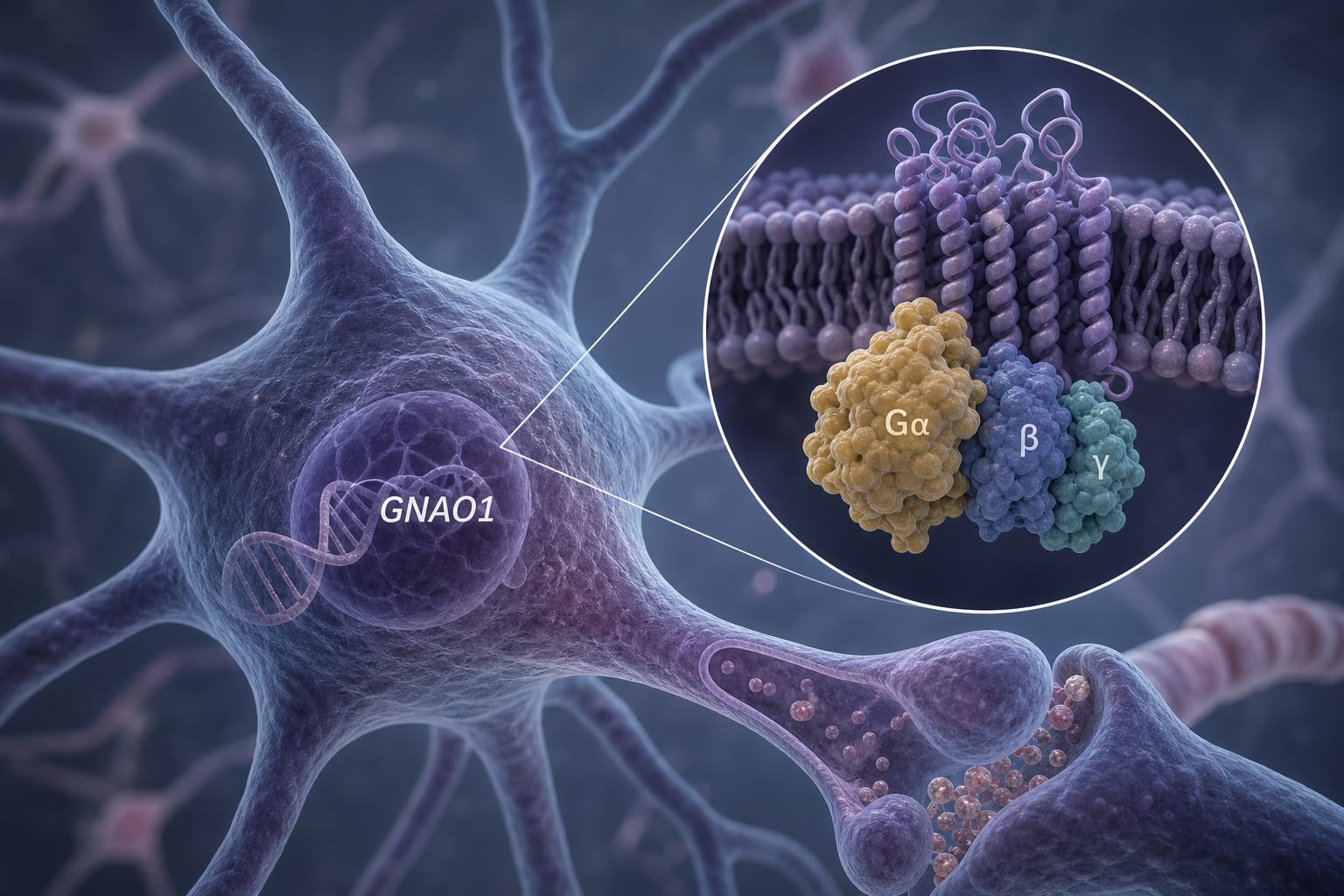
Longitudinal Analysis of Phenotypic Changes in GNAO1-Associated Disorders: Characterizing Disease Progression and Clinical Features

  • By

  • Jana Domínguez-Carral

  • Ana María Domínguez Cobo

  • Sol Balsells

  • Anna Aguilar-Ros

  • Chu-Ting Chang

  • William G. Ludlam

  • Kathryn Yang

  • Katerina Bernardi

  • Micaela Chinigioli

  • Ainara Salazar-Villacorta

  • Veronica Di Pisa

  • Nuria Lamagrande-Casanova

  • Elena González-Alguacil

  • Beatriz De la Casa-Fages

  • Akihisa Okumura

  • Josefina Rodríguez

  • Ayush Agarwal

  • Daniela Muñoz-Chesta

  • Carolina Reynoso-Osnayo

  • Amy Lin

  • Brahim Tabarki

  • Jobaida Parvin

  • Adolfo Alberto Gallo

  • Andreia Forno

  • Fabian Maass

  • Johnny Montiel Blanco

  • Salomé Nasif

  • Elizabeth Jennions

  • Jorge Luis Ramón-Gómez

  • Helene Verhelst

  • Juan José Nieto Barceló

  • Dunja Čokolić Petrović

  • Luz Victoria García Ruiz

  • Christoph van Riesen

  • Paulo Rego Sousa

  • Maria del Pilar Massaro Sanchez

  • Husnea Ara Khan

  • Wejdan Hakami

  • Jennifer Friedman

  • Iván Espinoza-Quinteros

  • Monica Troncoso

  • Divyani Garg

  • Micaela Pauni

  • Hirokazu Kurahashi

  • María Concepción Miranda-Herrero

  • Anna Duat-Rodriguez

  • Luca Soliani

  • Manju A. Kurian

  • Angeles Schteinschnaider

  • Siddharth Srivastava

  • Darius Ebrahimi-Fakhari

  • Kirill A. Martemyanov

  • Juan Darío Ortigoza-Escobar

  • July 1, 2026

Share

Objective:

To analyze the clinical characteristics and natural history of GNAO1-related disorders (GNAO1-RD) and to characterize disease progression and clinical features using a severity score.

Approach:
  • Study Design: A cross-sectional analysis was conducted on 66 individuals with de novo GNAO1 pathogenic variants, with 21 undergoing a standardized longitudinal assessment over 4 years.
  • Data Collection: Clinical data were collected through medical record reviews and structured interviews, focusing on neurodevelopmental milestones, epilepsy, movement disorders, and treatments.
  • Genetic Analysis: Molecular diagnosis of GNAO1 variants was performed using targeted sequencing, multi-gene panels, or whole exome sequencing.
  • Molecular Functional Analysis: Missense variants underwent molecular characterization using bioluminescence resonance energy transfer (BRET)-based assays to evaluate functional parameters.
Key Findings:
  • Approximately 282 individuals with GNAO1-RD have been reported, with over 150 distinct variants identified.
  • GNAO1 variants lead to diverse clinical presentations, including developmental delay, intellectual disability, movement disorders, and epilepsy.
  • The GNAO1-RD severity score allows for categorization of patients into severity-based subgroups.
Interpretation:

The authors interpret GNAO1-RD as a clinically heterogeneous disorder in which disease severity and manifestations vary across individuals. Their findings suggest that a severity score can help characterize this variability and support longitudinal assessment, while emphasizing the need for further natural history data to better understand disease progression.

Limitations:
  • No comprehensive natural history data for GNAO1-RD was previously available.
  • Specific responses to individual medications were not systematically collected.
Conclusion:

The authors concluded that GNAO1-RD has a broad and variable clinical spectrum, and that the severity score provides a useful framework for describing patients’ clinical status and tracking changes over time. Their findings support continued longitudinal study to clarify disease progression and improve understanding of how clinical features evolve.

Sources:

Original Source(s)

Related Content