Oncolytic virotherapy counteracts the selection of IFN-unresponsive cancer cells post-immunotherapy but is limited by the emergence of dedifferentiated cancer cells - Summary - MDSpire
Conexiant’s news site is now MDSpire News. Learn more
Advertisement
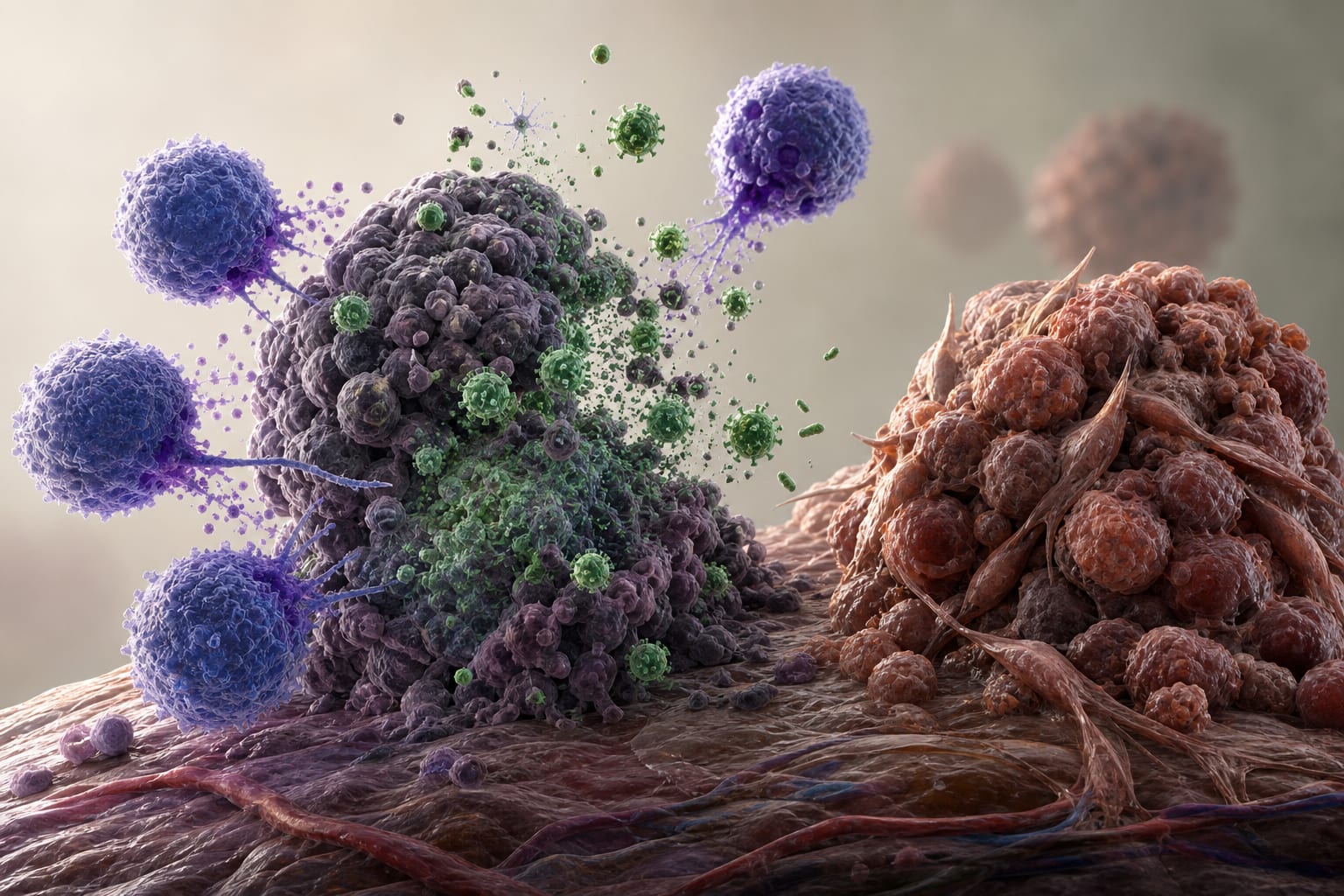
Oncolytic Virotherapy Mitigates the Selection of IFN-Resistant Tumor Cells Following Immunotherapy, Yet Faces Challenges from the Rise of Dedifferentiated Tumor Cells
To investigate the evolutionary dynamics of IFN-unresponsive tumor cells and the impact of sequential immuno-virotherapy on their selection and resistance mechanisms.
Approach:
Key Findings:
IFN-unresponsive tumor cells were eliminated by NK cells due to low MHC-I expression.
In the absence of NK cells, IFN-unresponsive subclones emerged following immunotherapy.
The findings highlight the dual role of IFN signaling in tumor dynamics, where loss of IFN responsiveness can lead to both susceptibility to oncolytic viruses and the emergence of resistant dedifferentiated tumor cells.
Limitations:
The study was conducted in mouse models, which may not fully replicate human tumor behavior.
The long-term effects of dedifferentiated tumor cells on treatment outcomes were not explored.
Conclusion:
The study provides insights into the complexities of tumor evolution in response to immunotherapy and oncolytic virotherapy, emphasizing the need for further research to address treatment resistance.
Ocular tumor coding can be challenging because ocular oncology often involves evolving lesions, diagnostic uncertainty, and terminology that does not always translate cleanly into ICD-10-CM codes. Understanding how to distinguish benign, malignant, in situ, and uncertain histologic behavior neoplasms is essential for accurate coding, medical necessity, and audit defensibility.