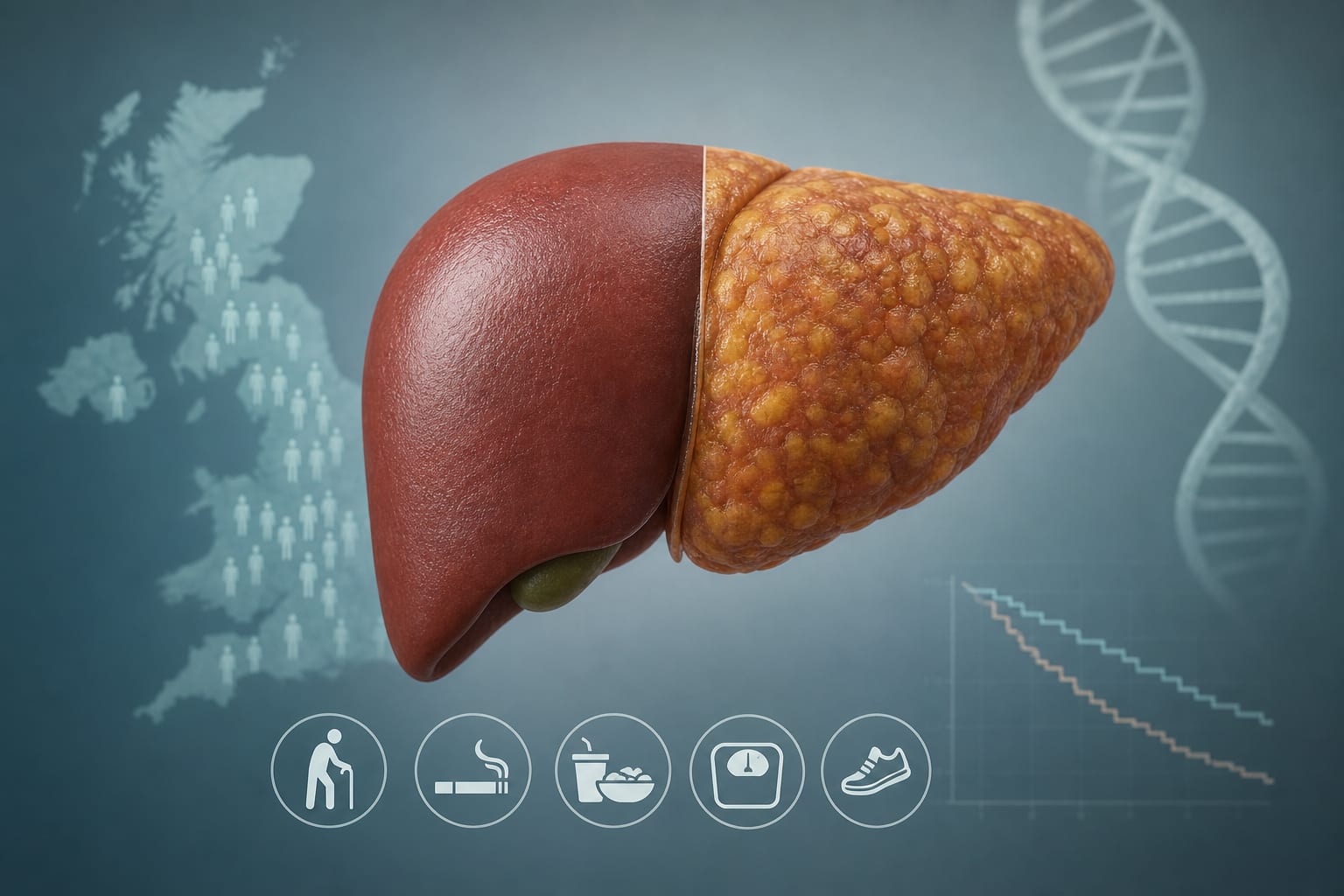
To explore the association between biological aging and hospital-diagnosed metabolic dysfunction-associated steatotic liver disease (MASLD) and investigate the potential mediating effects of biological aging on the relationships between unhealthy lifestyles and MASLD.
Approach:
Key Findings:
Accelerated biological aging was significantly associated with hospital-diagnosed MASLD, with hazard ratios of 1.46 (95% CI: 1.35, 1.57) for PhenoAge acceleration and 1.35 (95% CI: 1.19, 1.53) for KDMAge acceleration.
PhenoAge acceleration accounted for 11.4% to 25.5% of the associations between unhealthy lifestyle factors (smoking, drinking, poor diet, low physical activity) and MASLD.
The findings suggest that accelerated biological aging is linked to an increased risk of hospital-diagnosed MASLD and may mediate the effects of unhealthy lifestyles on MASLD risk.
Limitations:
The study may be limited by the observational nature of the data, which restricts causal inferences.
Potential confounding factors, such as genetic predisposition and environmental influences, were not accounted for in the analysis.
Conclusion:
Accelerated biological aging is associated with hospital-diagnosed MASLD and may partially mediate the relationships between unhealthy lifestyles and MASLD.