The impact of comorbid type 2 diabetes on survival outcomes in patients with solid tumors treated with immune checkpoint inhibitors: a meta-analysis focusing on lung cancer - Summary - MDSpire
Advertisement
The impact of comorbid type 2 diabetes on survival outcomes in patients with solid tumors treated with immune checkpoint inhibitors: a meta-analysis focusing on lung cancer
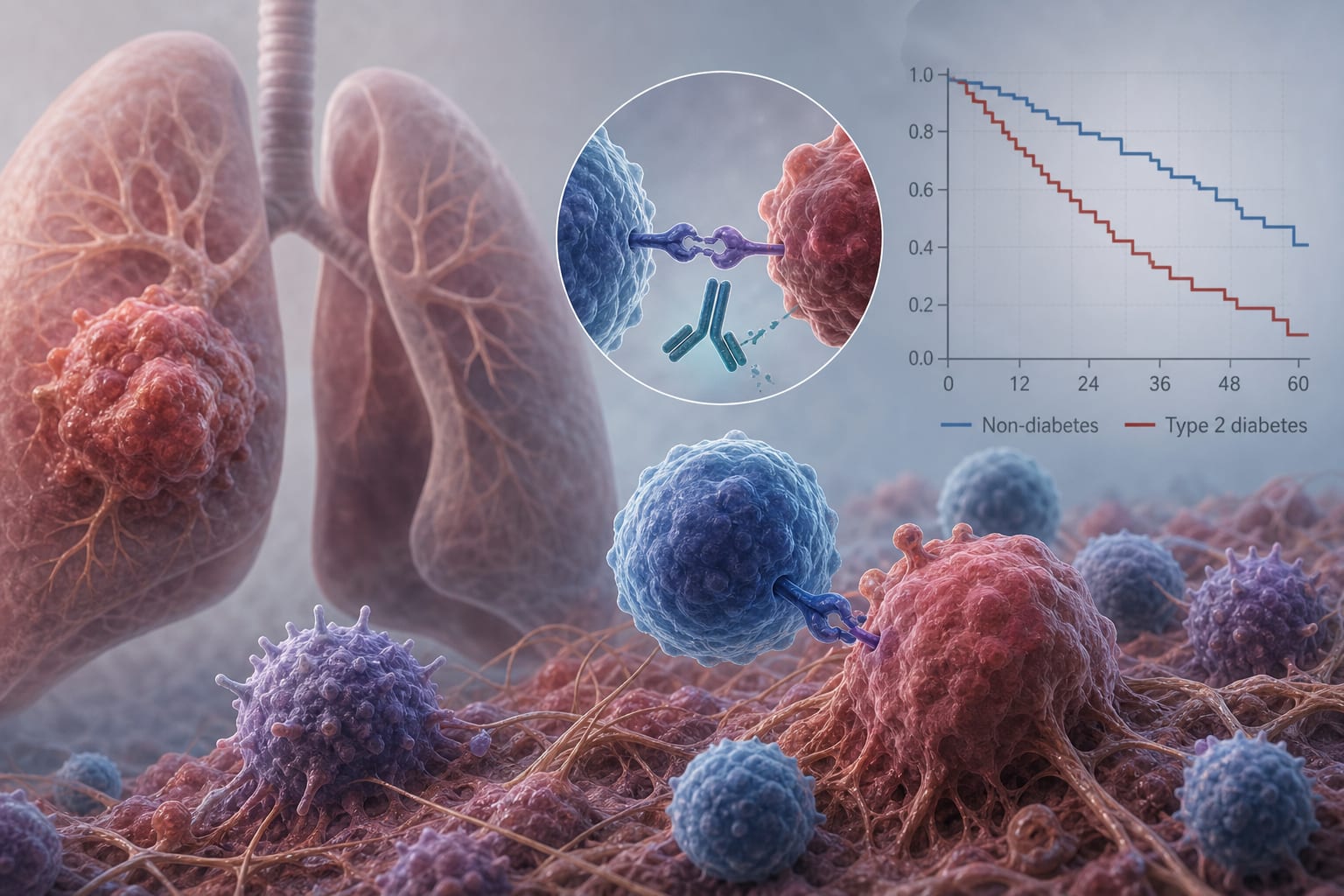
To systematically evaluate the impact of type 2 diabetes mellitus (T2DM) on the prognosis of immune checkpoint inhibitors (ICIs) treatment specifically in lung cancer patients.
Key Findings:
Patients with T2DM receiving ICIs had poorer overall survival (OS) (HR = 1.49, 95%CI: 1.25-1.77, P < 0.00001) based on six studies involving 1,225 participants.
Patients with T2DM had poorer progression-free survival (PFS) (HR = 1.38, 95%CI: 1.04-1.83, P = 0.03).
Subgroup analyses showed consistent poorer OS in T2DM patients regardless of sample size or type of survival analysis.
Interpretation:
T2DM may negatively impact OS in lung cancer patients treated with ICIs, but findings are based on limited studies and require further validation to confirm their significance.
Limitations:
Small number of included studies may limit the generalizability of the findings.
Limited sample sizes across studies could affect the robustness of the results.
Inherent bias risks due to retrospective designs may influence the outcomes.
Heterogeneity of tumor types complicates the interpretation of results.
Instability of PFS results suggests caution in drawing conclusions.
Conclusion:
Current evidence suggests a potential association between T2DM and poor OS in lung cancer patients treated with ICIs, but further large-scale, prospective studies are needed to confirm these findings and explore the role of glycemic control.