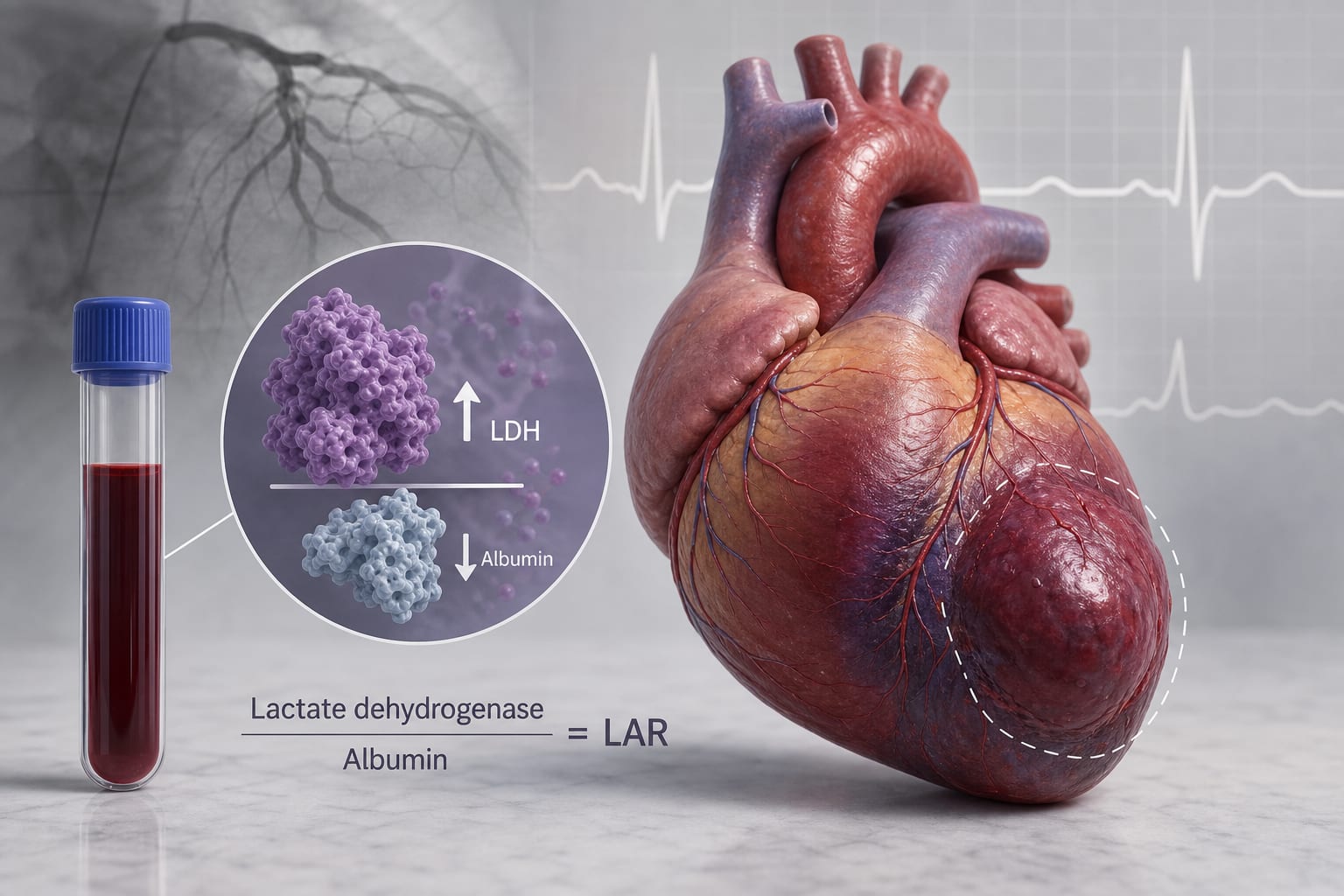
To assess the predictive capacity of the lactate dehydrogenase to albumin ratio (LAR) concerning the likelihood of left ventricular aneurysm (LVA) in patients experiencing STEMI.
Key Findings:
Participants in the highest quartile of LAR exhibited a significantly increased likelihood of developing LVA compared to those in the lowest quartile across all cohorts (First cohort: OR = 3.63, 95% CI = 1.65 - 7.96, P = 0.001; Second cohort: OR = 6.01, 95% CI = 2.22 - 16.26, P< 0.001; Third cohort: OR = 2.41, 95% CI = 1.47 - 3.96, P< 0.001).
LAR's predictive ability for LVA risk surpassed that of both lactate dehydrogenase and albumin (P< 0.05).
Interpretation:
A heightened LAR is independently linked to a greater likelihood of LVA occurrence in individuals with STEMI who received primary PCI.
Limitations:
The study is limited to a specific demographic in China, which may affect the generalizability of the findings. Potential confounding variables, such as age, sex, and comorbidities, may still influence the results despite adjustments.
Conclusion:
Increased LAR serves as a novel independent indicator of ventricular aneurysm risk in STEMI patients, highlighting its potential utility in clinical risk stratification.