Age-specific hospitalization dynamics during a measles outbreak in Nyanza District, Southern Province, Rwanda, 2026: A survival analysis with implications for clinical management - Summary - MDSpire
Conexiant’s news site is now MDSpire News. Learn more
Advertisement
Hospitalization Patterns by Age During a Measles Outbreak in Nyanza District, Southern Province, Rwanda, 2026: A Survival Analysis and Its Clinical Management Implications
To examine age-related differences in measles hospitalization duration and outcomes during the 2026 outbreak in Nyanza District, Rwanda, and assess implications for clinical management and outbreak response.
Approach:
Survival Analysis: Conducted a retrospective cohort analysis of 56 measles cases identified from February 16 to April 17, 2026. Kaplan–Meier methods were used to evaluate time to hospital discharge by age group, with differences assessed using the log-rank test.
Key Findings:
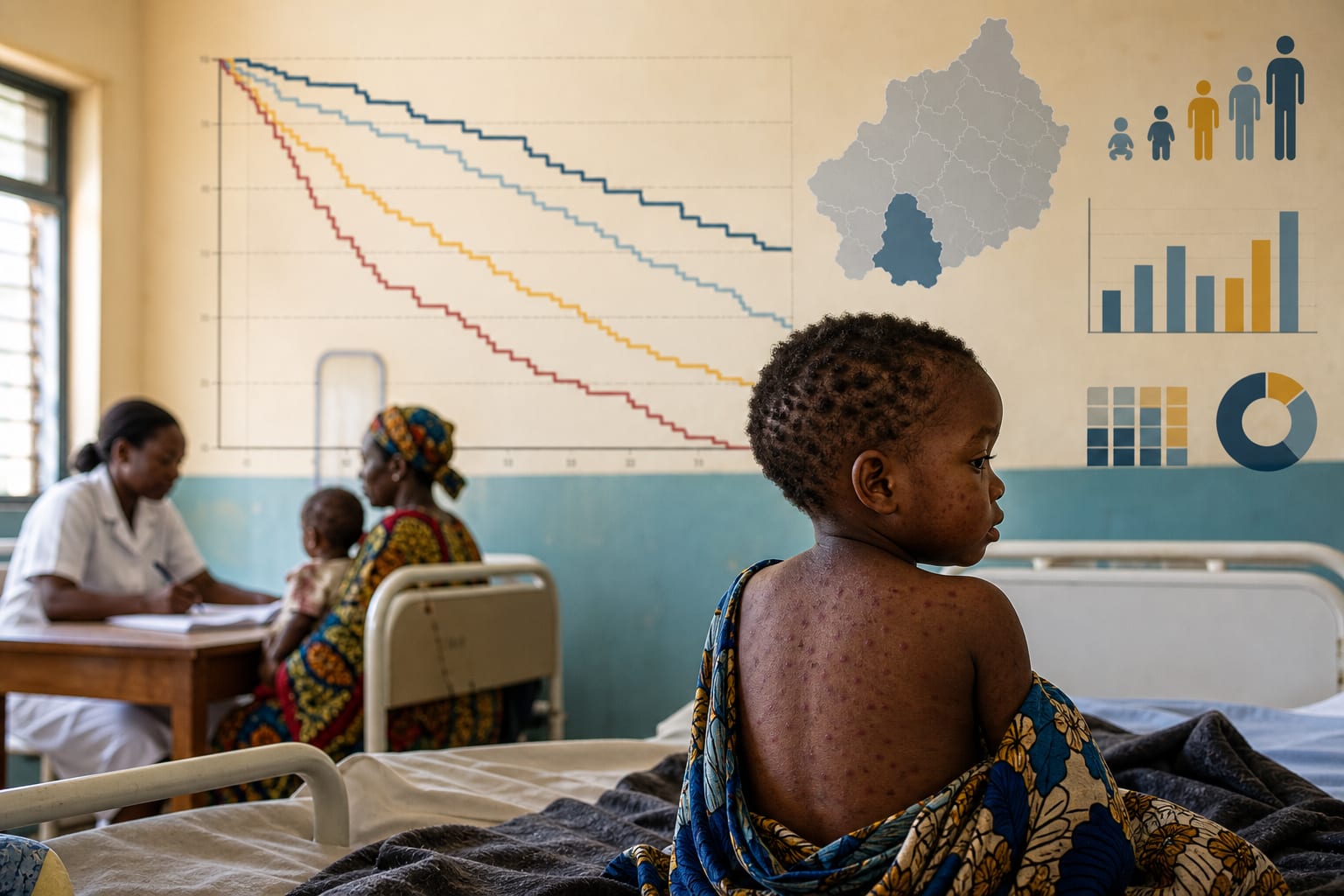
Time to hospital discharge differed significantly across age groups (log-rank P = 0.00049). Children aged 5-15 years had the most rapid discharge, with a median of approximately 5 days, while infants younger than 9 months, children aged 9-14 months, and individuals older than 15 years had more prolonged hospital stays.
Infants younger than 9 months accounted for the largest proportion of cases (44.6%), followed by individuals older than 15 years (25%).
Because the time-to-event analysis required documented admission and discharge dates, it was restricted to hospitalized cases, which represented illness severe enough to warrant admission rather than the full spectrum of measles cases, most of which were managed on an outpatient basis.
Interpretation:
Age was an important determinant of hospitalization duration, supporting age-targeted clinical triage and resource planning during measles outbreak response.
Limitations:
The sample size was modest, vaccination status was frequently unrecorded, and too few documented vaccine doses were available to permit stratification by vaccination status.
Data on admission indications, comorbidities, in-hospital mortality, and facility-specific length of stay were inconsistently captured and could not be analyzed. The short follow-up period also limited assessment of longer-term outcomes, and the hospitalization analysis did not represent the full outbreak.
Conclusion:
Age was the strongest determinant of measles hospitalization duration, with infants experiencing significantly prolonged clinical courses compared with older age groups. The findings support age-aware clinical management, earlier recognition of complications in infants, and age-targeted triage and resource planning during future measles outbreaks.