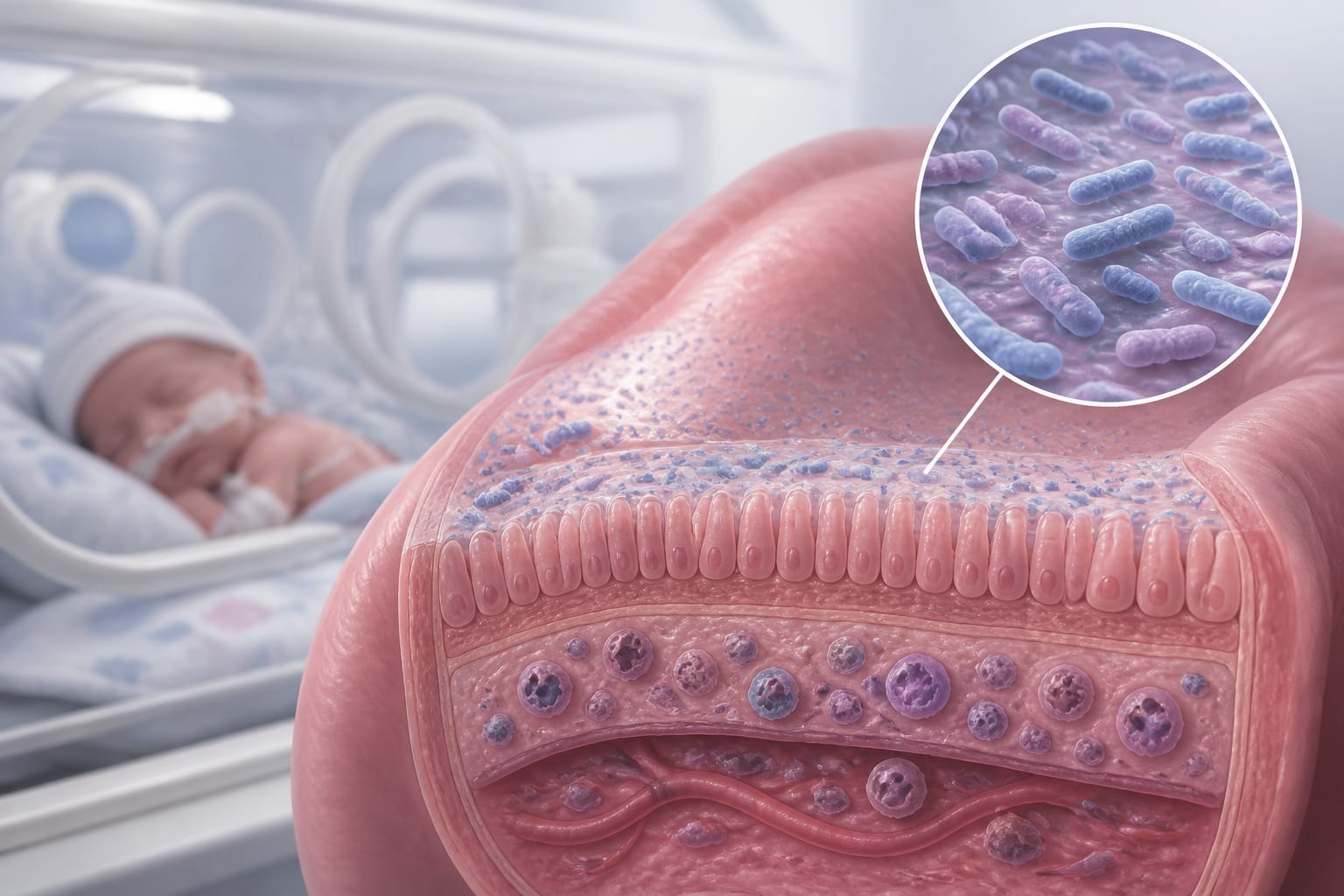
To evaluate the impact of routine probiotic supplementation on the incidence of necrotizing enterocolitis (NEC) in preterm infants in NICUs.
Approach:
Study Design: Multicenter retrospective cohort study in two NICUs in the Netherlands, assessing 1413 preterm infants before and after probiotic supplementation.
Key Findings:
Probiotic supplementation was associated with approximately 50% decrease in NEC among infants delivered before 30 weeks’ gestation.
No decline in all-cause mortality was observed.
The pre-implementation NEC incidence was 20%, while post-implementation it was 9%, consistent with rates documented in other cohorts of extremely preterm infants who received human milk without probiotic supplementation.
Interpretation:
Caution is advised in interpreting the findings due to the retrospective design and historical control used.
Limitations:
Retrospective design limits the level of evidence.
Historical control may not accurately reflect NEC incidence changes over time.
The study did not fully represent extremely preterm infants (≤27 plus 6 weeks’ gestation).
Conclusion:
Further adequately powered RCTs are needed to establish the safety and efficacy of probiotic prophylaxis in extremely preterm infants.