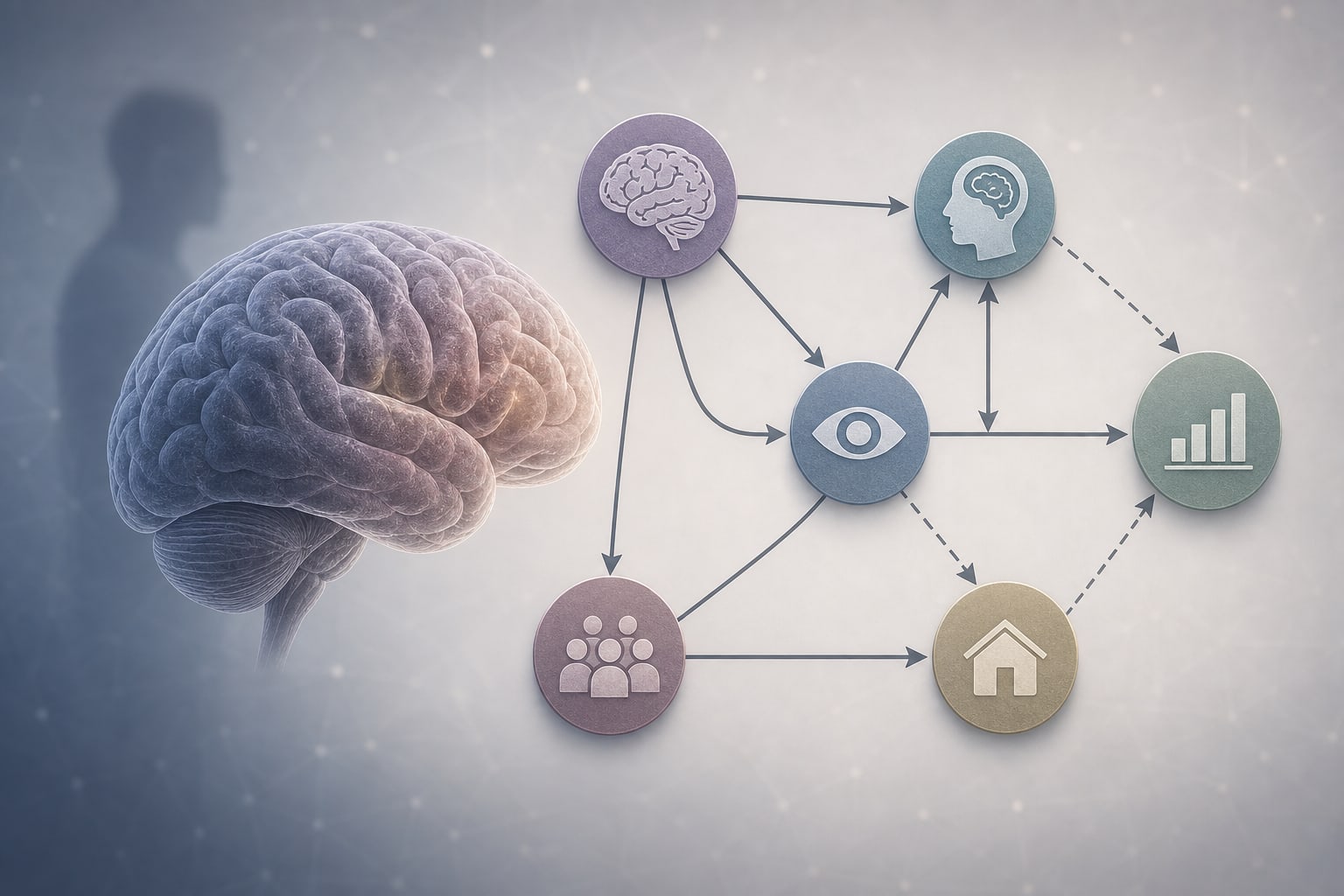
To explore the limitations of current computational neuropsychiatry models and propose a more nuanced understanding of neuropsychiatric symptoms beyond synaptopathy, emphasizing the need for a broader perspective.
Key Findings:
Active Inference provides a framework for understanding various psychiatric symptoms as disturbances in inference due to dysfunctional brain network dynamics, with implications for treatment.
Synaptopathies lead to rigid inferences or heightened sensitivity to noise, impacting belief updating and potentially guiding therapeutic approaches.
Disconnection syndromes are characterized by reduced functional integration, while dysconnection syndromes involve disrupted functional specialization, suggesting different treatment needs.
Interpretation:
The distinction between synaptopathy and disconnection syndromes is crucial for developing future models of neuropsychiatric symptoms, suggesting that a broader approach is needed, with potential directions for future research.
Limitations:
Current models primarily focus on free energy minimization without fully addressing the complexities of neuronal message passing, indicating a need for more comprehensive models.
The historical rejection of localized brain theories may limit the understanding of disconnection syndromes, suggesting a reevaluation of these theories could be beneficial.
Conclusion:
A more comprehensive understanding of neuropsychiatric symptoms requires moving beyond the traditional focus on synaptopathy to include factors related to brain connectivity and function, which could lead to improved treatment outcomes.