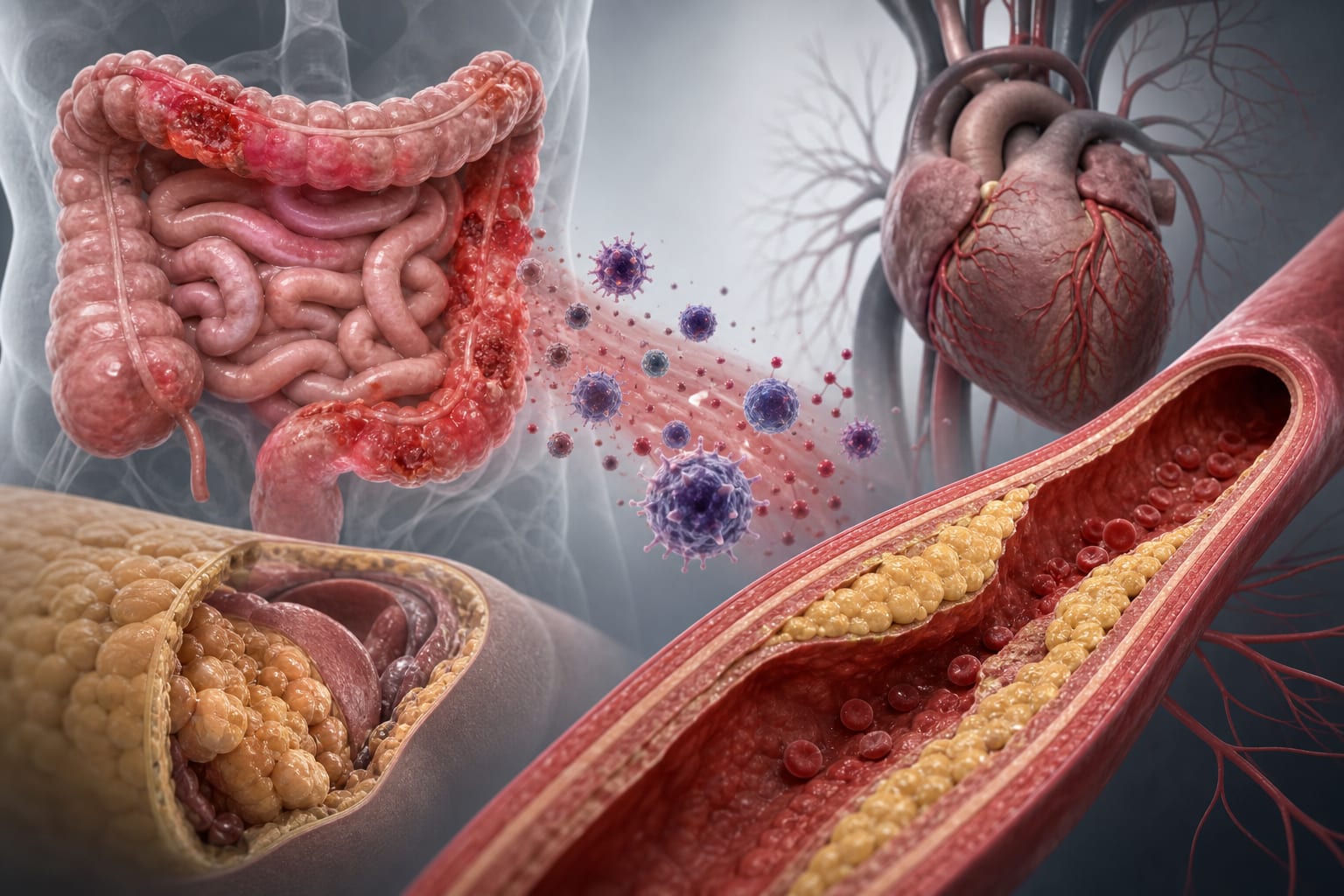
To summarize current knowledge on the cardiovascular risk associated with inflammatory bowel diseases (IBD) and the underlying mechanisms linking IBD to atherosclerotic cardiovascular disease (ASCVD).
Approach:
Key Findings:
Patients with IBD have an increased risk of ASCVD not fully explained by traditional risk factors.
Chronic systemic inflammation is a central mechanism linking IBD to cardiovascular risk.
The 'lipid paradox' in IBD involves reduced lipid levels alongside increased cardiovascular risk due to altered lipid metabolism.
Disease activity significantly influences cardiovascular risk, with higher risks during active disease.
Interpretation:
IBD should be viewed as a systemic disease with significant cardiovascular implications, necessitating integrated management strategies.
Limitations:
Traditional cardiovascular risk calculators may underestimate risk in IBD patients.
The review primarily focuses on established mechanisms without exploring emerging biomarkers in depth.
Conclusion:
Optimizing anti-inflammatory therapy and individualized cardiovascular prevention strategies may improve outcomes in IBD patients.