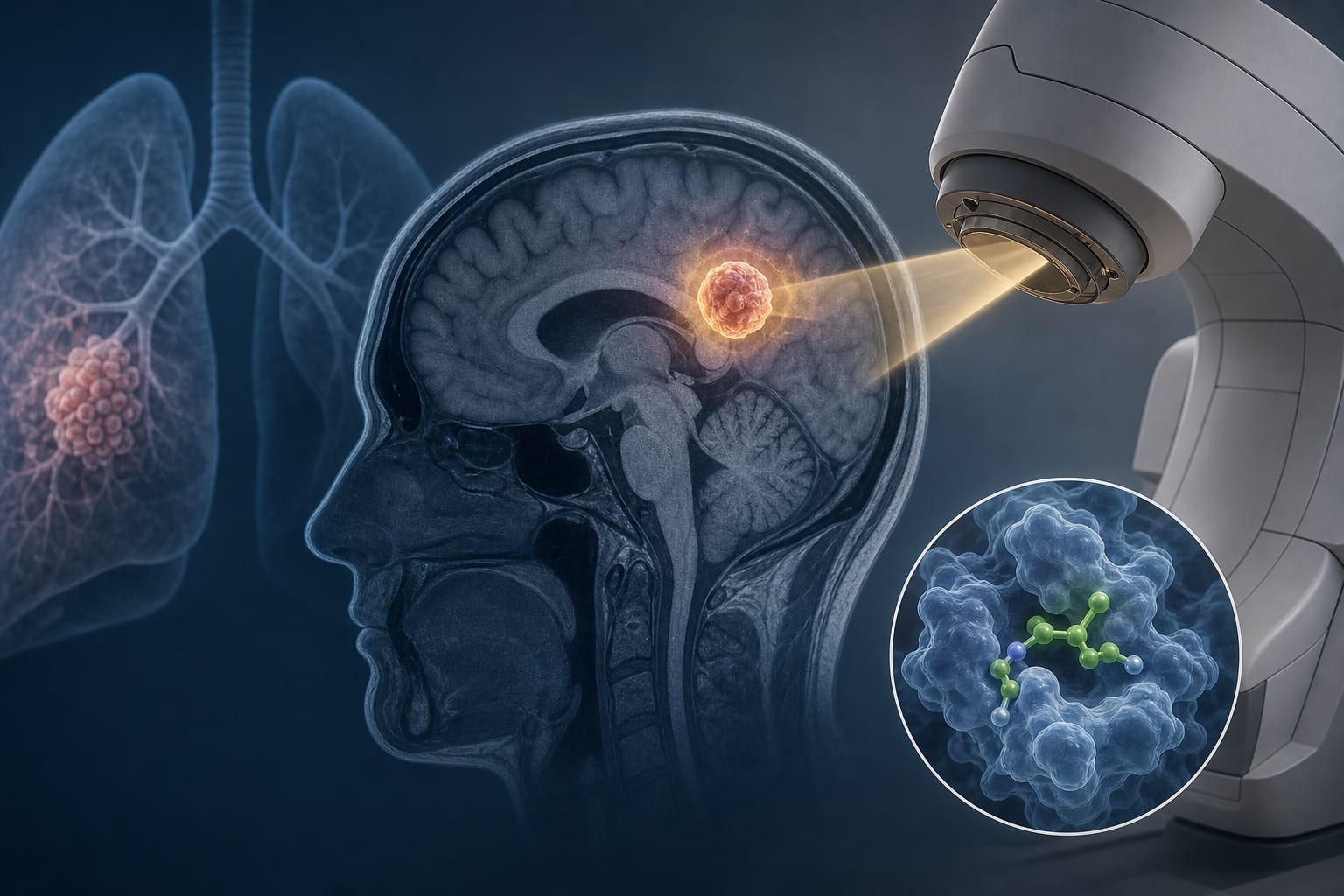
Association between radiotherapy timing and intracranial outcomes in EGFR-mutant NSCLC with brain metastases treated with EGFR-TKIs - Summary - MDSpire
To evaluate treatment outcomes and prognostic factors influencing overall survival (OS) and intracranial progression-free survival (iPFS) in patients with EGFR-mutated NSCLC and brain metastases treated with radiotherapy and EGFR-TKIs.
Approach:
Key Findings:
135 patients included; 70 received early RT, 65 received delayed RT.
EGFR mutation subtype and extent of metastases associated with OS (p < 0.05).
Mutation subtype and timing of RT linked to iPFS.
Early RT independently improved iPFS (14.6 vs. 10.4 months, p = 0.010).
Median OS superior in patients with exon 19 deletions compared to exon 21 L858R mutations (37.5 vs. 25.1 months, p = 0.009).
Interpretation:
Patients with EGFR-mutated NSCLC and brain metastases showed varying outcomes based on the timing of radiotherapy and mutation subtype.
Limitations:
Retrospective design may introduce selection bias.
Single-institution study limits generalizability.
Conclusion:
Early RT in conjunction with EGFR-TKIs can improve intracranial outcomes in patients with EGFR-mutated NSCLC and brain metastases.