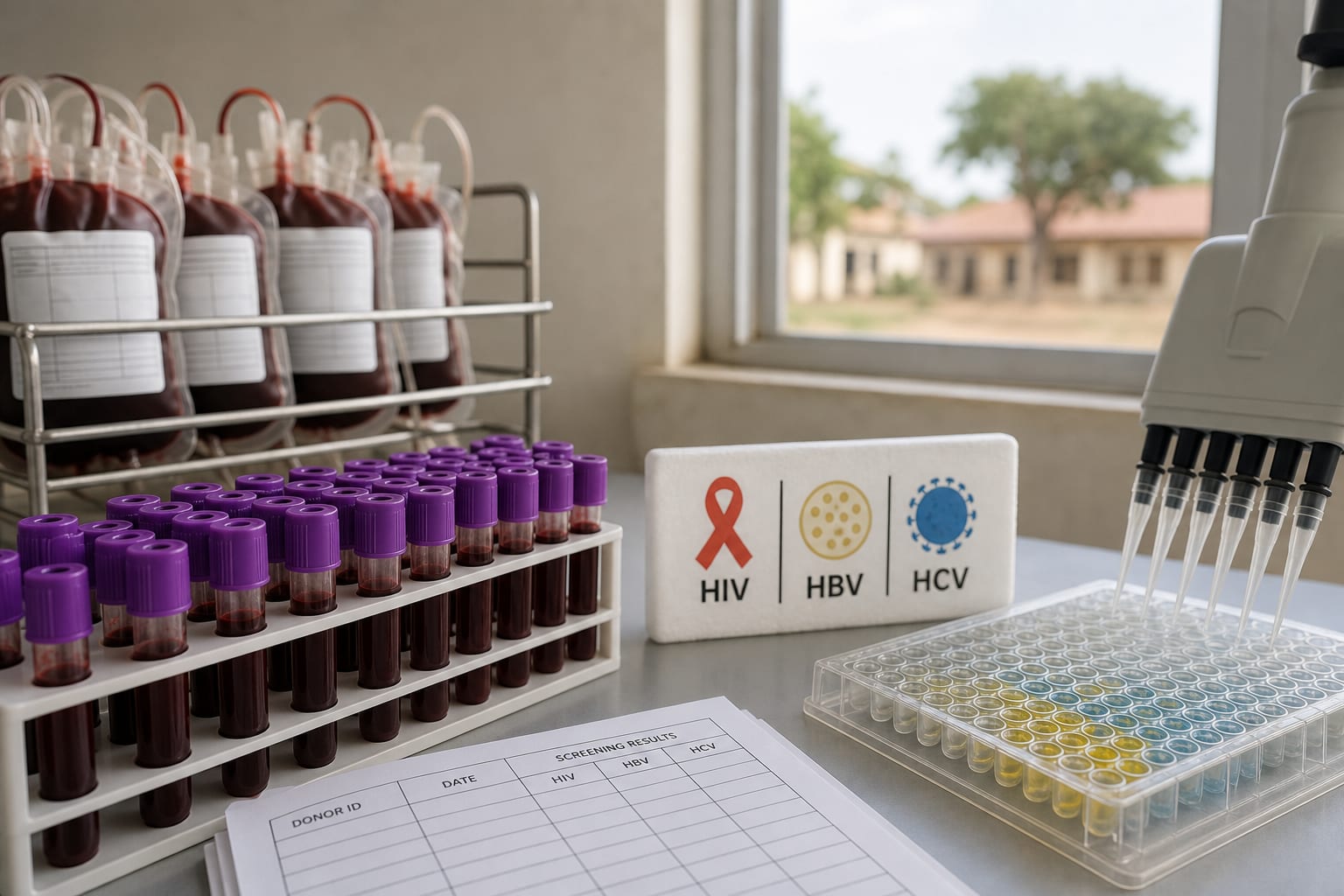
To estimate the residual risk of HIV, HBV, and HCV transmission among blood donors in the Borgou department of Benin, highlighting its importance for transfusion safety.
Key Findings:
Total of 11,113 repeat donors included, with a male predominance (male-to-female ratio: 14.14).
Majority of donors aged 18–30 years (72%) and students (54%).
Identified 145 incident infections: 5.98 for HIV, 350.28 for HBV, and 77.84 for HCV per 100,000 donor-years.
No significant association between HIV incidence and sociodemographic characteristics.
Significant associations for HBV and HCV incidences with age (p < 0.001 and p = 0.03, respectively).
Estimated residual risks: 1 in 277,000 donations for HIV, 1 in 1,862 for HBV, and 1 in 7,070 for HCV.
Interpretation:
Residual risk of TTIs in Borgou is lower than in several sub-Saharan African settings but higher than in high-income countries, indicating a need for improved public health policies.
Limitations:
Lack of robust epidemiological surveillance systems for blood donors.
Limited post-transfusion recipient follow-up, which may affect the accuracy of findings.
Conclusion:
Findings highlight the need to strengthen donor selection strategies, enhance health education, and implement more sensitive screening technologies, emphasizing the significance of these measures in improving blood safety.