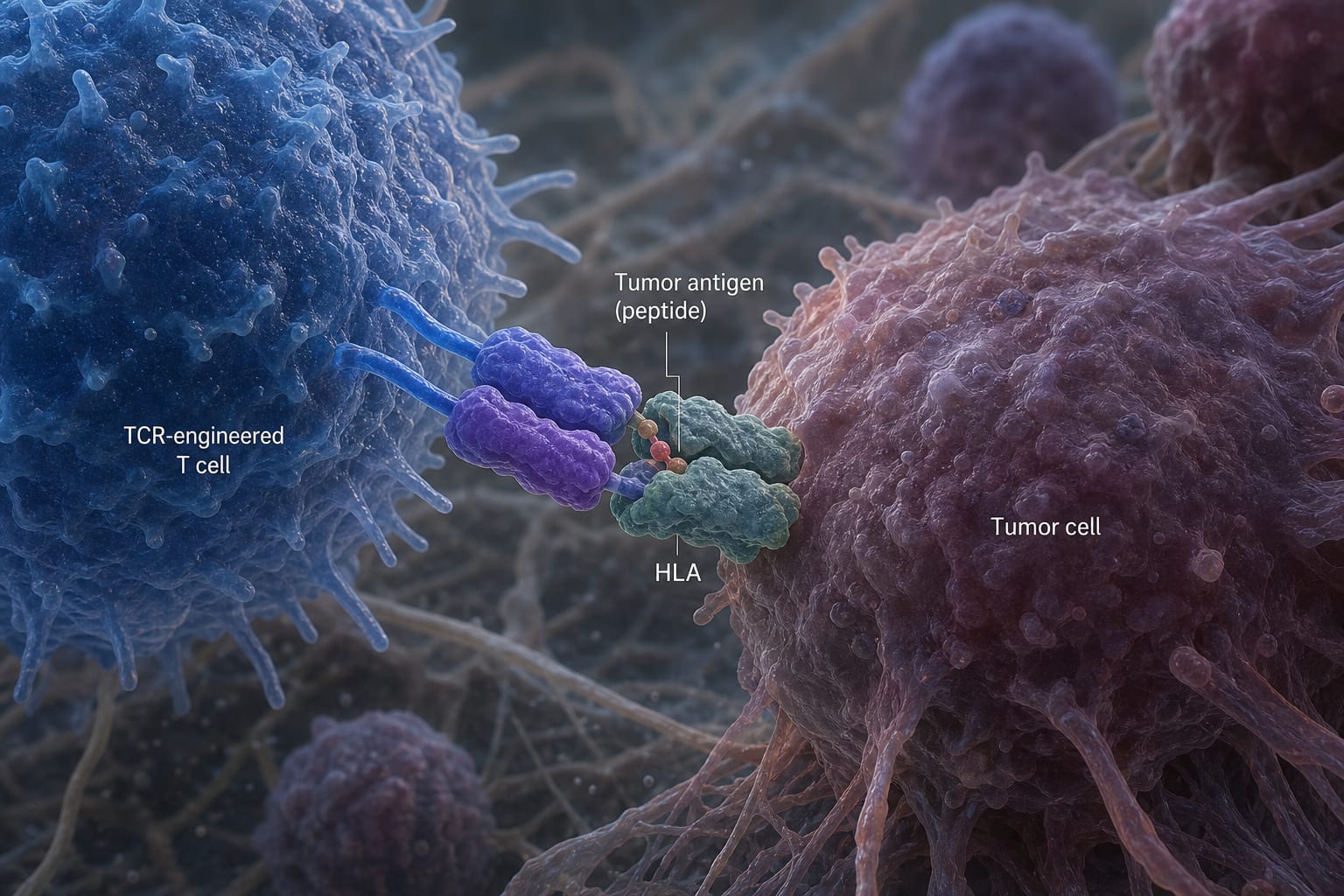
To summarize the biological basis, clinical progress, and challenges of TCR-T therapy in treating solid tumors, highlighting its significance compared to existing treatments.
Clinical activity is inconsistent due to HLA restriction, heterogeneous antigen expression, and an immunosuppressive tumor microenvironment, necessitating improved antigen presentation and T-cell fitness.
Durable tumor control requires not only target recognition but also effective antigen presentation and T-cell fitness.
Interpretation:
TCR-T therapy offers a promising framework for solid tumor treatment, but its efficacy is limited by biological and environmental challenges, including HLA restriction and tumor microenvironment factors.
Limitations:
HLA restriction limits the applicability of TCR-T therapy.
Antigen presentation can be unstable, affecting therapeutic outcomes.
The tumor microenvironment can suppress T-cell function and trafficking, highlighting the need for ongoing research.
Conclusion:
Broader and more durable benefits from TCR-T therapy will require integrated advances in target selection, safety design, and cellular engineering, addressing the identified challenges.