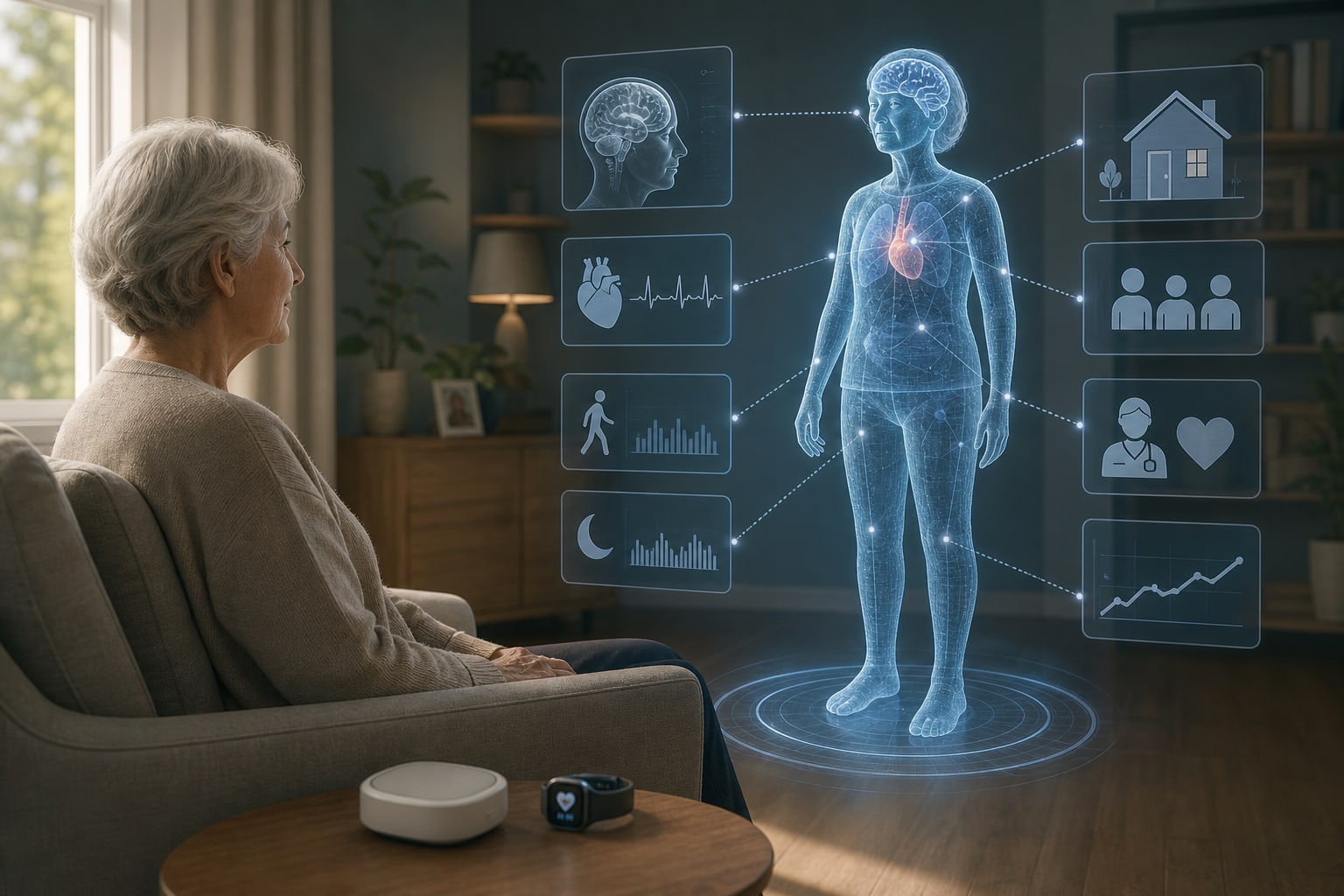
To explore older adults' perspectives on the potential use of digital twins in homecare settings, focusing on their specific needs and concerns.
Key Findings:
Digital twins can provide personalized and proactive care, improving health outcomes for older adults, as evidenced by recent studies.
There is a lack of research on user acceptability and the perspectives of older adults regarding digital twins in homecare, highlighting a critical gap.
Homecare services in Sweden often fail to meet the needs of older adults, leading to feelings of reduced independence and lack of control, as reported by users.
Interpretation:
Digital twins hold promise for improving homecare by addressing current service shortcomings; actionable research steps are needed to understand older adults' acceptance and specific needs.
Limitations:
Limited research on the application of digital twins in homecare contexts, particularly regarding user experiences.
Insufficient understanding of older adults' perspectives on digital health technologies, especially in diverse settings.
Conclusion:
Digital twins could significantly enhance homecare services for older adults, but their implementation must consider user perspectives, ethical implications, and address existing care service gaps.