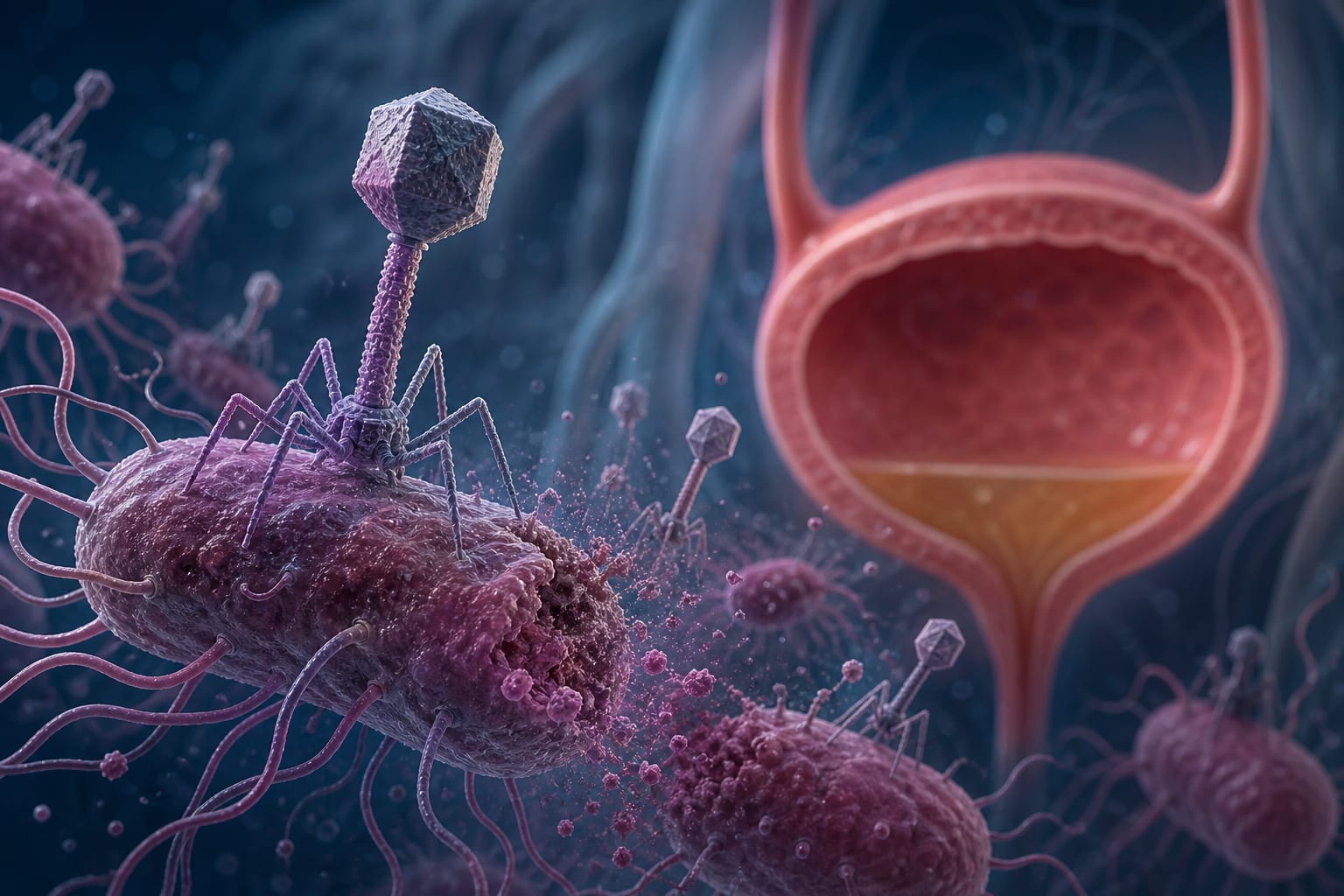
To isolate and characterize bacteriophages targeting a multidrug-resistant Klebsiella pneumoniae strain from a patient with neurogenic bladder and recurrent urinary tract infection (UTI), and assess their activity in human urine.
Approach:
Phage testing: Researchers characterized three phages through genome sequencing and stability testing, assessed their host range against 79 clinical K. pneumoniae UTI isolates, and compared their activity against the original clinical strain, RT535, in laboratory broth and human urine.
Key Findings:
The three phages were genetically distinct. No lysogeny-associated, antibiotic-resistance, or bacterial virulence genes were identified in their genomes.
Two phages had narrow host ranges; the third infected 29% of the tested isolates.
Lytic activity was generally stronger and more sustained in human urine than in laboratory broth, although phage-resistant bacteria emerged.
Interpretation:
Activity in urine supports further investigation of these phages as potential treatments for multidrug-resistant K. pneumoniae UTI.
Limitations:
Activity was assessed in laboratory assays, not in an in vivo UTI model or as a treatment in patients. The study therefore cannot determine how the phages would perform in the bladder or establish an effective dosing strategy.
Conclusion:
The three phages are candidates for further therapeutic evaluation, but the findings do not establish that they can treat recurrent UTI.
A large audit of biomedical publications suggests fabricated references are increasingly appearing in peer-reviewed papers — often in ways that are difficult for reviewers and readers to detect.