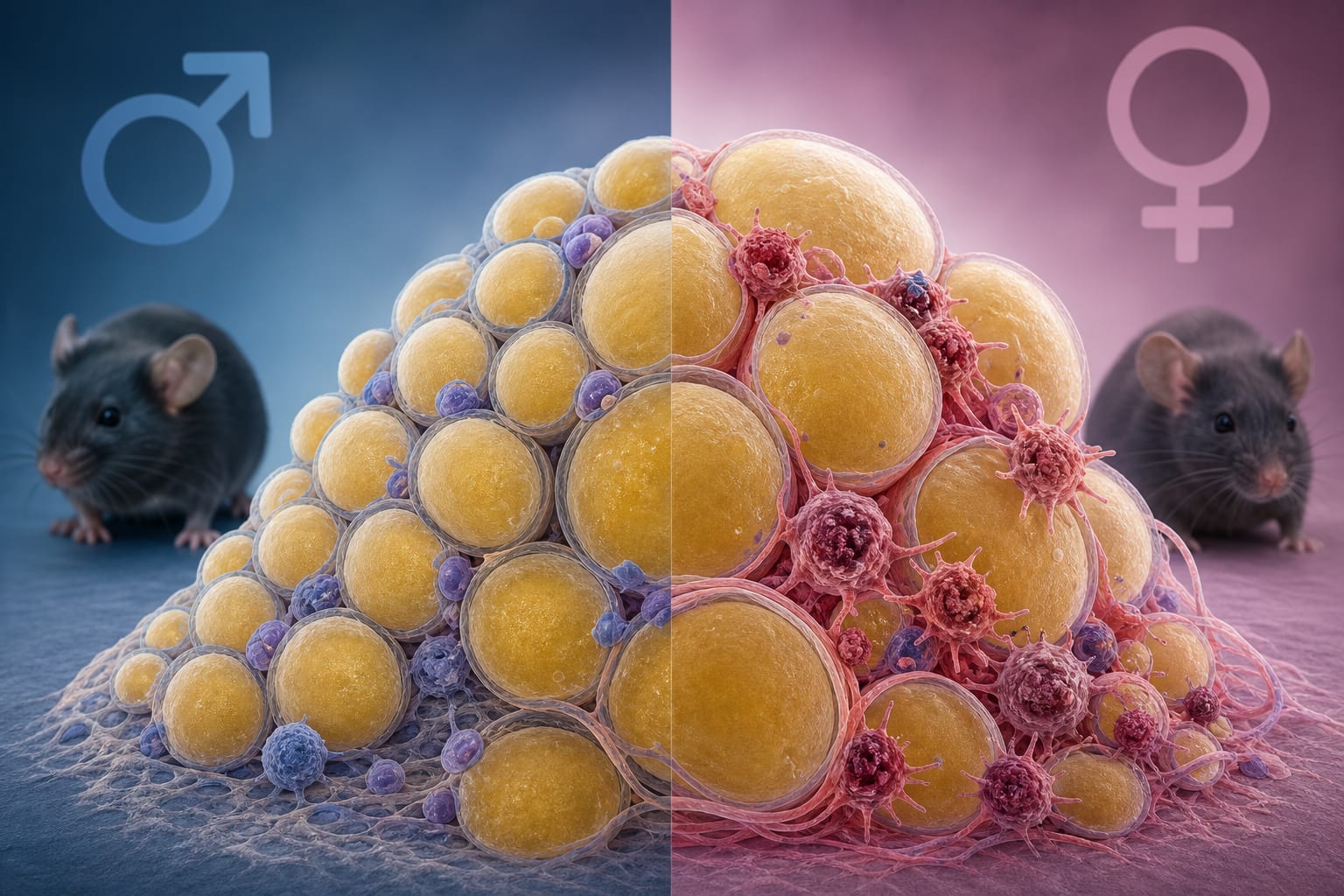
To determine the early sequence of events leading to adipose tissue dysfunction and metabolic inflammation in response to a high-fat diet (HFD), focusing on sex-specific differences.
Approach:
Key Findings:
HFD induced rapid adipose expansion in both sexes, but male mice showed greater weight gain and adipocyte hypertrophy.
Males exhibited earlier accumulation of pro-inflammatory CD11c+ ATMs and increased inflammatory gene expression compared to females.
Metabolic dysfunction, including hyperinsulinemia, was observed to precede inflammation, particularly in males.
Interpretation:
Short-term HFD leads to sex-specific adipose tissue remodeling and metabolic dysfunction.
Limitations:
The study was conducted in a rodent model, which may not fully replicate human responses.
The focus was on short-term dietary exposure; long-term effects were not assessed.
Conclusion:
The findings highlight the importance of considering sex as a biological variable in the early development of metabolic disease.