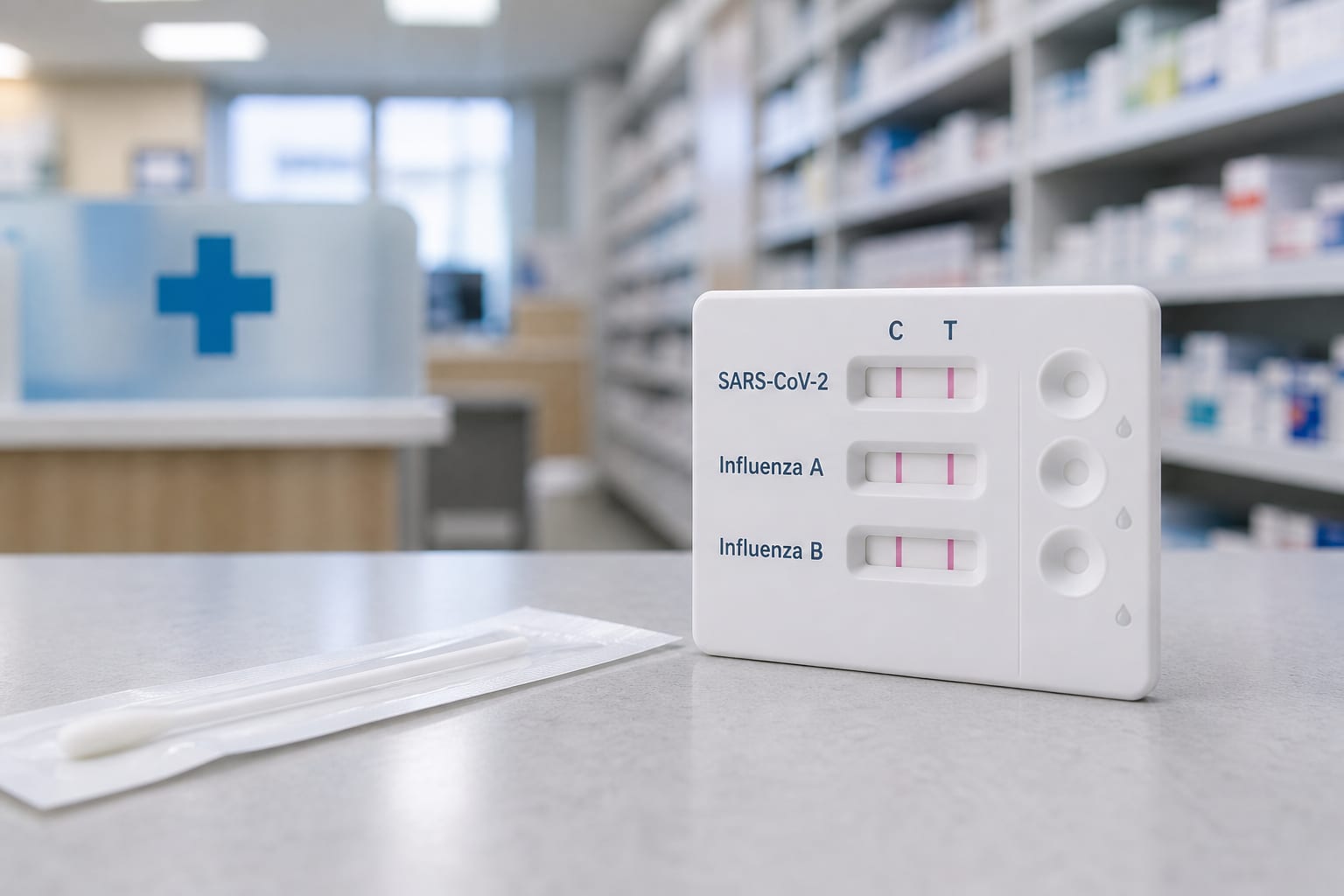
To estimate the prevalence, associated factors, and antiviral treatment of SARS-CoV-2 and influenza coinfection identified through pharmacy-based testing in the United States.
Approach:
Design and population: Retrospective cohort of 817,834 people receiving multiplex SARS-CoV-2 and influenza A/B testing at pharmacies in 50 states, the District of Columbia, and Puerto Rico from September 1, 2023, through May 31, 2025.
Analysis: Researchers assessed infection prevalence, compared participant characteristics, modeled factors associated with coinfection, and used antiviral dispensing data to assess treatment.
Key Findings:
Coinfection prevalence was 0.081% (95% CI, 0.075%-0.087%); it was highest among children younger than 18 years at 0.145% (95% CI, 0.109%-0.186%).
Compared with adults aged 18 to 64 years, children had higher adjusted odds of coinfection (OR, 1.93; 95% CI, 1.42-2.57), while adults aged 65 years or older had lower odds (OR, 0.69; 95% CI, 0.53-0.89).
Among 665 people with coinfection, 26 (3.9%) received COVID-19 treatment and 29 (4.4%) received influenza treatment; none received treatment for both infections.
Among 144 symptomatic participants with coinfection who reported health histories, 92 (63.9%) reported no comorbidities.
Interpretation:
The authors reported low coinfection prevalence and low antiviral dispensing in this pharmacy-tested cohort. They identified children and people with comorbidities as groups with greater coinfection risk and noted a potential opportunity to reduce morbidity through treatment of eligible people with coinfection.
Limitations:
Self-reported survey data may have introduced selection bias, recall bias, and misclassification, limiting generalizability.
Nonresponse and prescriptions obtained elsewhere limited information on symptoms, comorbidities, severity, treatment, and outcomes.
The analysis did not include location-level random effects or adjust for clustering by pharmacy.
Conclusion:
The authors stated that multiplex testing in community pharmacies can identify SARS-CoV-2 and influenza coinfection and that pharmacy clinicians might consider prompt antiviral therapy for symptomatic people vulnerable to severe outcomes.