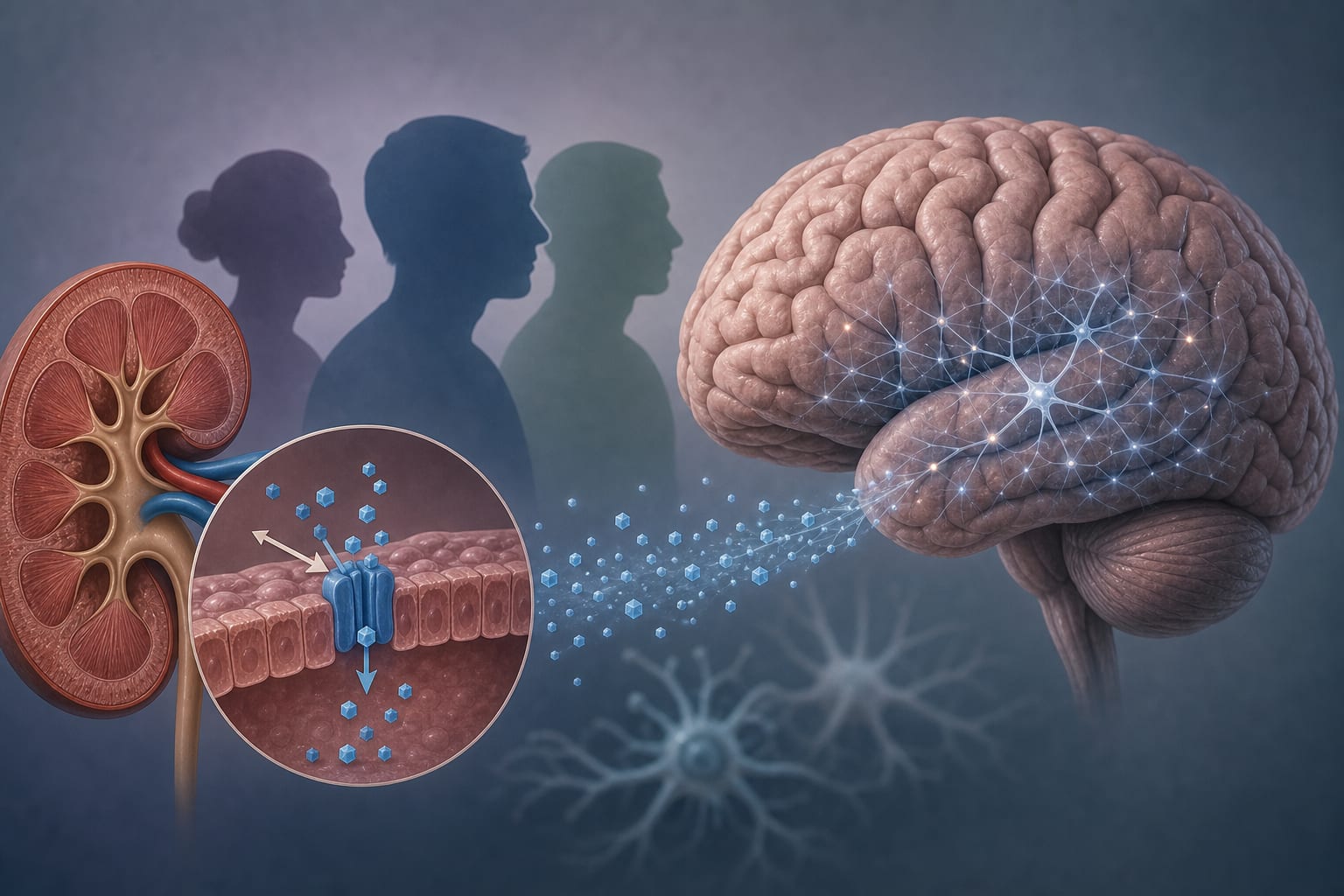
To evaluate whether treatment with SGLT2 inhibitors is associated with reduced risk of incident dementia and other neuropsychiatric outcomes in patients with psychiatric disorders.
Approach:
Study Design: Retrospective cohort study using a target trial emulation approach within the VA health care system.
Data Source: Electronic health record data from the US VA Corporate Data Warehouse.
Inclusion Criteria: Participants aged 65 years or older with a history of major depressive disorder, bipolar disorder, or schizophrenia spectrum disorder.
Outcome Measures: Primary outcome was incident all-cause dementia; secondary outcomes included time to psychiatric emergency department utilization and psychiatric hospitalization.
Key Findings:
SGLT2 inhibitors may be associated with reduced risk of incident dementia and depression compared to other antidiabetic medications.
Few studies have examined neuropsychiatric outcomes in psychiatric populations using SGLT2 inhibitors.
Interpretation:
The study aims to clarify the relationship between SGLT2 inhibitors and dementia risk in individuals with psychiatric disorders, addressing gaps in existing research.
Limitations:
Prior studies did not account for dynamic entry times, treatment adherence, or comprehensive covariate adjustment.
The study is limited to data from the VA health care system, which may not be generalizable to other populations.
Conclusion:
The findings may provide insights into the potential role of SGLT2 inhibitors in reducing dementia risk among individuals with psychiatric disorders.
by David T. Liebers, Tianshe He, Rebecca A. Betensky, Chunlei Zheng, Kaitlin N. Swinnerton, Sean Jacobson, Linden Huhmann, Mary T. Brophy, Nhan V. Do, Paola Gilsanz, Ricardo S. Osorio, Nunzio Pomara, Antonio Convit, Donald C. Goff, Dan V. Iosifescu, Nathanael R. Fillmore, Jaime Ramos-Cejudo