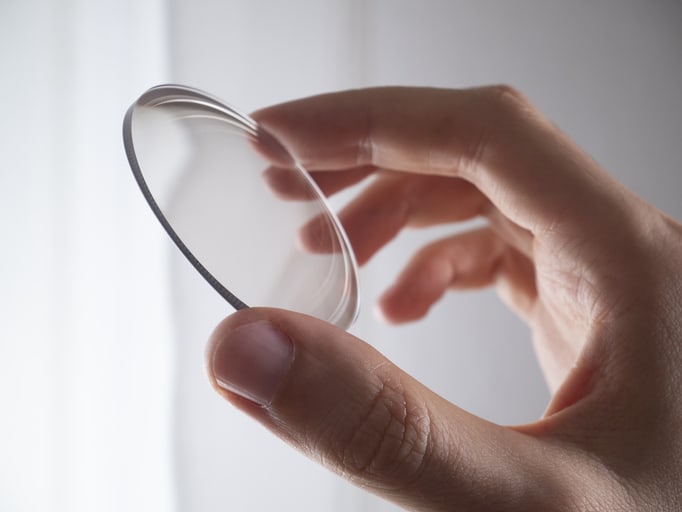
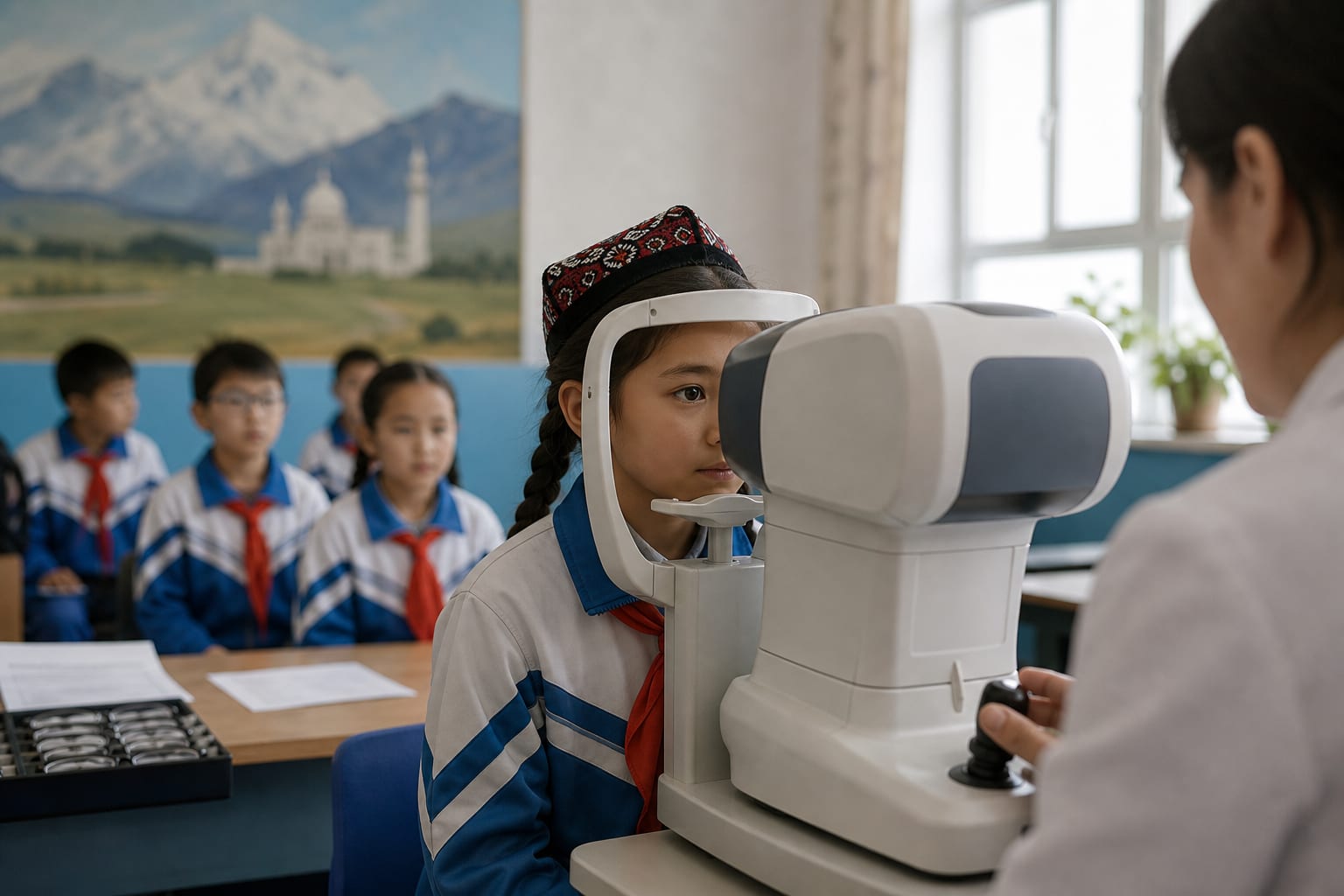
To compare the safety and effectiveness of highly aspherical lenslet (HAL) spectacle lenses with single-vision lenses (SVL) for slowing myopia progression in US children aged 6 to 12 years.
Approach:
Design and setting: A double-masked, multicenter randomized clinical trial at 9 US sites; the trial is ongoing toward its 36-month primary end point, with a prespecified 24-month analysis conducted for regulatory purposes.
Participants and allocation: Eligible children had myopia and astigmatism of 1.50 D or less. Participants were randomized 1:1 to HAL or SVL, stratified by site, age, and baseline myopia.
Outcomes: Primary outcomes were changes from baseline in cycloplegic spherical equivalent refraction and axial length. Safety assessments included adverse events, visual acuity, symptoms, and spectacle use.
Interpretation:
The provided context describes the trial rationale and methods but does not report its 24-month results.
Limitations:
The trial had not yet reached its 36-month primary end point at the time of the prespecified 24-month analysis.
Conclusion:
The study was designed to assess HAL lens safety and effectiveness compared with SVL in a US pediatric cohort.
A nearly decade-long observational follow-up found continued slowing of axial elongation into late adolescence, while refractive outcomes remained less consistent.