To investigate the clinical significance and biological role of SLC10A3 in glioblastoma (GBM) progression and immune evasion, particularly its impact on the immunosuppressive microenvironment.
Key Findings:
SLC10A3 is overexpressed in GBM and correlates with poor prognosis.
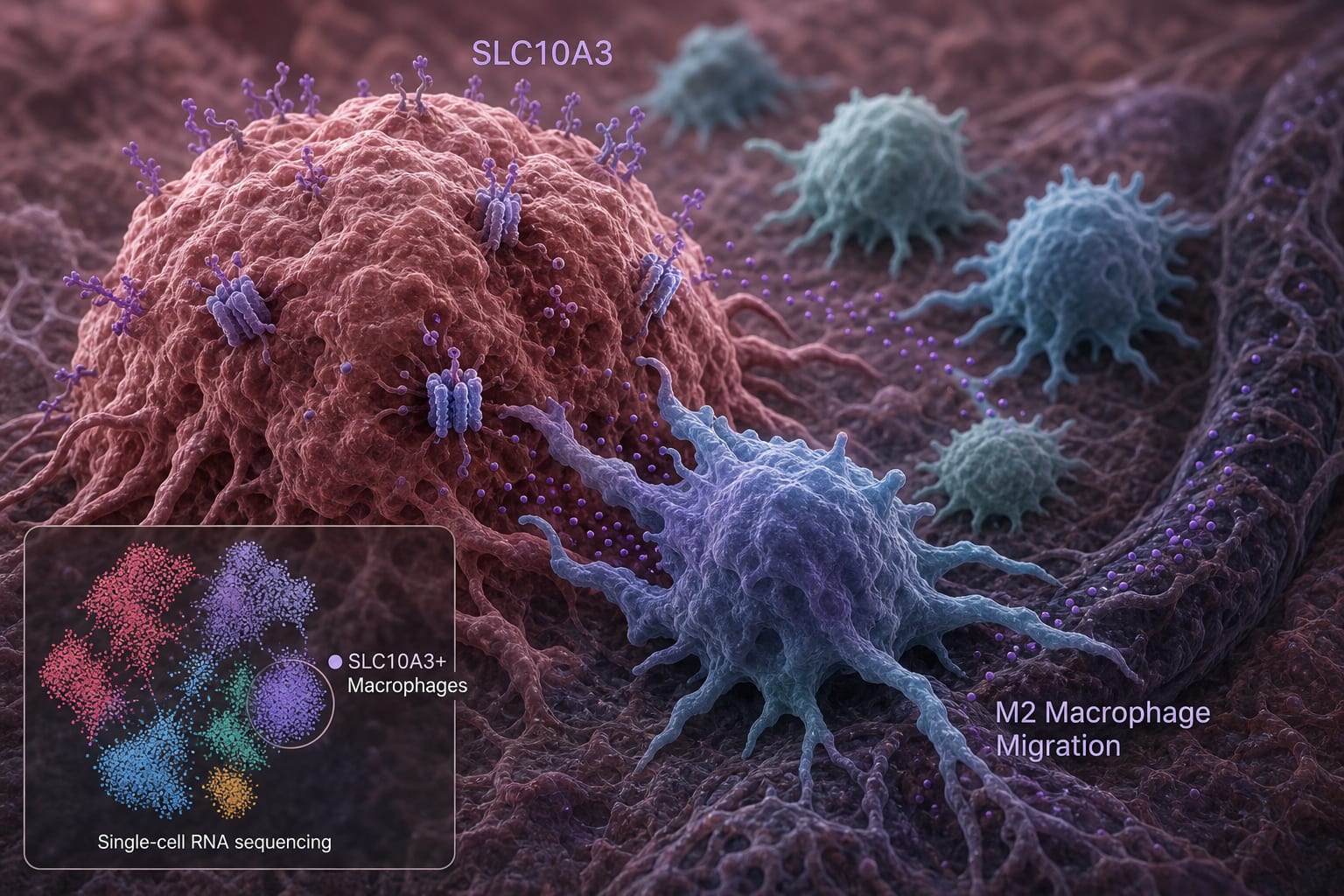
Enrichment analyses link SLC10A3 to signaling pathways such as PI3K-Akt, NF-κB, and HIF-1, involved in macrophage infiltration and T-cell suppression.
SLC10A3 knockdown inhibits GBM cell proliferation, migration, and invasion, and reduces M2 macrophage migration.
Interpretation:
SLC10A3 may promote GBM aggressiveness and immune evasion, indicating its potential as a therapeutic target, particularly in combination therapies.
Limitations:
Further studies are needed to validate the translational relevance of SLC10A3, including clinical trials.
The specific mechanisms by which SLC10A3 alters the immune microenvironment require additional investigation, particularly in vivo.
Conclusion:
SLC10A3 could serve as a potential therapeutic target for GBM, providing a basis for developing combination therapies targeting tumor-immune interactions and warranting further research.