Subcortical language localization using sign language and awake craniotomy for dominant posterior temporal glioma resection in a hearing-impaired patient - Summary - MDSpire
Advertisement
Subcortical language localization using sign language and awake craniotomy for dominant posterior temporal glioma resection in a hearing-impaired patient
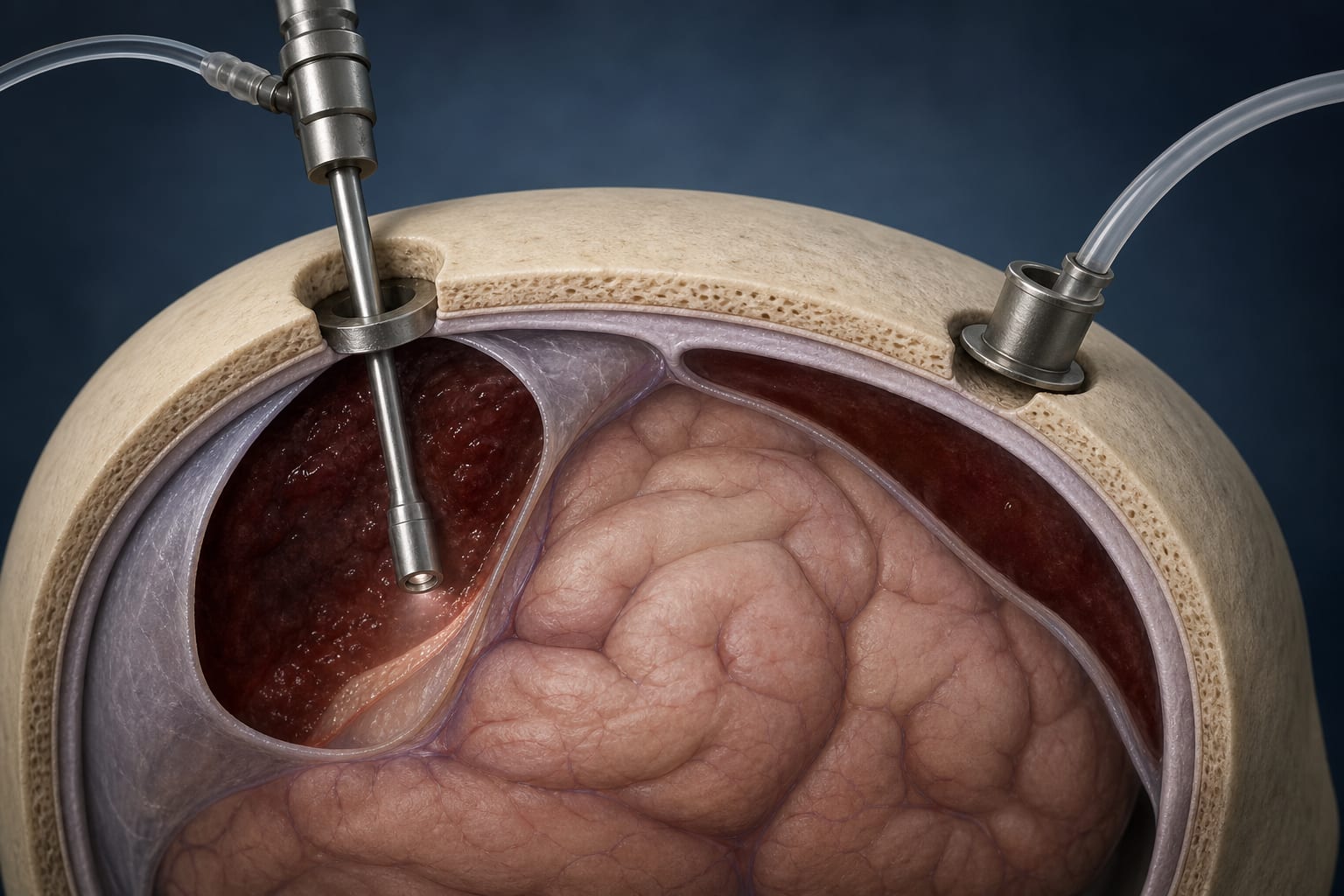
To report the case of a post-lingual deaf patient undergoing awake craniotomy for glioma resection, testing both sign language and spoken language during intraoperative mapping, highlighting the unique aspects of this case.
Key Findings:
Both sign language and spoken language were tested intraoperatively for the first time in a single patient, providing a unique perspective on language localization.
Subcortical mapping revealed phonemic paraphasias, indicating proximity to critical language pathways, which is significant for understanding language processing.
Postoperative MRI confirmed gross total resection of the tumor.
Interpretation:
The findings suggest that awake mapping can effectively localize language functions in hearing-impaired patients, providing insights into the neural basis of language processing in diverse modalities.
Limitations:
Only one case study limits generalizability; further research is needed to validate findings.
The study did not test sign language during cortical mapping due to procedural constraints, which may limit the understanding of its localization.
Conclusion:
Awake craniotomy with intraoperative language mapping is feasible and informative for hearing-impaired patients, enhancing understanding of language localization and suggesting avenues for future research.