Durable response to ALK inhibition in low-allele-frequency SPTBN1–ALK–rearranged gastric cancer followed by lineage plasticity–mediated resistance: a case report - Summary - MDSpire
Advertisement
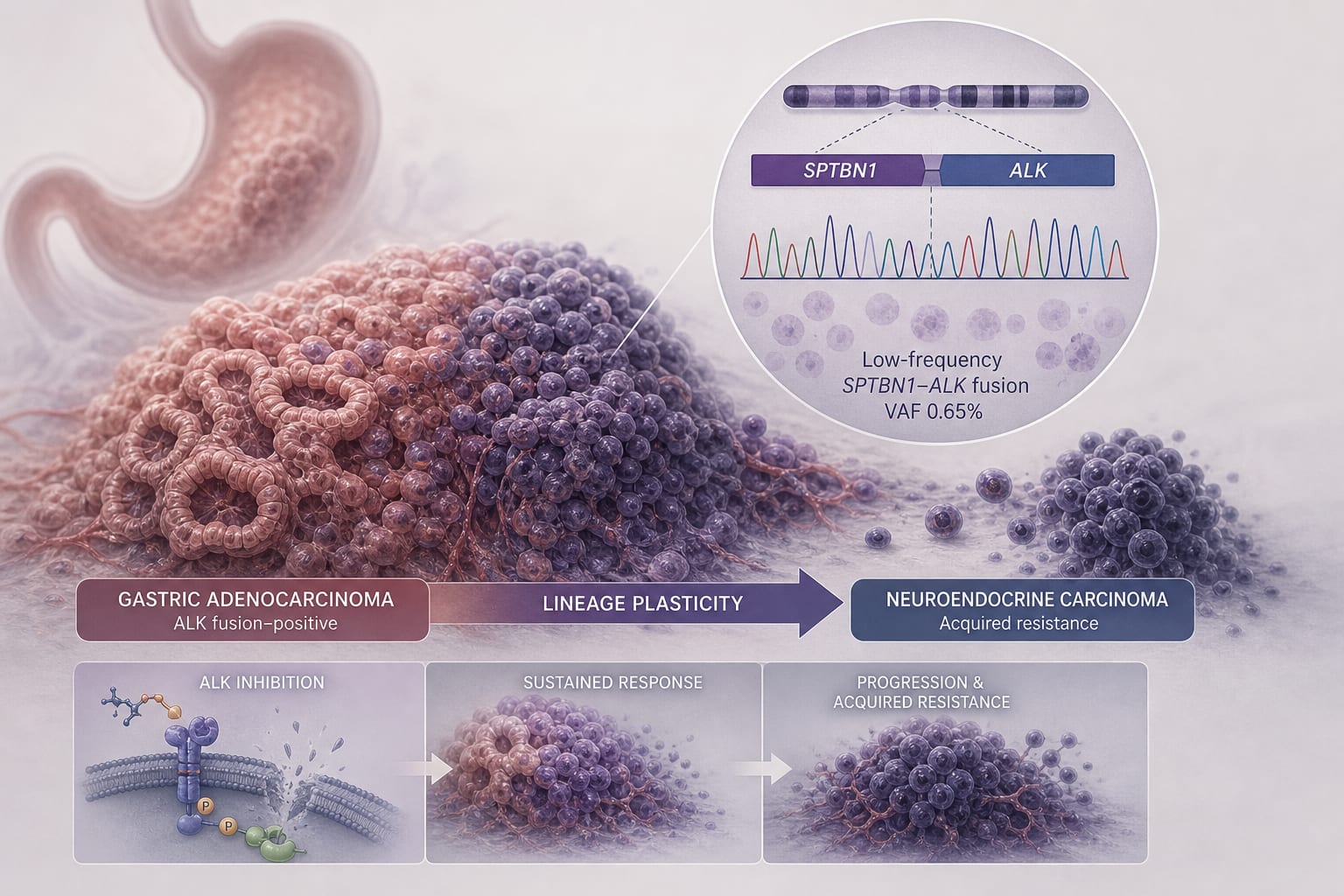
Sustained Response to ALK Inhibition in Gastric Cancer with Low-Frequency SPTBN1–ALK Rearrangement and Subsequent Resistance via Lineage Plasticity: A Case Study
To report a case of a patient with metastatic gastric adenocarcinoma harboring a rare SPTBN1–ALK fusion and to explore the therapeutic relevance of ALK inhibitors in such cases, particularly given the rarity of this fusion.
Approach:
Case Presentation: A 52-year-old woman with metastatic gastric adenocarcinoma was treated with the ALK inhibitor iruplinalkib after failing chemotherapy and immunotherapy, resulting in a durable partial response lasting approximately 14 months.
Progression Analysis: At progression, there was an increase in the fusion-positive clone's variant allele frequency and histologic transformation to small-cell neuroendocrine carcinoma, indicating lineage plasticity.
Key Findings:
The SPTBN1–ALK fusion was detected at a low variant allele frequency but was clinically relevant.
The patient experienced significant clinical improvement with ALK-targeted therapy.
Histologic transformation to small-cell neuroendocrine carcinoma occurred at progression, indicating lineage plasticity and the dynamic nature of the tumor.
Interpretation:
This case highlights the potential clinical relevance of low-allele-frequency ALK fusions in gastric cancer, emphasizing the need for comprehensive genomic profiling.
Limitations:
The rarity of ALK rearrangements in gastric cancer limits generalizability and understanding of their clinical implications.
The case study design does not provide broader population-level data.
Conclusion:
Comprehensive genomic profiling and longitudinal monitoring may enhance the identification of rare actionable alterations in advanced gastric cancer.