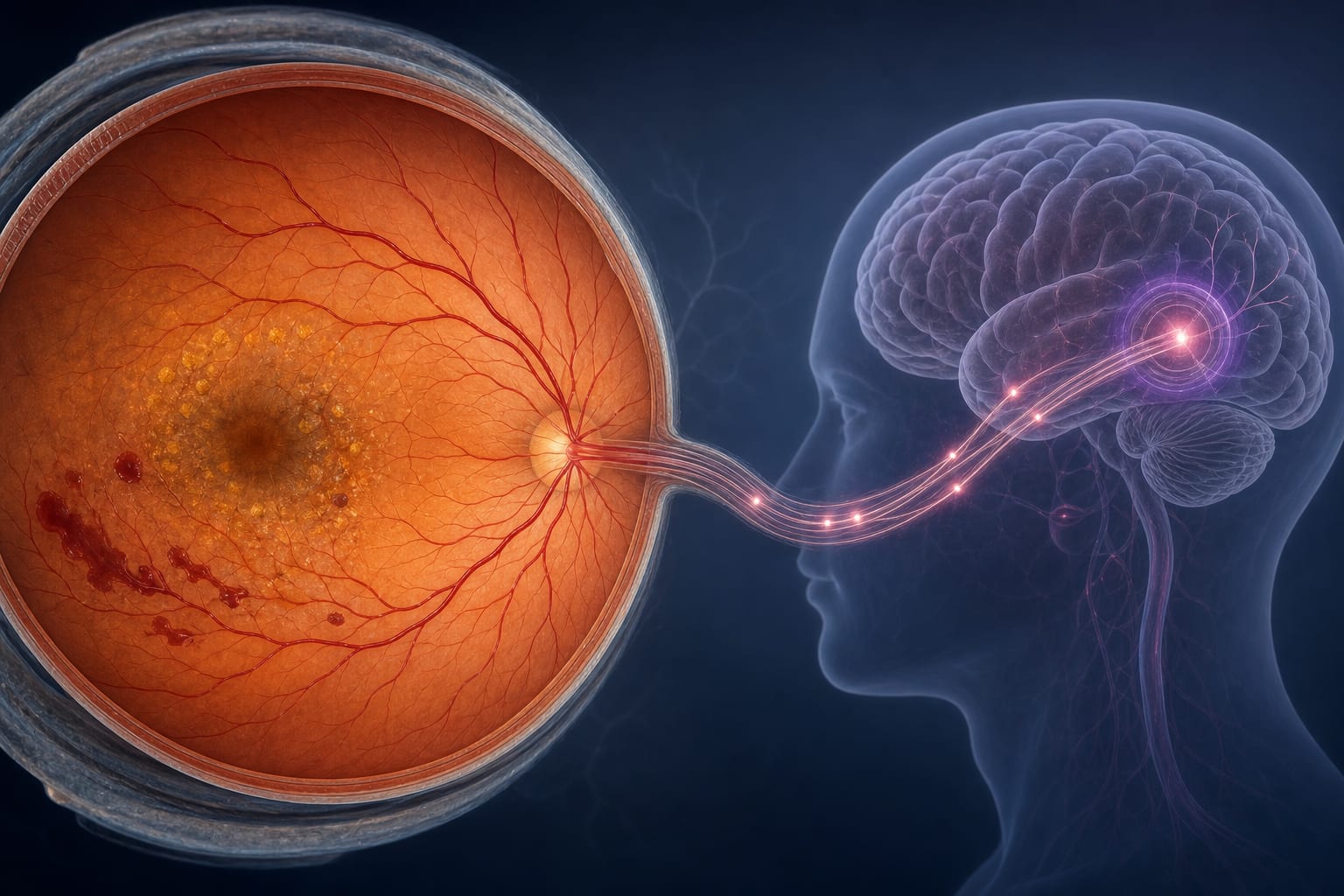
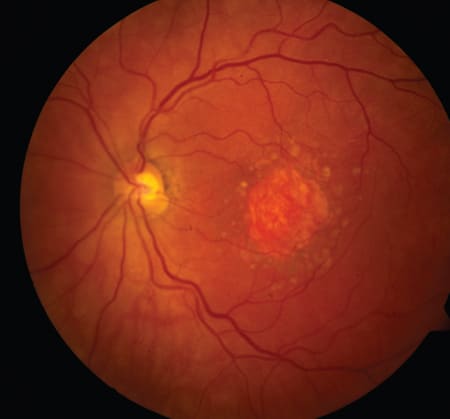
To examine potential associations between migraine and retinal disorders, focusing on retinal migraine, age-related macular degeneration (AMD), retinal vascular occlusions, and photophobia.
Approach:
Search Strategy: The search focused on associations between migraine and retinal disorders using databases like PubMed, Embase, and others, prioritizing publications from the last 10 years.
Key Findings:
Visual phenomena are characteristic of migraine aura, but the impact of migraine on retinal structure and function is unclear.
Retinal migraine is rare and insufficiently characterized for mechanistic conclusions.
Epidemiological data suggest an increased risk of neovascular AMD in individuals with migraine.
Photophobia, retinal artery occlusion, and changes in retinal nerve fiber layer thickness are reported more frequently in migraine patients.
Proposed mechanisms for AMD, such as microvascular dysfunction, impaired DNA damage response, disrupted autophagy, and mitochondrial dysregulation, may also relate to migraine, but evidence is limited.
Interpretation:
Migraine is linked to several retinal conditions, particularly AMD, with suggested overlapping biological processes.
Limitations:
Causality between migraine and retinal disorders has not been established.
The rarity of retinal migraine complicates understanding its pathogenesis.
Evidence for shared mechanisms between AMD and migraine remains limited.
Conclusion:
Further studies are needed to determine whether retinal alterations contribute to migraine pathophysiology or are secondary phenomena.
Post hoc GATHER2 analyses presented at ASRS 2026 suggest ellipsoid zone integrity and low-luminance deficit may provide complementary measures of disease progression and treatment response.