To investigate the prognostic factors on the natural recovery time of positional cranial deformities in infants.
Approach:
Study Design: A retrospective cohort study including 1,219 infants diagnosed with positional cranial deformities.
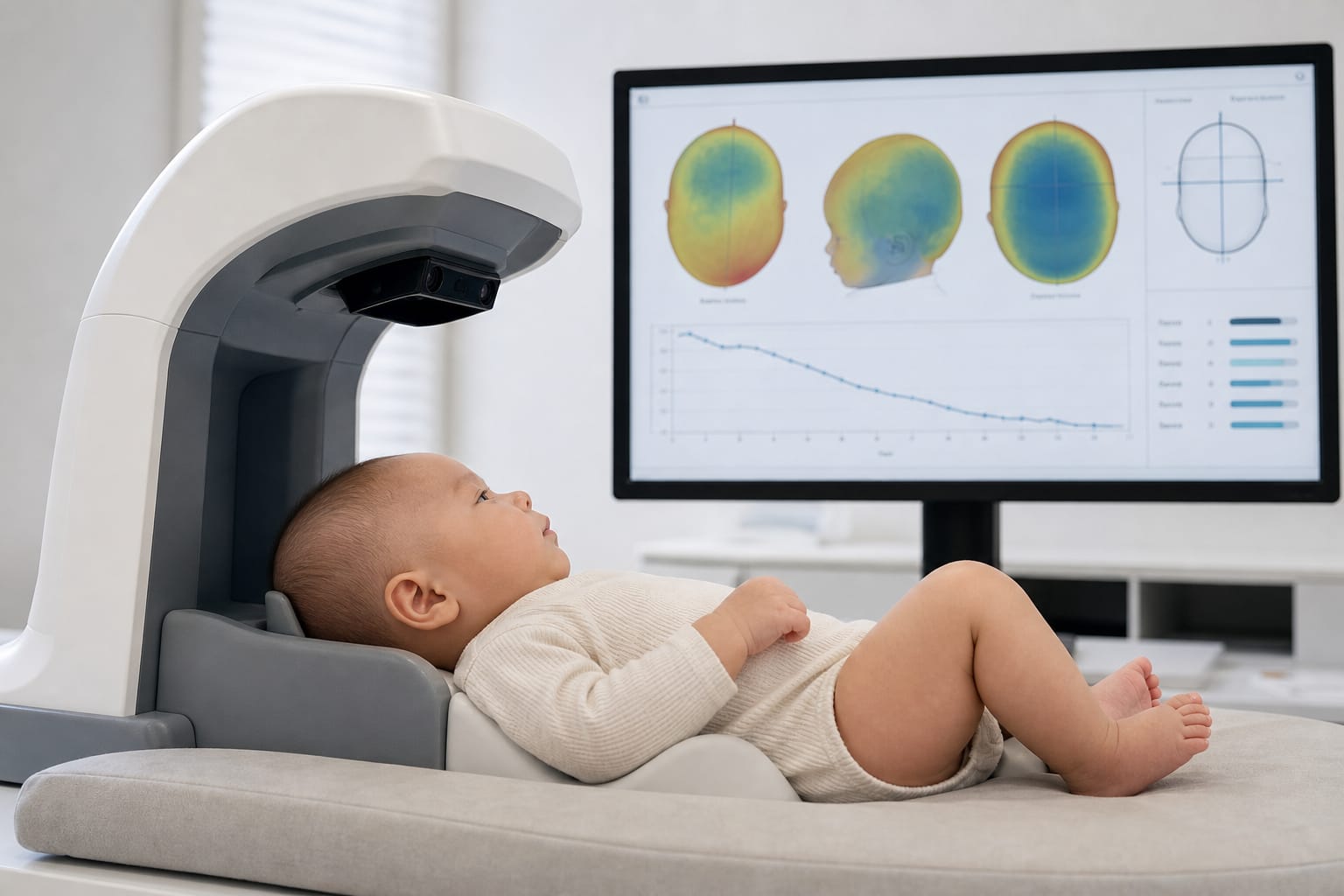
Data Collection: Cranial parameters were measured using the STARscanner 2.0 system, and median recovery time was estimated using survival analysis.
Statistical Analysis: Multivariate proportional hazards Cox regression analyses evaluated the effects of various factors on recovery time.
Key Findings:
Younger age was an independent predictor of faster recovery (hazard ratio = 0.44, P < 0.001).
Infants with mild deformities recovered significantly faster than those with severe deformities (P < 0.001).
Sex and cranial shape were not significantly associated with recovery time.
Interpretation:
Younger age at diagnosis and milder deformity severity were associated with a higher likelihood and faster rate of natural recovery from positional cranial deformities.
Limitations:
The study was limited to infants diagnosed at a single center.
Data was collected retrospectively, which may introduce bias.
Conclusion:
Younger age at diagnosis and milder deformity severity were associated with a higher likelihood and faster rate of natural recovery from positional cranial deformities.