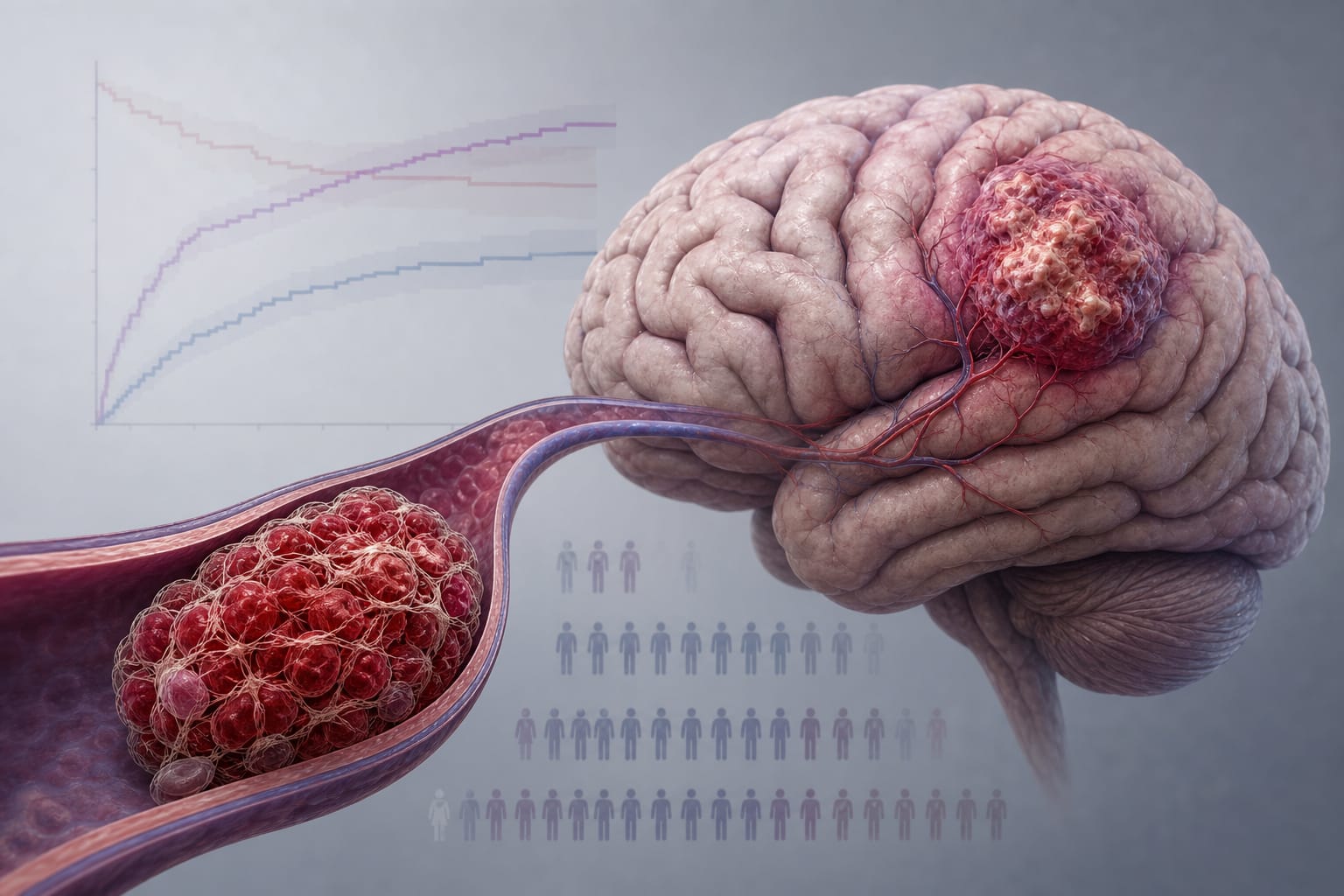
To analyze patterns of failure and outcomes of salvage stereotactic radiosurgery (SRS) for recurrent high-grade gliomas (HGG), focusing on progression-free survival, overall survival, and local failure-free survival, while identifying factors predicting benefit from SRS.
Key Findings:
SRS demonstrated potential benefits in local control for recurrent HGG, suggesting a need for tailored treatment approaches.
Patterns of failure included local, marginal, and distant failures, with varying rates based on treatment characteristics, indicating the complexity of disease management.
Demographic and clinical factors such as age and tumor characteristics influenced outcomes, highlighting the importance of personalized treatment strategies.
Interpretation:
The study suggests that salvage SRS can be an effective treatment option for recurrent HGG, with specific patient characteristics potentially predicting better outcomes.
Limitations:
Single-institution study may limit generalizability; further multi-center studies are needed to validate findings.
Small sample size and retrospective nature may introduce bias, necessitating caution in interpreting results.
Conclusion:
Salvage SRS for recurrent HGG shows promise, particularly in select patient populations, warranting further investigation to refine treatment strategies and identify optimal patient profiles.