Sufficient-dose Brentuximab vedotin improves prognosis in patients with classic Hodgkin lymphoma: a single-center real-world study in China - Summary - MDSpire
Advertisement
Sufficient-dose Brentuximab vedotin improves prognosis in patients with classic Hodgkin lymphoma: a single-center real-world study in China
To compare the efficacy and safety of a local ABVD-like regimen and a BV-containing A-AVD-like regimen in Chinese patients with classic Hodgkin lymphoma, focusing on treatment outcomes.
Approach:
Study Design: Single-center retrospective study involving 243 patients with classic Hodgkin lymphoma, comparing treatment outcomes between ABVD and A-AVD regimens.
Data Collection: Patient data were collected from electronic medical records, including demographics, treatment details, and follow-up outcomes.
Key Findings:
A-AVD group had a higher proportion of elderly patients (≥60 years) compared to ABVD (25.5% vs. 9.4%, p = 0.002).
First-evaluation complete response rates were similar (CR: 69.3% for A-AVD vs. 72.5% for ABVD, p = 0.549).
Overall response rate (ORR: 93.8% for A-AVD vs. 98.0% for ABVD, p = 0.312).
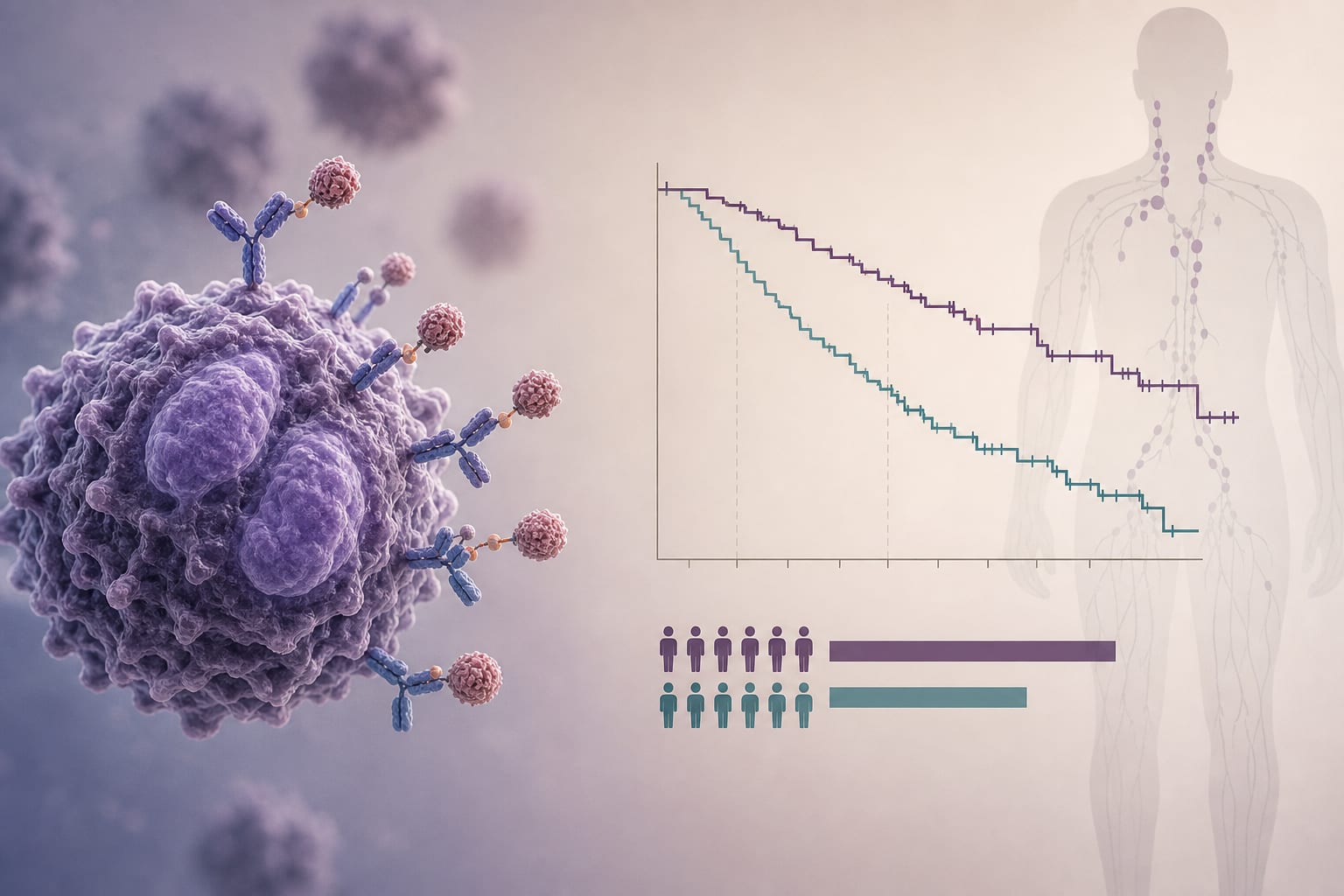
Overall progression-free survival (PFS) and overall survival (OS) showed no significant differences between the two regimens (PFS p=0.489; OS p = 0.230).
In patients with Ann Arbor stage III-IV, a sufficient dose of BV (≥1.15 mg/kg) significantly improved PFS (2-year PFS 91.7% vs. 58.7%; p=0.036).
A-AVD was associated with a higher rate of peripheral neuropathy (47.1% vs. 5.2%, p < 0.001).
Interpretation:
Maintaining sufficient BV dose intensity (≥1.15 mg/kg) was significantly associated with superior PFS in advanced-stage patients.
Limitations:
Single-center study may limit generalizability.
Retrospective design may introduce bias.
Conclusion:
A-AVD regimen achieved a 2-year PFS rate of 76.7% and showed comparable efficacy and survival outcomes to ABVD.