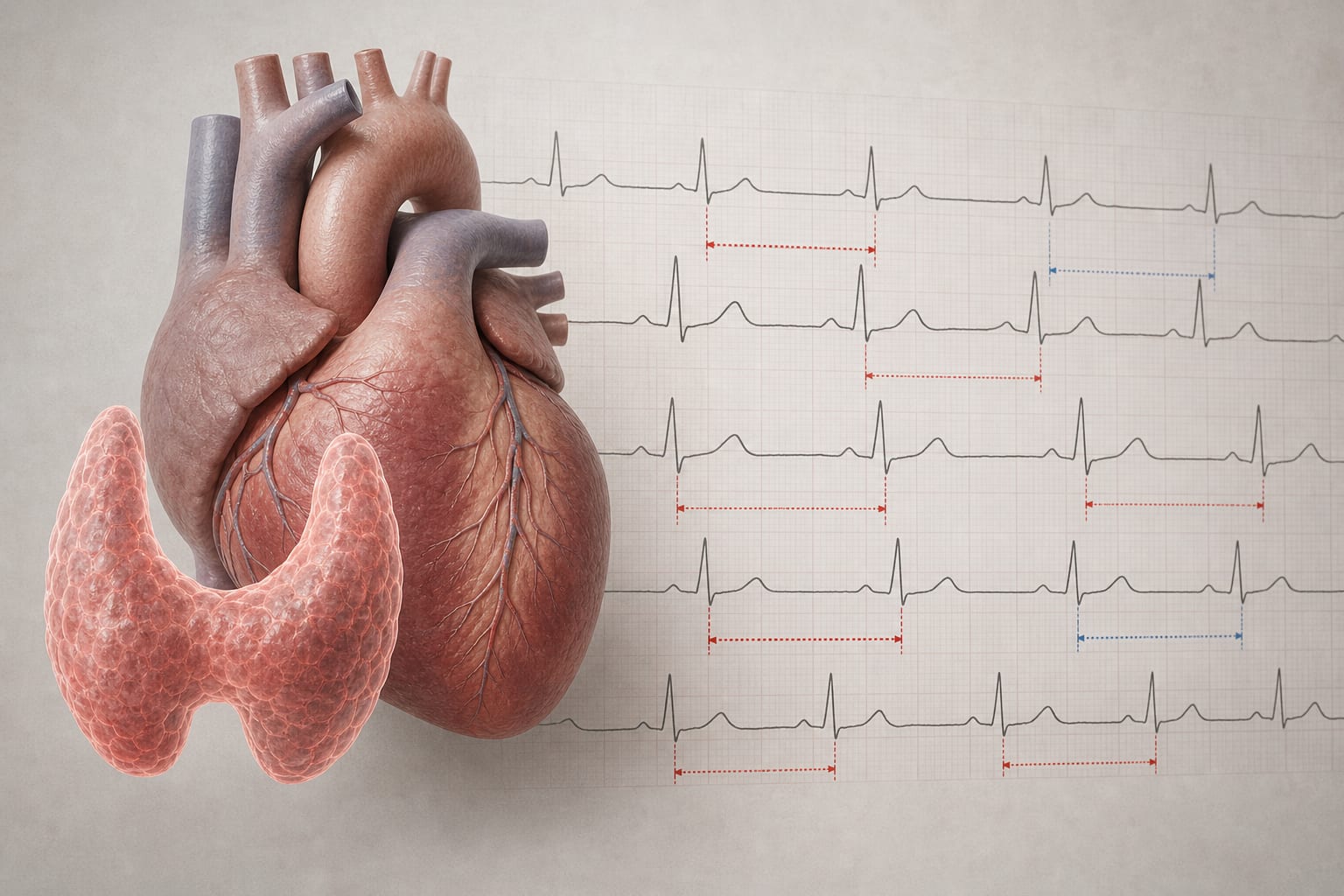
To evaluate electrocardiographic dispersion parameters as markers of altered ventricular repolarization in patients with overt hyperthyroidism.
Approach:
Study Design: Single-centre retrospective case-control study involving 97 adults: 55 with overt hyperthyroidism and 42 healthy euthyroid controls.
Parameters Assessed: Six ventricular repolarization dispersion parameters were evaluated from standard 12-lead ECG recordings.
Statistical Analysis: Group comparisons, correlation analyses, ROC analyses, and multivariable modeling were performed.
Key Findings:
All six dispersion parameters were significantly higher in overt hyperthyroidism compared to controls (p < 0.001).
Best discriminatory performance was observed for JTcFd (AUC 0.813) and QTcBd (AUC 0.804).
Tp-ed was independently associated with overt hyperthyroidism in multivariable analysis.
Weak and non-significant correlations were found between thyroid hormone levels and dispersion indices.
Interpretation:
The study indicates an association between overt hyperthyroidism and increased ventricular repolarization heterogeneity, as indicated by alterations in ECG-derived repolarization parameters.
Limitations:
The study is retrospective and does not establish causation.
No clinical arrhythmic outcomes were assessed.
Conclusion:
The findings indicate electrophysiological changes in overt hyperthyroidism.