Case Report: Intranasal esketamine and accelerated intermittent theta-burst stimulation for severe treatment-resistant depression with suicidal ideation - Summary - MDSpire
Advertisement
Case Report: Intranasal esketamine and accelerated intermittent theta-burst stimulation for severe treatment-resistant depression with suicidal ideation
To evaluate the feasibility and clinical outcomes of combining intranasal esketamine and accelerated intermittent theta-burst stimulation (iTBS) in a patient with severe treatment-resistant depression and high-risk suicidal ideation after inadequate responses to previous treatments.
Approach:
Patient Description: A 29-year-old woman with recurrent major depressive disorder and high-risk suicidal ideation was hospitalized after inadequate responses to multiple treatments.
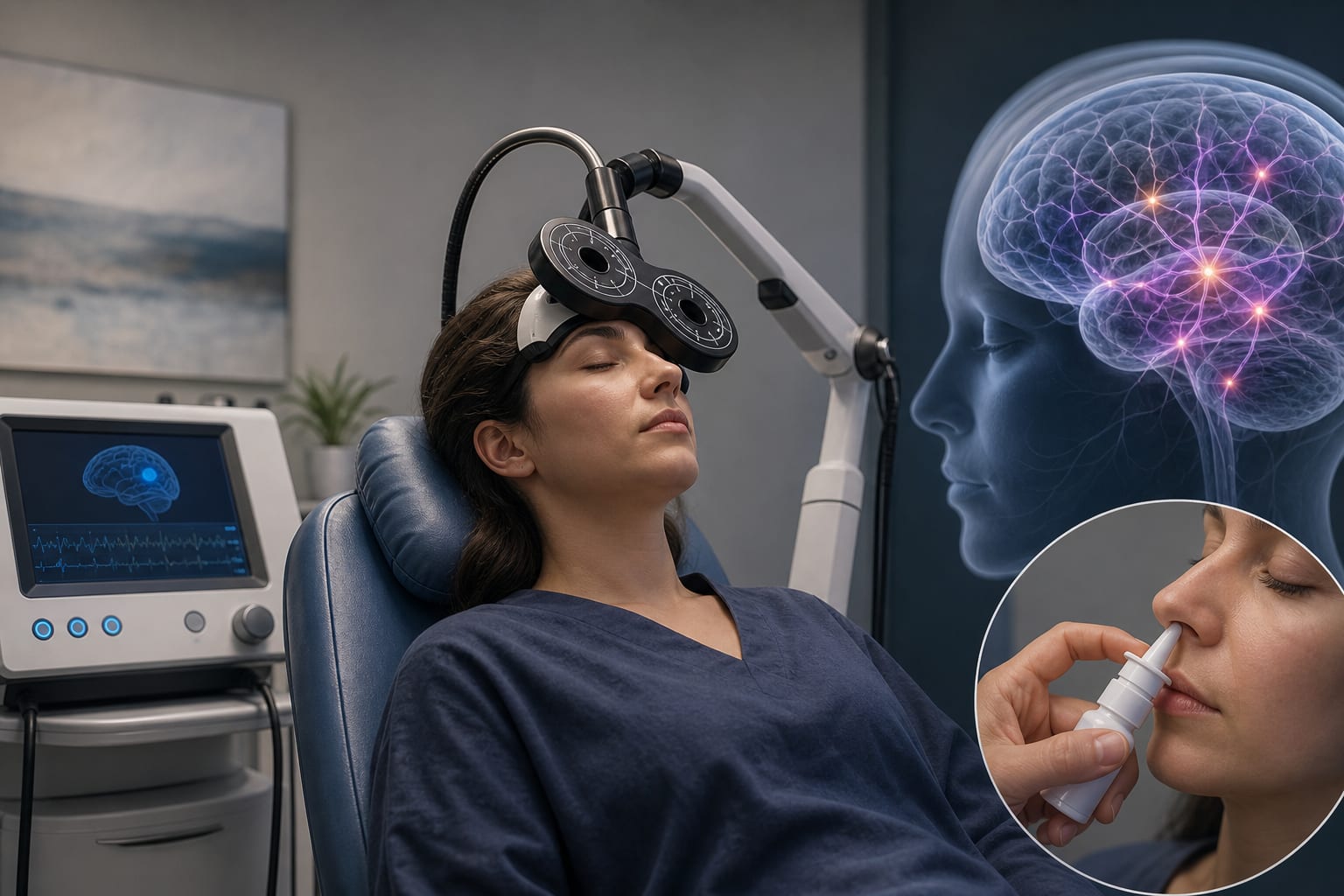
Treatment Protocol: The patient received intranasal esketamine (84 mg) and an accelerated iTBS protocol targeting the left dorsolateral prefrontal cortex, with 10 iTBS sessions over 4 days.
Key Findings:
The patient's depressive symptoms improved during treatment (PHQ-9: 15 to 11; HAMD: 27 to 20; BDI: 41 to 28).
Suicidal ideation also showed improvement.
Clinical status remained stable at the 2-week follow-up (PHQ-9 = 8; HAMD = 17; BDI = 23).
A device-derived stress index decreased from 7 to 3, indicating clinical improvement.
Interpretation:
The combination of intranasal esketamine and accelerated iTBS was feasible for treating severe depression with high-risk suicidal ideation in an inpatient setting.
Limitations:
This is a single case study, limiting generalizability.
Further controlled studies are needed to evaluate efficacy, safety, and durability of the combined approach.
The lack of long-term follow-up data limits the understanding of the treatment's sustainability.
Conclusion:
The case suggests the feasibility of combined treatment in high-risk patients, but further research is necessary.