Creation and assessment of a predictive model for the risk of myocardial hypoperfusion following primary PCI in patients with ST-segment elevation myocardial infarction - Summary - MDSpire
Advertisement
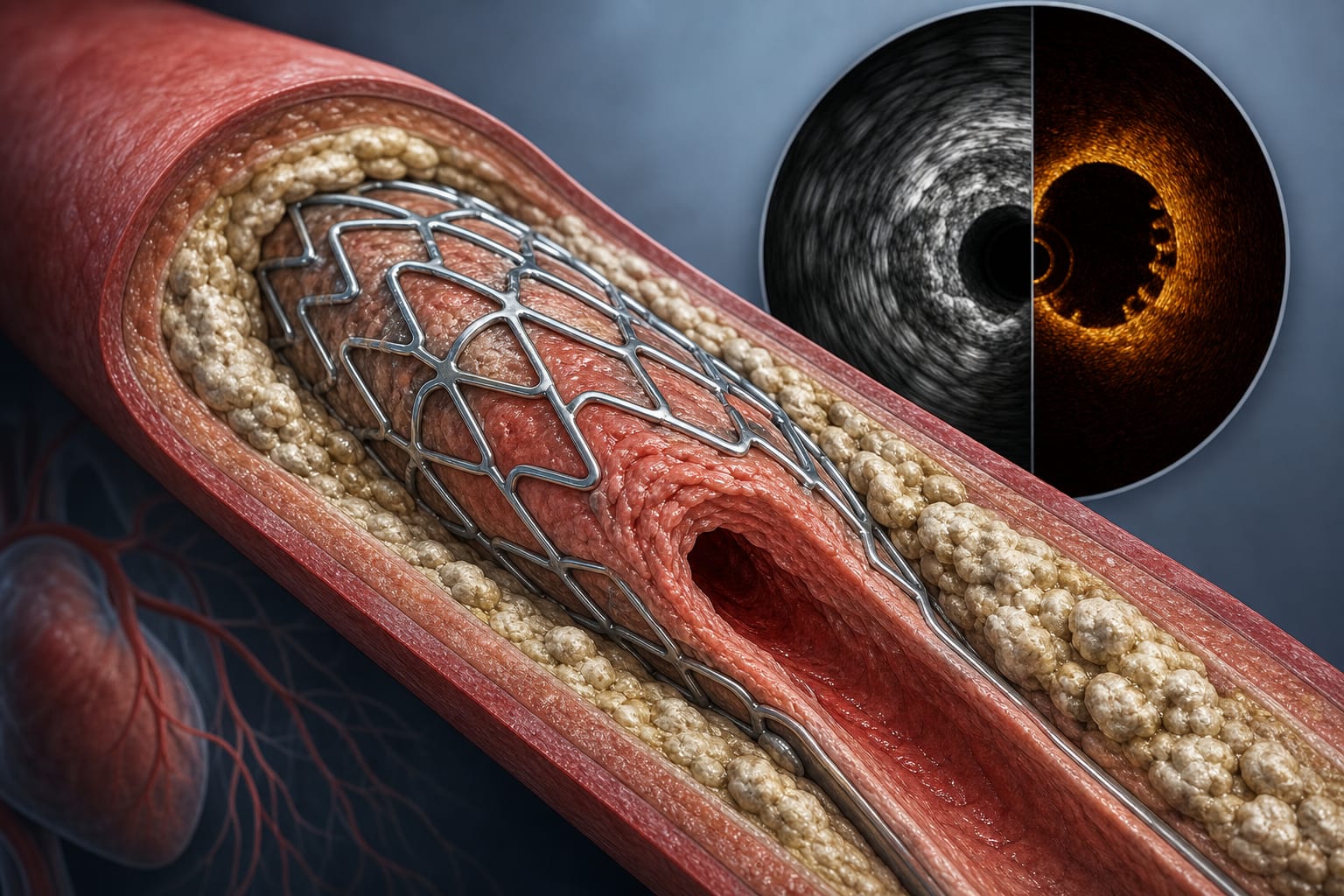
Creation and assessment of a predictive model for the risk of myocardial hypoperfusion following primary PCI in patients with ST-segment elevation myocardial infarction
To analyze the clinical factors and biomarkers associated with myocardial hypoperfusion following primary PCI in patients with acute STEMI and to develop a risk prediction model.
Key Findings:
Time from onset to primary PCI, atorvastatin dose before PCI, balloon deflation method during PCI, RDW, and MAO levels were identified as independent predictors of myocardial hypoperfusion (all P < 0.05).
The nomogram showed good discrimination with AUC values of 0.855 in the training cohort and 0.838 in the validation cohort.
Calibration curves indicated good agreement between predicted and observed outcomes.
Interpretation:
The proposed prediction model demonstrates favorable predictive performance and clinical utility, suggesting its potential value for early risk stratification in patients with STEMI, which could lead to improved patient outcomes.
Limitations:
The study is retrospective, which may introduce bias in the findings.
The findings may not be generalizable to all patient populations due to the specific inclusion criteria, and future studies should aim to validate the model in diverse cohorts.
Conclusion:
The identified predictors are crucial for assessing the risk of myocardial hypoperfusion post-PCI, and the developed model can aid in early risk stratification and targeted interventions.
In a target-trial emulation of more than 600,000 veterans, GLP-1 RA initiators saw fewer new substance use disorders—and patients with existing SUDs had fewer overdoses, hospitalizations, and deaths.