To summarize the research progress of RFX5 in human malignancies and its implications for cancer immunotherapy and targeted therapy.
Approach:
Literature Review: A systematic review of published data on RFX5 expression profiles, biological roles, molecular mechanisms, and clinical relevance, focusing on solid malignancies and immunotherapy.
Key Findings:
RFX5 is a context-dependent transcriptional integrator in cancer.
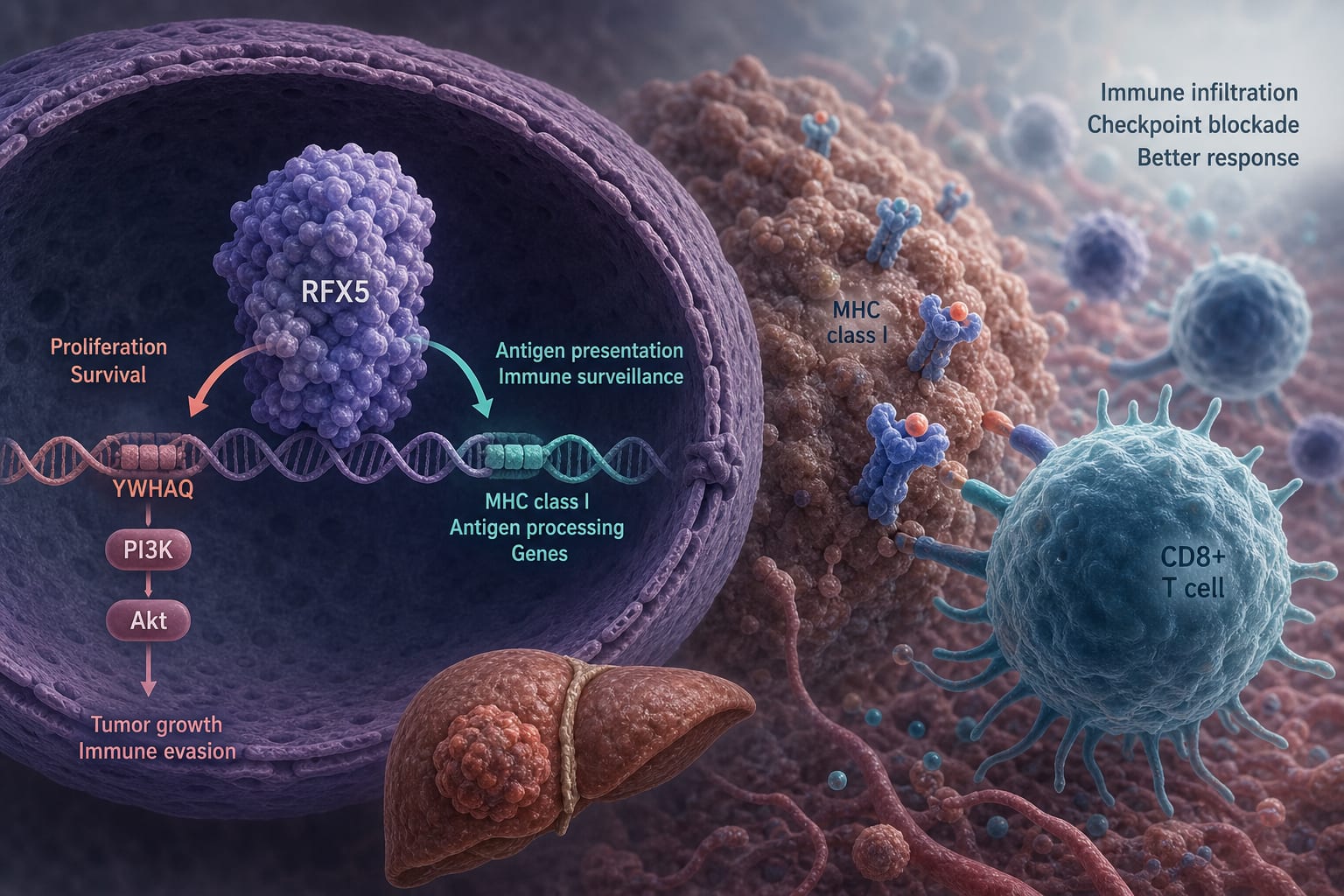
In hepatocellular carcinoma (HCC), RFX5 drives tumor growth via the YWHAQ–PI3K/Akt axis.
In immune-inflamed tumors, RFX5 enhances antigen presentation and CD8+ T-cell infiltration.
Altered RFX5 expression correlates with clinical prognosis and immune checkpoint blockade response in specific tumor types.
Interpretation:
RFX5 functions are shaped by tumor lineage and microenvironmental immune cues, rather than being fixed oncogenic or tumor-suppressive.
Limitations:
Current evidence does not support RFX5 as an independent predictive biomarker.
No incremental predictive value beyond established immune biomarkers has been verified.
Challenges include defining cell-type-specific targets and linking RFX5 activity to therapeutic vulnerabilities.
Conclusion:
The study proposes a lineage-signal dual-switch framework to reconcile conflicting observations regarding RFX5’s roles in cancer, highlighting the need for further research.