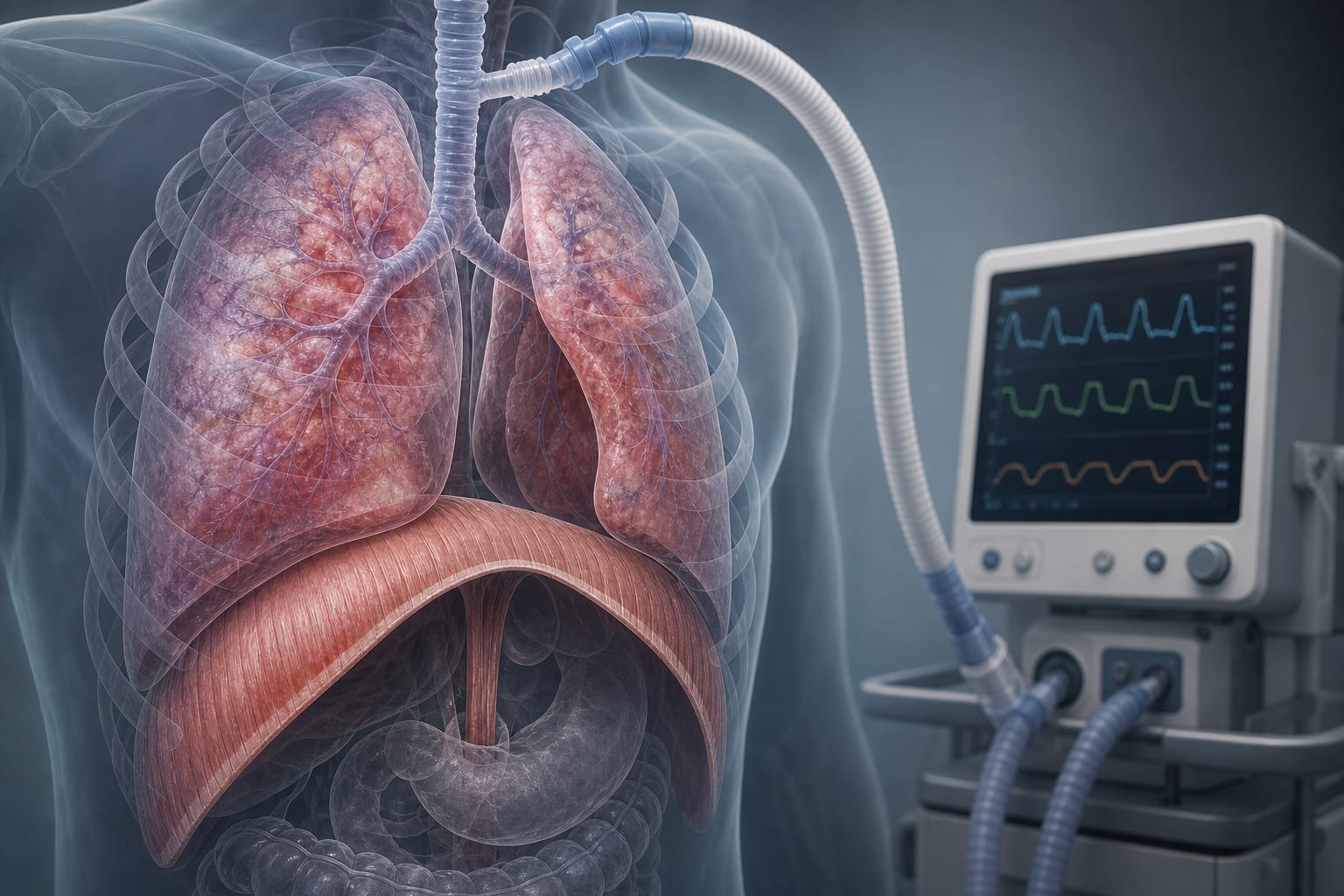
Lung- and diaphragm-protective mechanical ventilation in acute respiratory distress syndrome - Summary - MDSpire

Lung- and diaphragm-protective mechanical ventilation in acute respiratory distress syndrome

  • By

  • Glauco M. Plens

  • Idunn S. Morris

  • Richard Greendyk

  • Andrea Castellví-Font

  • Annemijn H. Jonkman

  • Domenico L. Grieco

  • Glasiele C. Alcala

  • Jose Dianti

  • Marcelo Britto Passos Amato

  • Martin Dres

  • Shailesh Bihari

  • Robinder G. Khemani

  • Laurent Brochard

  • Taiga Itagaki

  • Ewan C. Goligher

  • July 7, 2026

  • 0 min

Share

Objective:

To synthesize the mechanistic basis of lung- and diaphragm-protective (LDP) ventilation strategies and their feasibility and efficacy in patients with acute respiratory distress syndrome (ARDS).

Approach:
  • Lung Injury Mechanisms: Excessive stress and strain during mechanical ventilation can cause lung injury, primarily through cyclic overdistension of the 'baby lung'.
  • Diaphragm Injury Mechanisms: Mechanical ventilation can lead to diaphragm injury (myotrauma), affecting diaphragm structure and function, often due to derangements in loading conditions.
  • Clinical Integration: Clinicians must integrate knowledge of injury mechanisms with individual patient characteristics to implement lung-protective strategies effectively.
Key Findings:
  • Excessive respiratory effort can exacerbate lung injury in ARDS patients.
  • Diaphragm inactivity contributes to atelectasis and increases the risk of lung injury.
  • Myotrauma from mechanical ventilation affects more than half of mechanically ventilated patients.
Interpretation:

Limitations:
  • Potential adverse effects of interventions like permissive hypercapnia and neuromuscular blockade.
  • The clinical relevance of certain mechanisms, such as diaphragm shortening from high PEEP, remains uncertain.
Conclusion:

LDP ventilation strategies may provide a framework for protecting both the lungs and diaphragm in ARDS patients.

Original Source(s)

Related Content