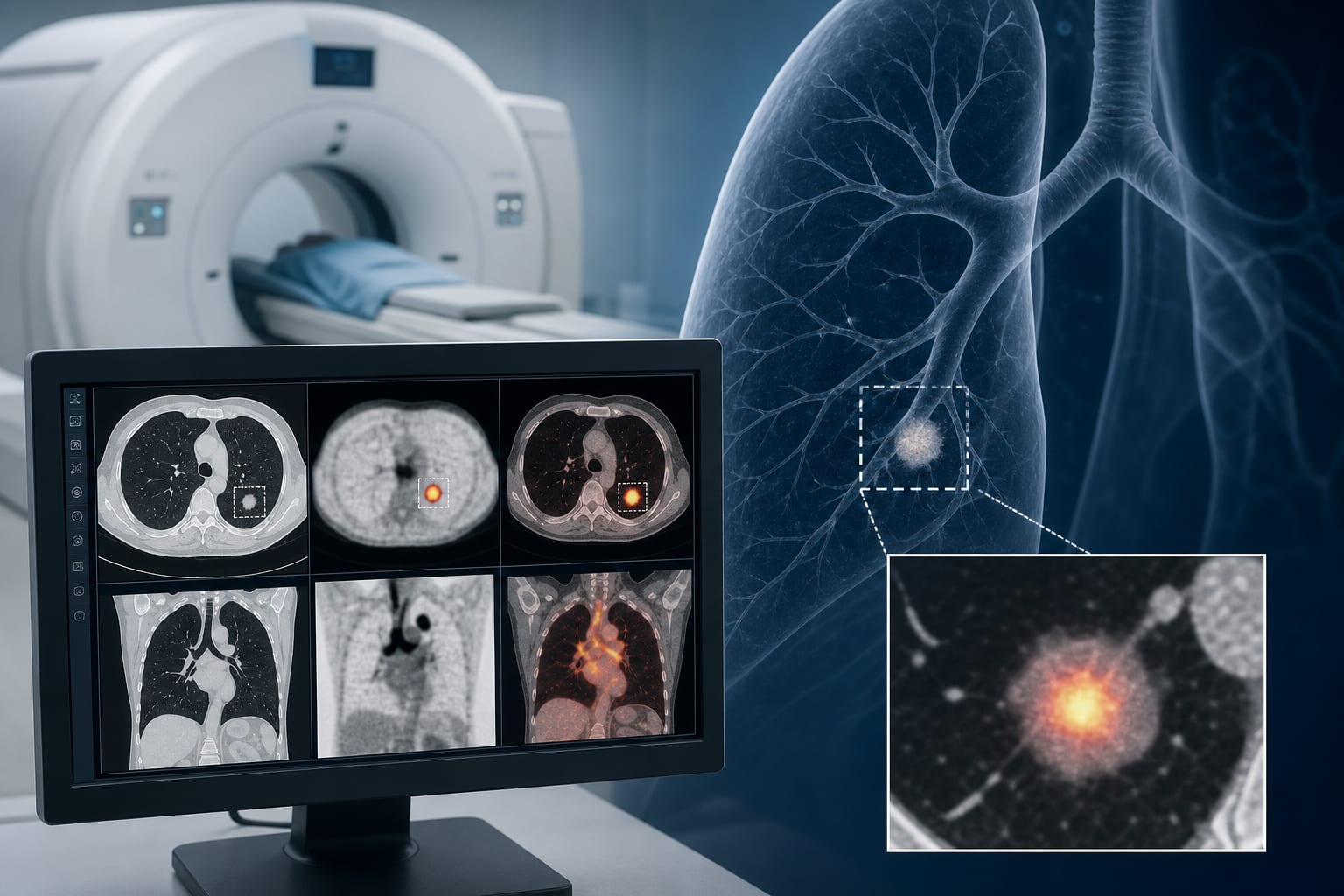
To evaluate the effectiveness of the INTEGRAL-Risk model in classifying patients at risk for lung cancer within one year, specifically comparing it to the US Preventive Services Task Force criteria and the PLCOm2012 model.
Key Findings:
The INTEGRAL-Risk model achieved an area under the curve of 0.88 for predicting lung cancer within 1 year, outperforming the PLCOm2012 model (0.79).
At a specificity threshold matching the 2021 USPSTF criteria, the INTEGRAL-Risk model captured 85% of lung cancer cases within 1 year.
The model demonstrated improved discrimination among various racial and ethnic groups, particularly among Asian, non-Hispanic Black, and non-Hispanic White participants.
Performance metrics declined over longer prediction horizons, with areas under the curve of 0.84 at 2 years and 0.81 at 3 years.
Interpretation:
The INTEGRAL-Risk model shows promise in refining eligibility for lung cancer screening, particularly in identifying high-risk individuals.
Limitations:
The study did not assess lung cancer mortality, false-positive results, screening risks, cost-effectiveness, or implementation feasibility.
The model underpredicted risk among Asian and non-Hispanic Black participants, indicating a need for recalibration.
The researchers could not assess whether the INTEGRAL-Risk model differentiated lung cancers with different driver sequence variants due to unavailable data.
Conclusion:
The INTEGRAL-Risk model may enhance the selection of individuals for lung cancer screening, but further adequately powered prospective studies are required before broader implementation.