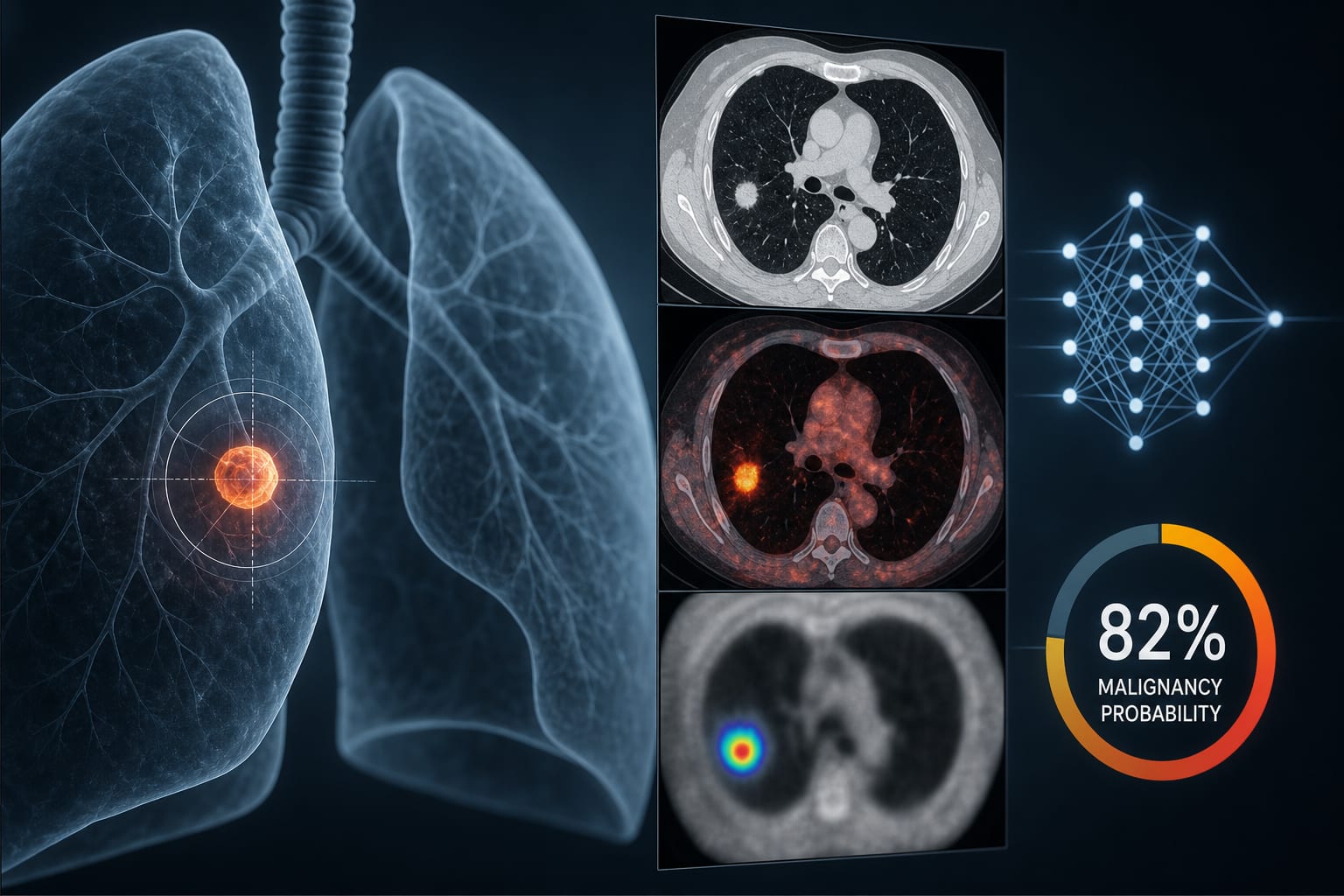
To build a CT-based radiomics model integrating clinical and biological data for predicting progression-free survival (PFS) in locally advanced head and neck squamous cell carcinoma (LAHNSCC) patients, highlighting the significance of accurate PFS prediction.
Key Findings:
Over 60% of new HNSCC cases are locally advanced, with significant recurrence rates despite optimal therapy. Include specific recurrence statistics.
Current prognostic stratification methods, including TNM8, are suboptimal for predicting outcomes in LAHNSCC, with a need for improved accuracy.
Radiomics models have potential but face limitations in validation and clinical applicability, necessitating further research.
Interpretation:
The study suggests that integrating clinical, biological, and radiomics data can enhance the prediction of progression in LAHNSCC, specifically addressing the limitations of existing models by providing a more comprehensive risk assessment.
Limitations:
Lack of external validation for radiomics models, which could be addressed in future studies.
High heterogeneity in study populations regarding cancer stages and treatments, suggesting a need for more standardized patient selection criteria.
No standardized panel of radiomics variables validated for clinical use, indicating a gap in current research.
Conclusion:
A CT-based radiomics model may improve risk stratification for LAHNSCC patients, but further validation and standardization are needed for clinical implementation, emphasizing the importance of future research in this area.