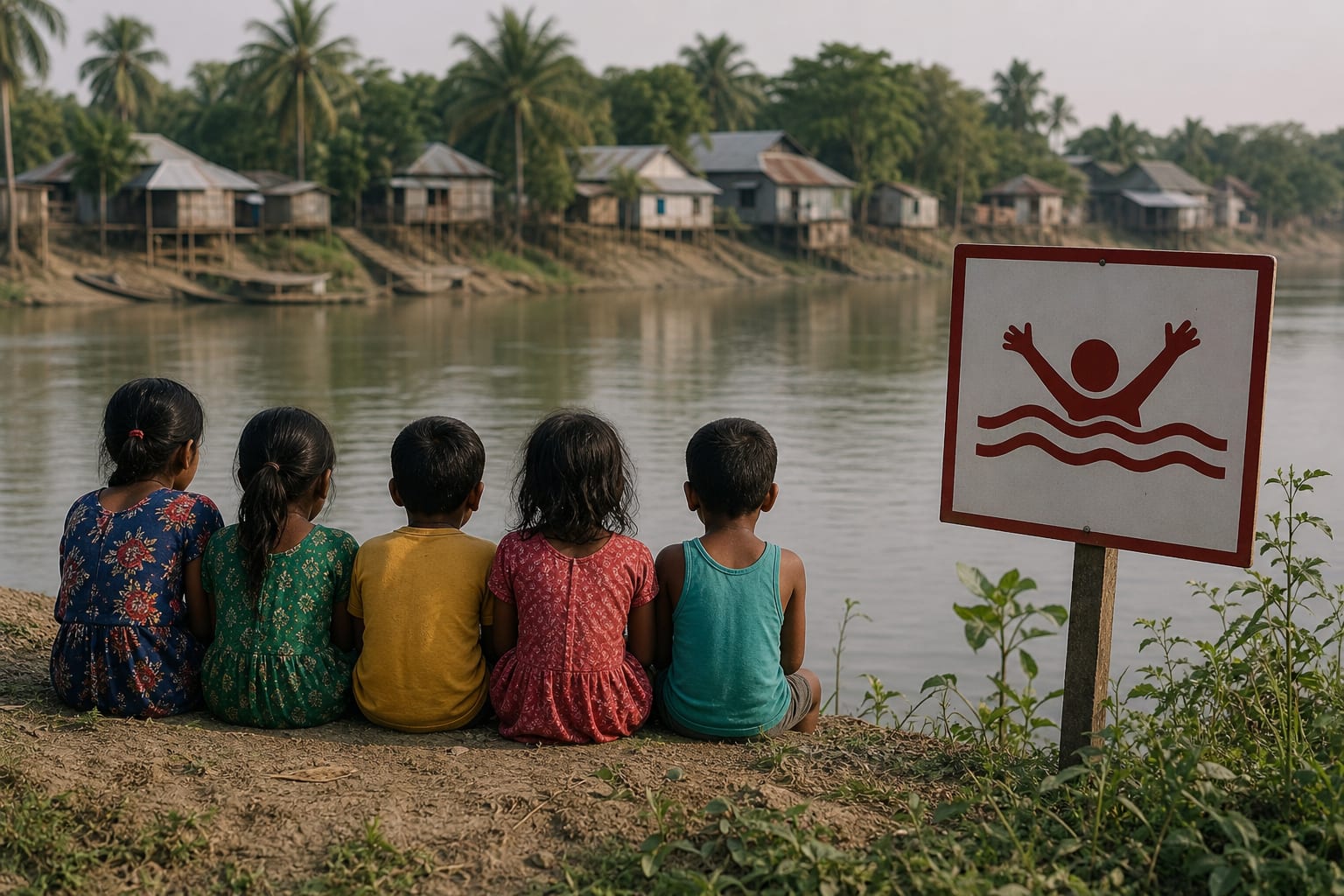
To examine perceptions of childhood drowning in the northern region and island areas of Bangladesh, focusing on variations across sociodemographic characteristics.
Approach:
Study Design: Cross-sectional study surveying 322 respondents from northern mainland and Sandwip Island using a semi-structured questionnaire.
Data Collection: Data collected through purposive sampling of households with child drowning experiences.
Statistical Analysis: Logistic and linear regression analyses were conducted to explore associations between perceptions, drowning mortality, and sociodemographic factors.
Key Findings:
90.37% of respondents believe drowning is preventable, yet only 5.28% teach children how to respond during incidents.
84.47% of respondents lack knowledge of rescue techniques.
Willingness to send children to childcare centers was associated with higher reported drowning deaths (aOR: 3.69).
Geographic and income disparities influenced risk perception, with island residents reporting lower awareness (β = −0.04) and higher-income respondents showing greater perception.
Interpretation:
There is a mismatch between awareness of drowning risks and proactive measures taken by families.
Limitations:
The study may not fully capture perceptions in all regions of Bangladesh due to its focus on specific areas.
Responses may be influenced by social desirability bias.
Conclusion:
Findings highlight the need for targeted interventions and safety audits of childcare facilities.