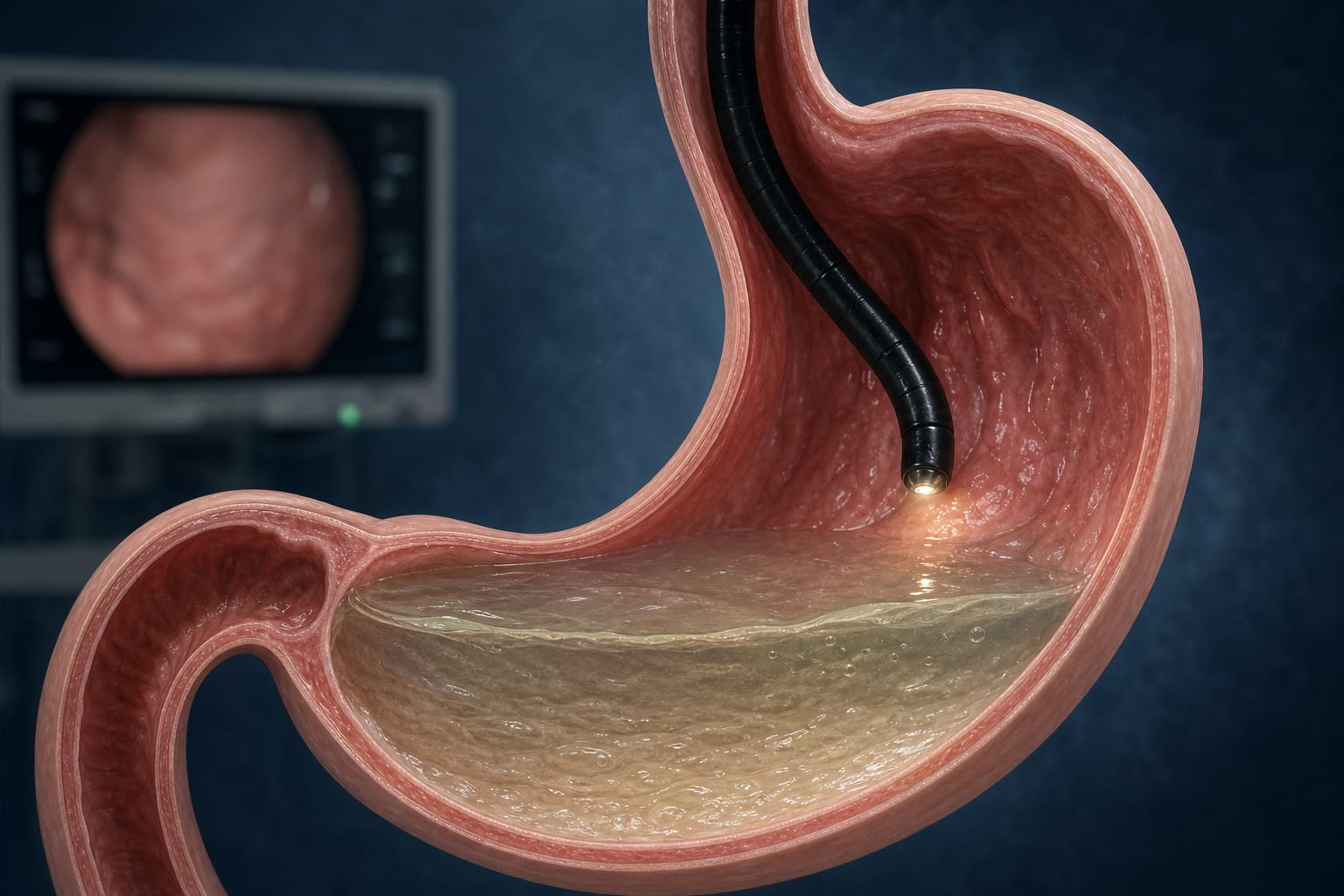
To address observations regarding the OCULUS trial's findings on clear liquid diets and safety concerns in periprocedural administration of GLP-1/GIP receptor agonists.
Approach:
Trial Context: Emphasizes the importance of procedural context in interpreting safety findings, particularly in upper endoscopy.
CS-RGV Detection: Notes that clinically significant residual gastric volume (CS-RGV) was detected promptly in the OCULUS trial, allowing for timely procedure termination.
Dietary Impact: Reports that none of the participants following a 24-hour clear liquid diet experienced CS-RGV.
Ongoing Research: Mentions the OCULUS-2 trial, which is examining the effects of holding or continuing GLP-1/GIP RAs during bowel preparation.
Need for Further Research: Highlights the need for further investigation into the combination of dietary modification and medication withholding.
Key Findings:
CS-RGV was not detected in participants who followed a clear liquid diet before endoscopy.
The OCULUS trial's early termination raises concerns about sample size and detection of aspiration-related adverse events.
Current literature suggests that clear liquids may reduce CS-RGV risk.
Interpretation:
The findings from the OCULUS trial may not be generalizable to all procedural contexts, particularly those without routine endoscopic visualization.
Limitations:
Early trial termination may have limited the ability to detect aspiration-related adverse events.
The sample size may not have been sufficient to draw definitive conclusions.
Scant evidence exists regarding patient preferences in dietary and medication strategies.
Conclusion:
Further investigation is required to determine the incremental benefits of combining dietary modification with medication withholding for patients receiving GLP-1/GIP RAs.