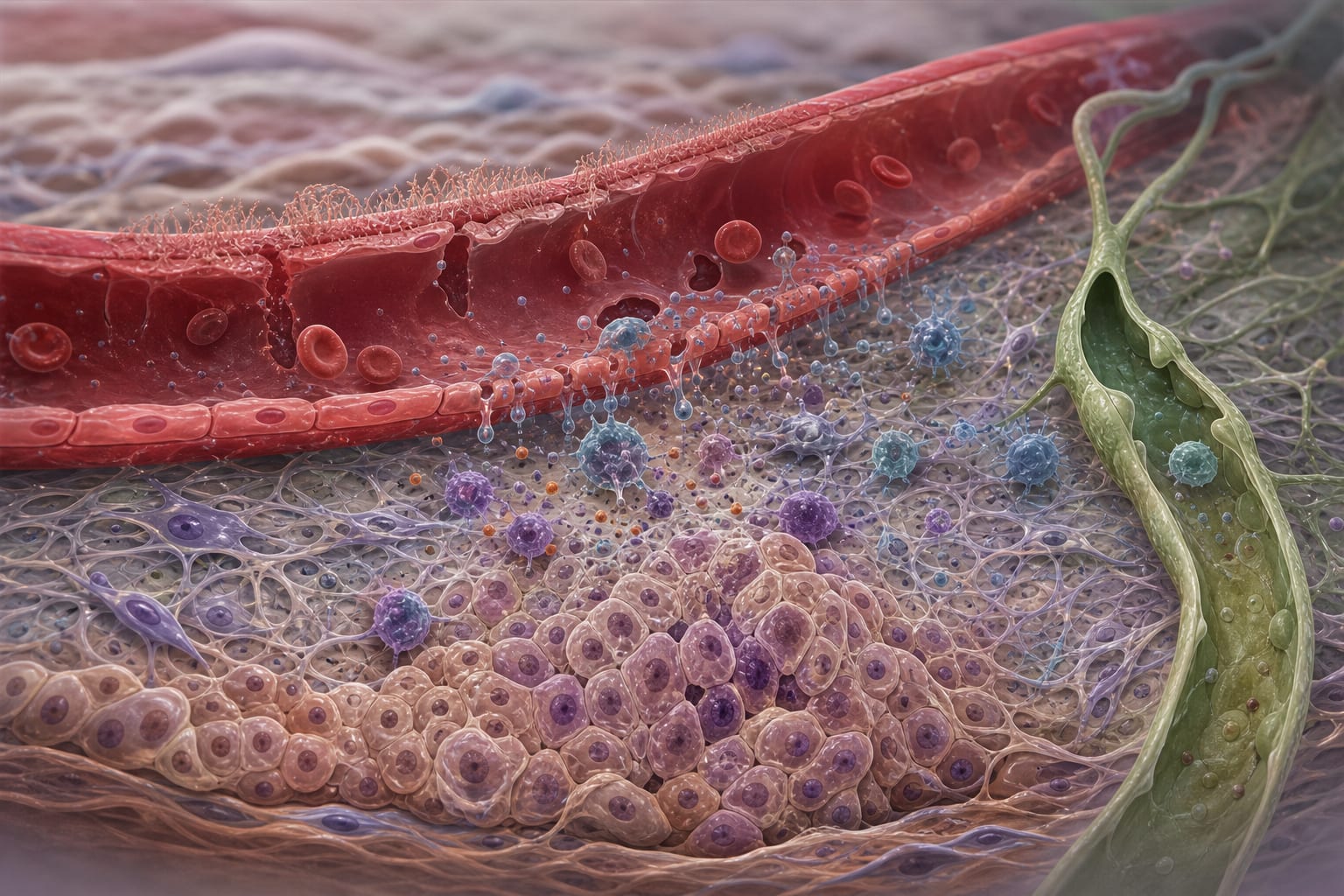
To present a mechanovascular framework that elucidates the physiological conditions leading to metabolic changes during early carcinogenesis.
Approach:
Framework Proposal: The authors propose a framework involving chronic vasomotor dysregulation, endothelial glycocalyx disruption, low-grade inflammation, endothelial hyperpermeability, and impaired lymphatic drainage.
Mechanistic Insights: The framework suggests that these factors lead to elevated interstitial fluid pressure and extracellular matrix remodeling before tumor formation.
Metabolic Reprogramming: It discusses how mechanotransduction and signaling pathways contribute to a glycolytic phenotype and cellular proliferation.
Immune Function Impact: The framework also addresses how elevated lactate levels may impair immune cell function.
Hypoxia Mechanism: Functional hypoxia is proposed to arise from spatial dysregulation of oxygen delivery.
Key Findings:
Chronic vasomotor dysregulation and other factors contribute to metabolic reprogramming in early carcinogenesis.
Disruption of erythrocyte mechanotransduction affects microvascular homeostasis.
Elevated extracellular lactate levels may reduce immune cell cytotoxic function.
Sustained microenvironmental stress may induce metabolic plasticity and genetic alterations.
Interpretation:
The proposed framework identifies interstitial biomechanical and transport dysregulation as potential drivers of metabolic changes and immune suppression in early cancer development.
Conclusion:
Restoring vascular-interstitial homeostasis may offer a strategy for early cancer interception.