Redefining diagnostic lesional status in temporal lobe epilepsy with artificial intelligence - Summary - MDSpire

Redefining diagnostic lesional status in temporal lobe epilepsy with artificial intelligence

  • By

  • Ezequiel Gleichgerrcht

  • Erik Kaestner

  • Reihaneh Hassanzadeh

  • Rebecca W Roth

  • Alexandra Parashos

  • Kathryn A Davis

  • Anto Bagić

  • Simon S Keller

  • Theodor Rüber

  • Travis Stoub

  • Heath R Pardoe

  • Patricia Dugan

  • Daniel L Drane

  • Anees Abrol

  • Vince Calhoun

  • Ruben I Kuzniecky

  • Carrie R McDonald

  • Leonardo Bonilha

  • January 22, 2025

  • 0 min

Share

Objective:

To evaluate the effectiveness of artificial intelligence in improving the classification of temporal lobe epilepsy (TLE) patients, particularly those categorized as MRI-negative, thereby addressing significant diagnostic challenges.

Key Findings:
  • The CNN achieved an accuracy of 85.9% ± 2.8% in differentiating TLE from healthy controls, indicating its potential as a diagnostic tool.
  • MRI-negative patients were accurately identified as TLE 82.7% ± 0.9% of the time, highlighting the model's effectiveness in a challenging subset.
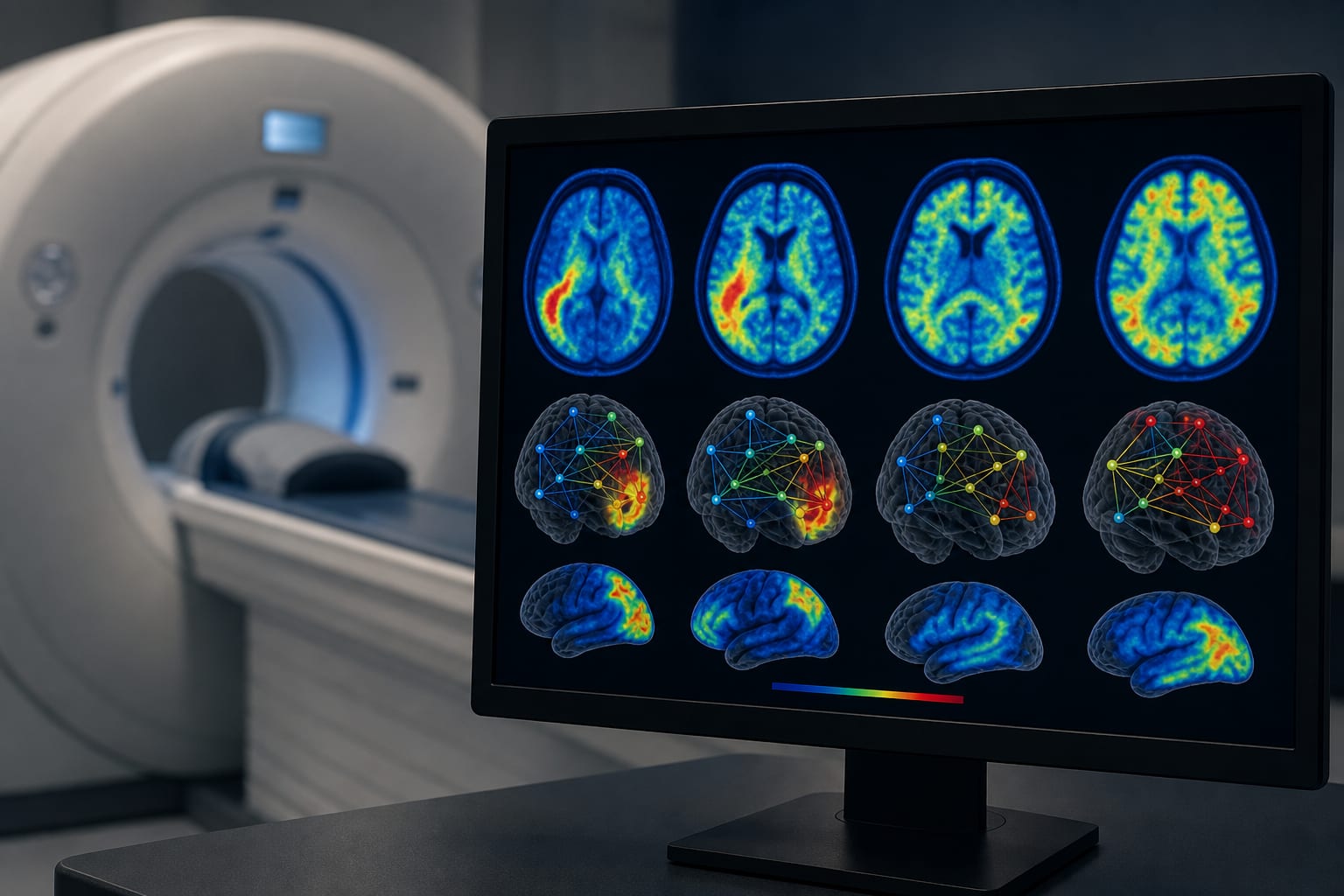
  • Saliency maps indicated that limbic structures were crucial for classification, consistent across MRI-positive and MRI-negative groups, reinforcing the need for a revised understanding of TLE.
Interpretation:

AI can effectively identify subtle lesional patterns in TLE patients that are often missed by human experts, suggesting a need to redefine the concept of 'lesional' TLE based on these findings.

Limitations:
  • The study's findings are based on a specific dataset and may not generalize to all TLE populations, necessitating further validation.
  • The reliance on a gold standard of surgical freedom may not encompass all clinical scenarios, potentially limiting the applicability of results.
Conclusion:

AI-aided diagnosis has the potential to significantly enhance the neuroimaging diagnosis of TLE, particularly for patients previously deemed MRI-negative, which could transform clinical practice.

Original Source(s)

Related Content