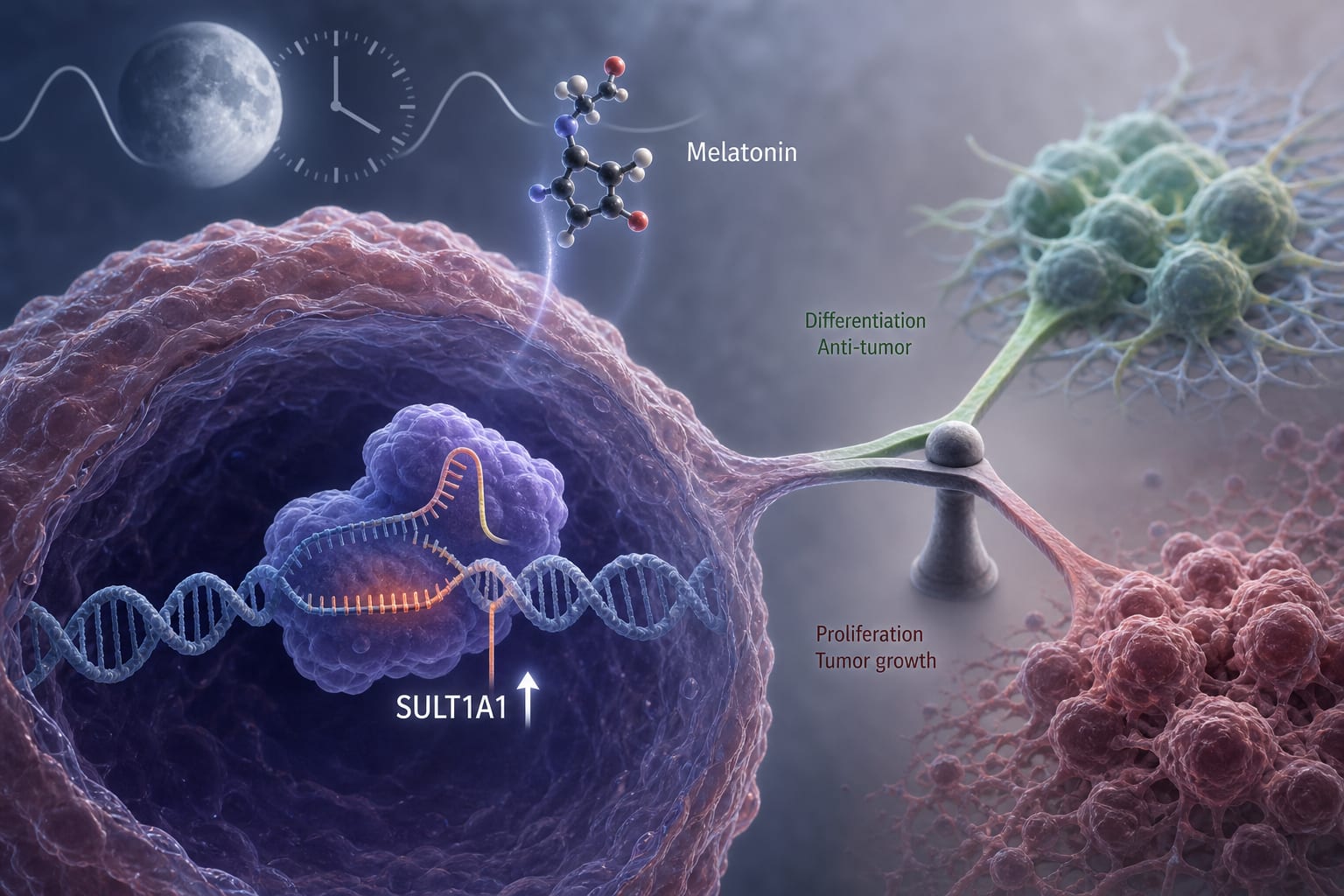
To investigate the role of circadian genes in osteosarcoma cell fate determination and therapeutic response, focusing on SULT1A1.
Approach:
Data Integration: Gene expression data from GEO was integrated to construct a prognostic model of circadian rhythm-annotated genes based on melatonin-related signatures, validated using the TARGET database.
Single-Cell RNA Sequencing: Single-cell RNA-seq and pseudotime trajectory inference were performed to characterize osteosarcoma cell states and identify branch-point genes.
Functional Assays: Publicly available CRISPR-Cas9 dependency data (DepMap) was queried, and functional assays were conducted in osteosarcoma cell lines.
Key Findings:
A five-gene circadian rhythm-annotated prognostic signature was established and validated.
SULT1A1 was identified as essential for osteosarcoma cell proliferation and sensitivity to melatonin.
SULT1A1 knockdown significantly suppressed cell proliferation and enhanced the anti-tumor efficacy of melatonin.
Interpretation:
SULT1A1 may modulate osteosarcoma cell proliferation and sensitivity to melatonin.
Limitations:
The study primarily relies on data from publicly available databases, which may have inherent biases.
Further validation in clinical settings is needed to confirm the findings.
Conclusion:
SULT1A1 is a candidate circadian-associated gene that may play a role in osteosarcoma differentiation and response to melatonin.