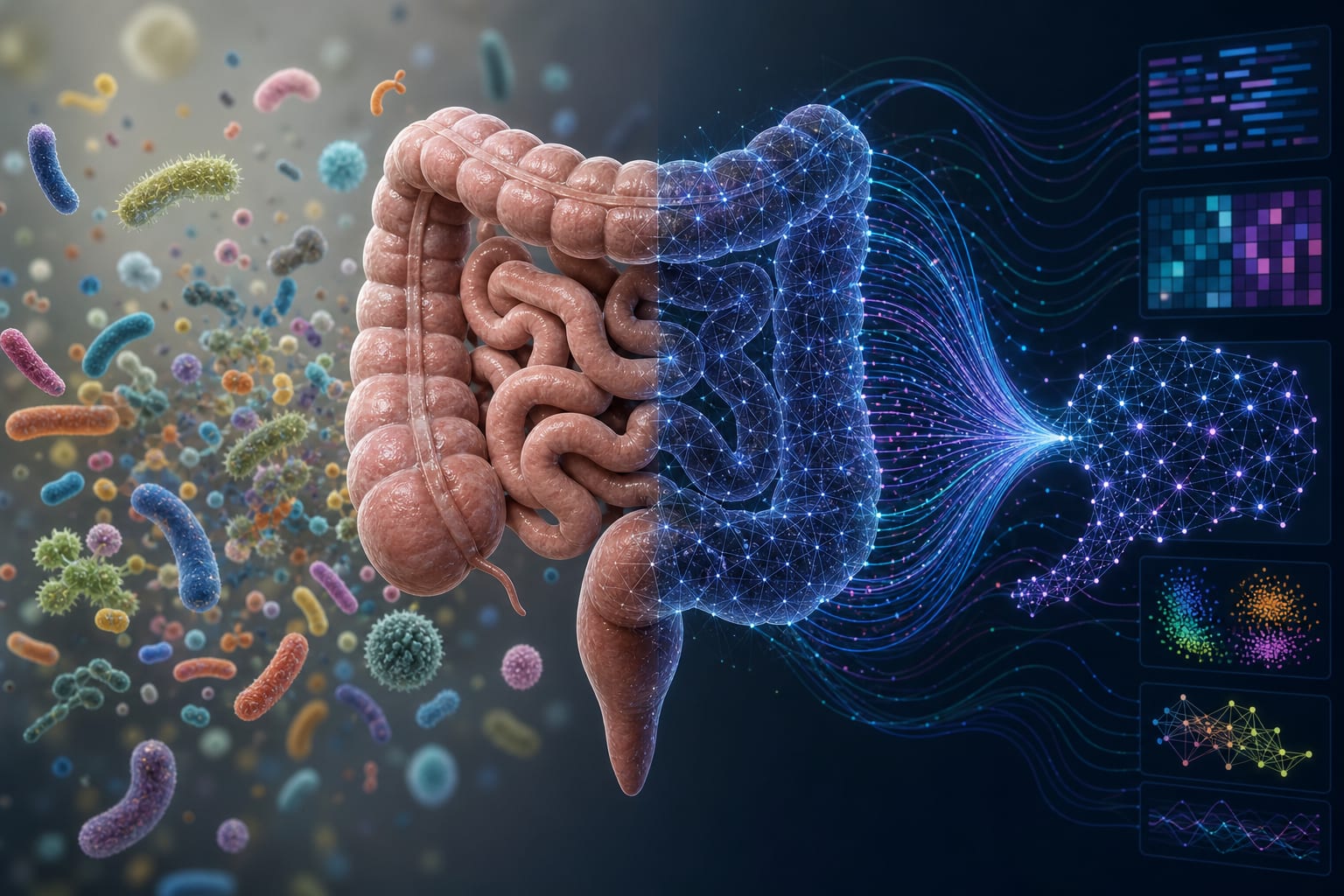
To explore the transformative potential of artificial intelligence (AI) in microbiome research, highlighting its applications, challenges, and significance in addressing current research gaps.
Key Findings:
AI enables higher-resolution insights into host-microbiome interactions, paving the way for novel therapeutic strategies.
AI methods improve data integration and preprocessing in microbiome studies, enhancing the reliability of results.
AI is revolutionizing the discovery of biomarkers and disease prediction, with significant implications for personalized medicine.
Interpretation:
AI presents a promising direction for microbiome research, significantly enhancing the ability to model complex biological interactions and improve health outcomes.
Limitations:
Challenges in interpretability and generalizability of AI models, particularly in diverse microbiome contexts.
Data governance issues, such as privacy concerns and data sharing, require robust frameworks and collaboration.
Conclusion:
AI is shifting microbiome research from traditional methods to advanced, data-driven approaches, with significant implications for understanding human health and informing public health strategies.