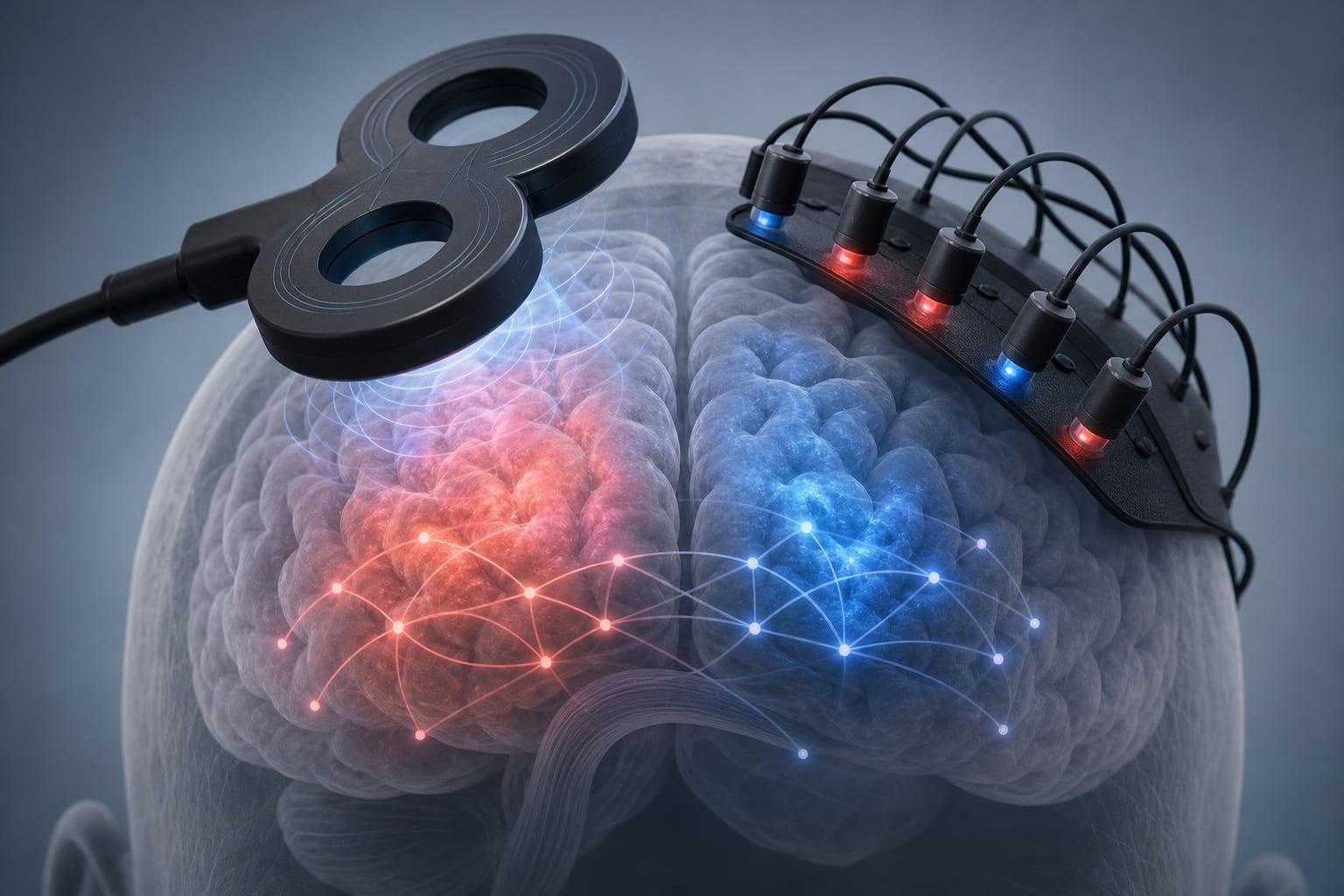
Transcranial magnetic stimulation combined with functional near-infrared spectroscopy to elucidate the neurophysiological mechanisms of post-stroke hemiplegia: a systematic review - Summary - MDSpire
Advertisement
Transcranial magnetic stimulation combined with functional near-infrared spectroscopy to elucidate the neurophysiological mechanisms of post-stroke hemiplegia: a systematic review
To systematically synthesize clinical research evidence regarding the combined use of TMS and fNIRS in post-stroke motor function recovery, emphasizing its significance in enhancing rehabilitation outcomes and analyzing its neurophysiological mechanisms, clinical efficacy, and methodological quality.
Approach:
Key Findings:
The TMS-fNIRS combined protocol was found to be safe and feasible.
Six out of nine interventional studies reported statistically significant improvements in motor function, such as Fugl-Meyer Assessment scores, particularly with interventions like intermittent theta-burst stimulation (iTBS) and high-frequency repetitive transcranial magnetic stimulation (rTMS).
Effective TMS interventions could enhance activation of the ipsilesional primary motor cortex and improve interhemispheric balance.
Two-thirds of the studies found significant correlations between neurophysiological changes and clinical function improvements.
Interpretation:
The combined TMS-fNIRS technology shows potential for advancing stroke rehabilitation toward individualization and closed-loop practice, suggesting a paradigm shift in therapeutic approaches.
Limitations:
Small sample sizes in existing studies limit generalizability.
High protocol heterogeneity complicates comparisons.
Uneven methodological quality, particularly high risk of bias in non-randomized studies, affects the reliability of findings.
Conclusion:
Current evidence is still in the early stage, and future research should urgently focus on large-scale, standardized, algorithm-driven clinical trials to transition from 'proof-of-concept' to 'precision therapy'.