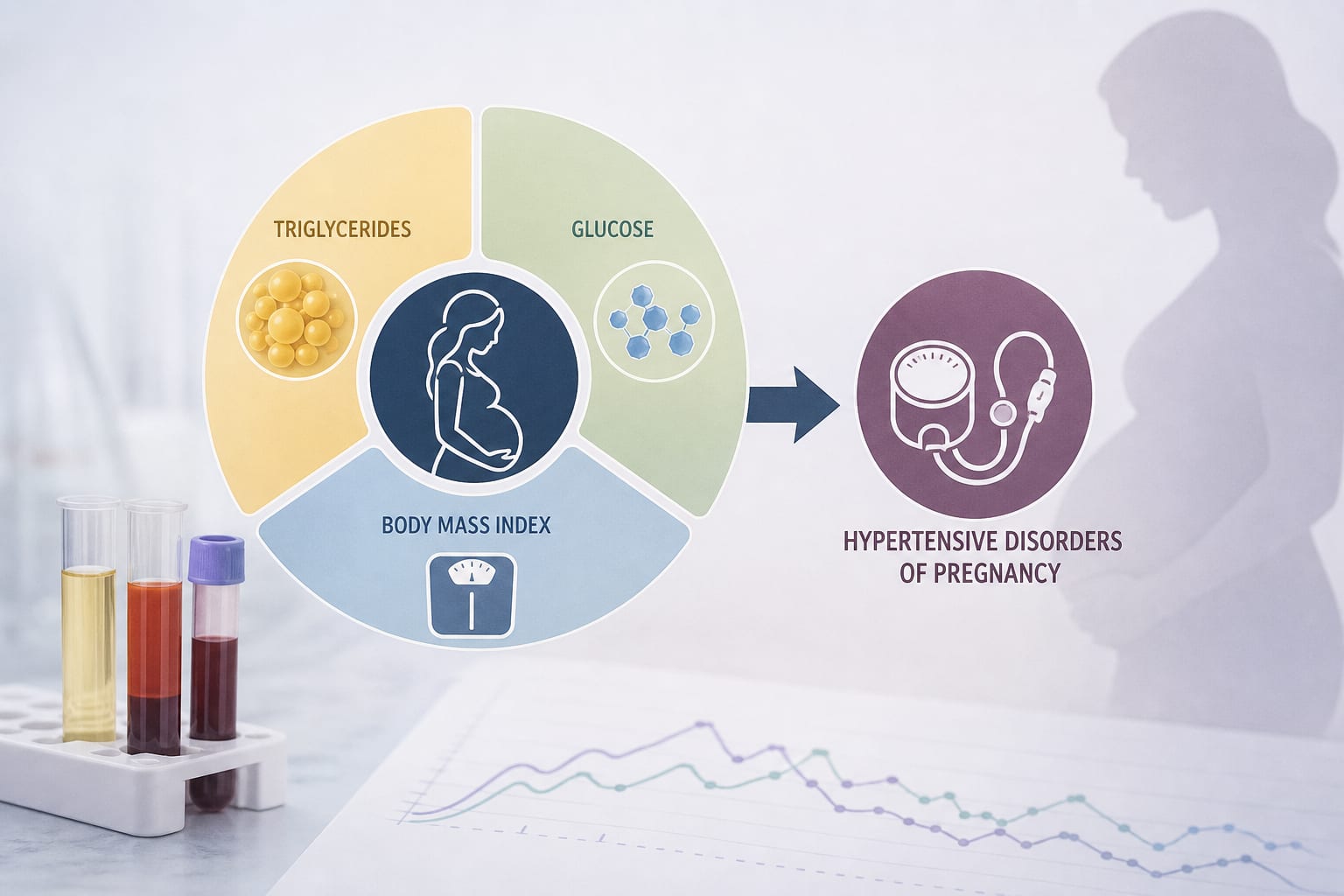
To examine the association between a modified Life’s Essential 8 (mLE8) score measured during pregnancy and incident cardiometabolic disease over 7 years of follow-up.
Approach:
Study Design: The study utilized a racially diverse, low-income cohort from South Carolina, examining participants from the Cradle randomized trial of group prenatal care.
Eligibility Criteria: Participants aged 14 to 45 years with a singleton pregnancy were included, while those with major medical comorbidities were excluded.
Data Collection: Demographic, lifestyle, and stress surveys were completed at enrollment and during the third trimester, alongside biospecimen collection.
mLE8 Scoring: Cardiovascular health during pregnancy was assessed using a modified LE8 score that excluded non-HDL cholesterol due to unavailability in most participants.
Follow-Up: Follow-up began 7 days after delivery to assess the incidence of cardiometabolic disease.
Key Findings:
Higher mLE8 scores were associated with a longer time to incident cardiometabolic disease after delivery.
Traditional cardiovascular risk calculators are not well-suited for reproductive-aged women due to exclusion of pregnancy-related factors.
Interpretation:
The role of the mLE8 as a proactive risk stratification tool for long-term maternal cardiometabolic health remains to be determined.
Limitations:
The study primarily focused on a specific cohort, which may limit generalizability.
Existing studies have largely been cross-sectional, with limited prospective data on maternal outcomes.
Conclusion:
The study aims to clarify the role of mLE8 in identifying individuals at risk for later cardiometabolic disease during pregnancy.
by Ellen C. Francis, Shalin Patel, Anushka Pande, Alexa Freedman, Lauren Keenan-Devlin, Linda M. Ernst, Emily S. Barrett, Ann Borders, Gregory E. Miller, Shristi Rawal, Amy H. Crockett