Naringin and denosumab ameliorate osteoporosis and suppress the aldosterone-MR/SGK1 signaling axis by modulating the bone-kidney interorgan communication in Orchiectomized rats - Summary - MDSpire
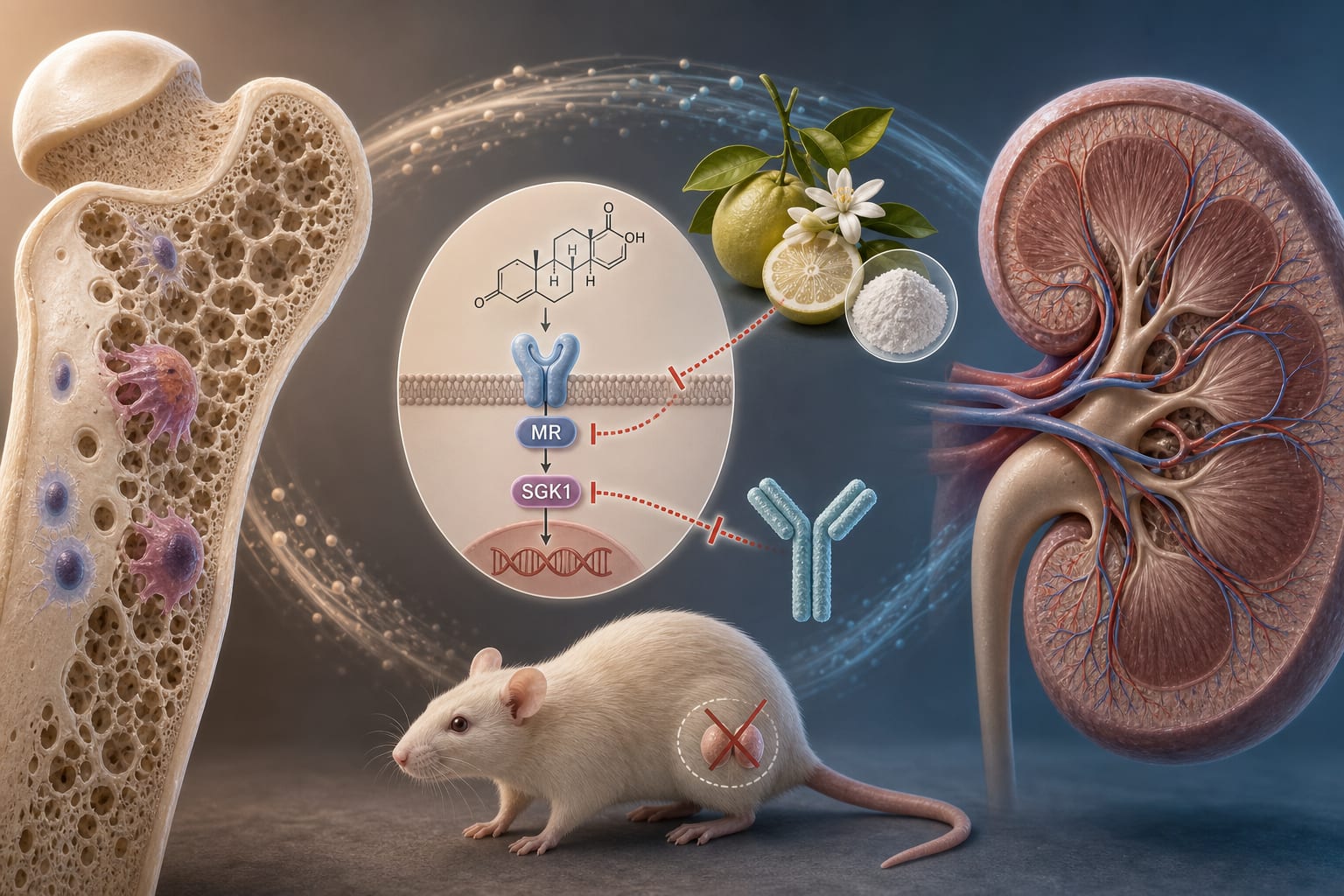
To investigate the bidirectional 'bone-kidney' axis and whether anti-osteoporosis treatments can modulate the aldosterone-MR/SGK1 axis while improving bone mass.
Approach:
Animal Model: Utilized orchiectomized aging male rats to study the effects of naringin and denosumab on osteoporosis.
Interventions: Administered naringin (200 mg/kg/d) and denosumab (6.3 mg/kg, s.c.) to evaluate their impact on bone density and aldosterone levels.
Analysis Techniques: Conducted micro-CT analysis for bone structure, ELISA for serum aldosterone levels, and qPCR/Western blot for molecular signaling pathways.
Key Findings:
Naringin significantly increased bone mineral density and improved trabecular microarchitecture.
Denosumab showed a similar exploratory trend in enhancing bone volume fraction and trabecular number.
Both treatments markedly suppressed the ORX-induced elevation in serum aldosterone levels.
Inhibition of the MR/SGK1 signaling pathway was observed in the kidney and reduced MR expression in bone tissue.
Interpretation:
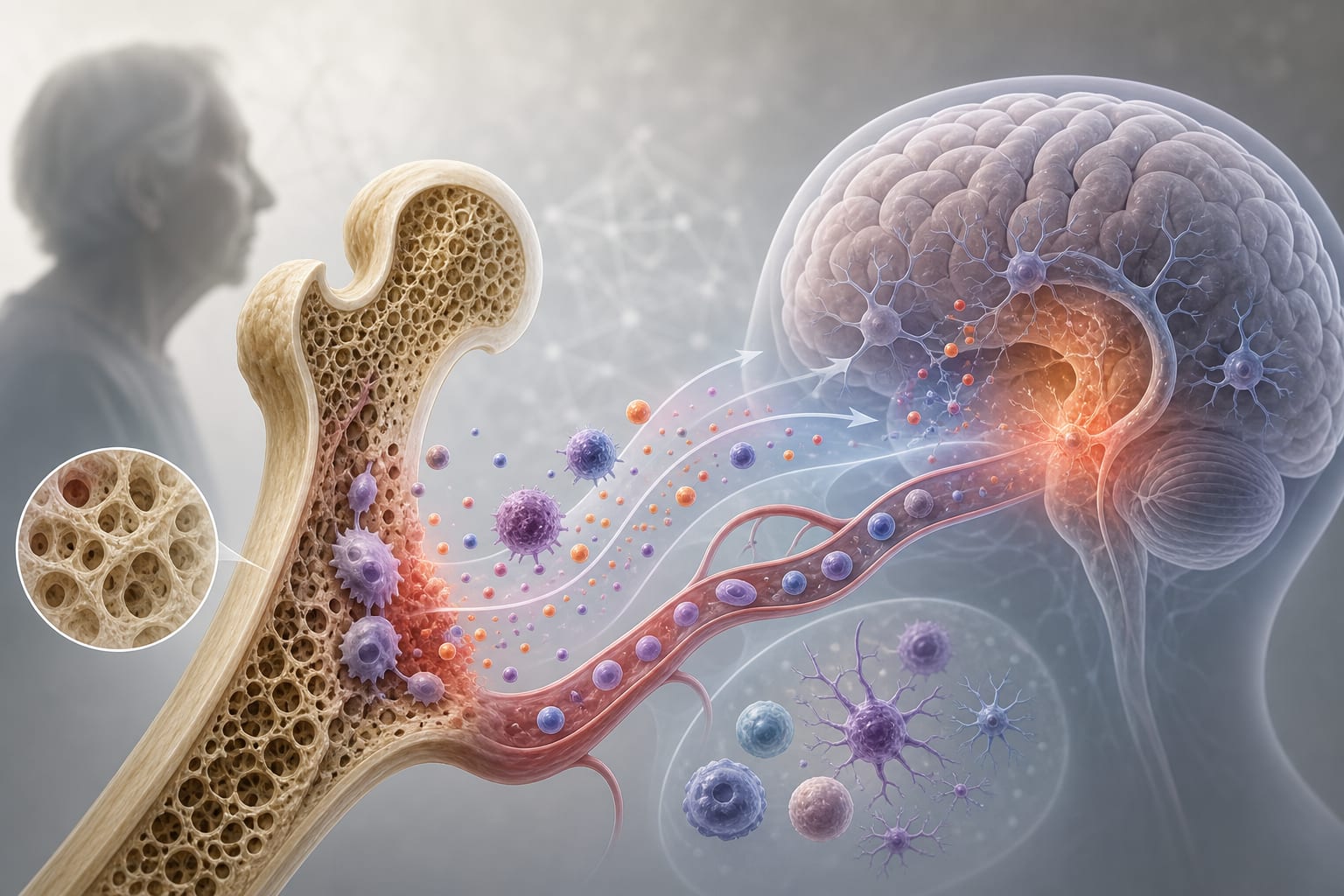
This study provides experimental evidence that bone-targeted interventions can downregulate systemic aldosterone levels and its signaling pathway.
Limitations:
The study was conducted on an animal model, which may not fully replicate human physiology.
Further mechanistic investigations are needed to fully understand the bone-kidney interactions.
Conclusion:
This research supports the hypothesis that anti-osteoporosis treatments can influence aldosterone metabolism.