Percutaneous endoscopic gastrostomy insertion in patients with neuromuscular disease-a single centre experience of a novel technique - Summary - MDSpire
Advertisement
Percutaneous endoscopic gastrostomy insertion in patients with neuromuscular disease-a single centre experience of a novel technique
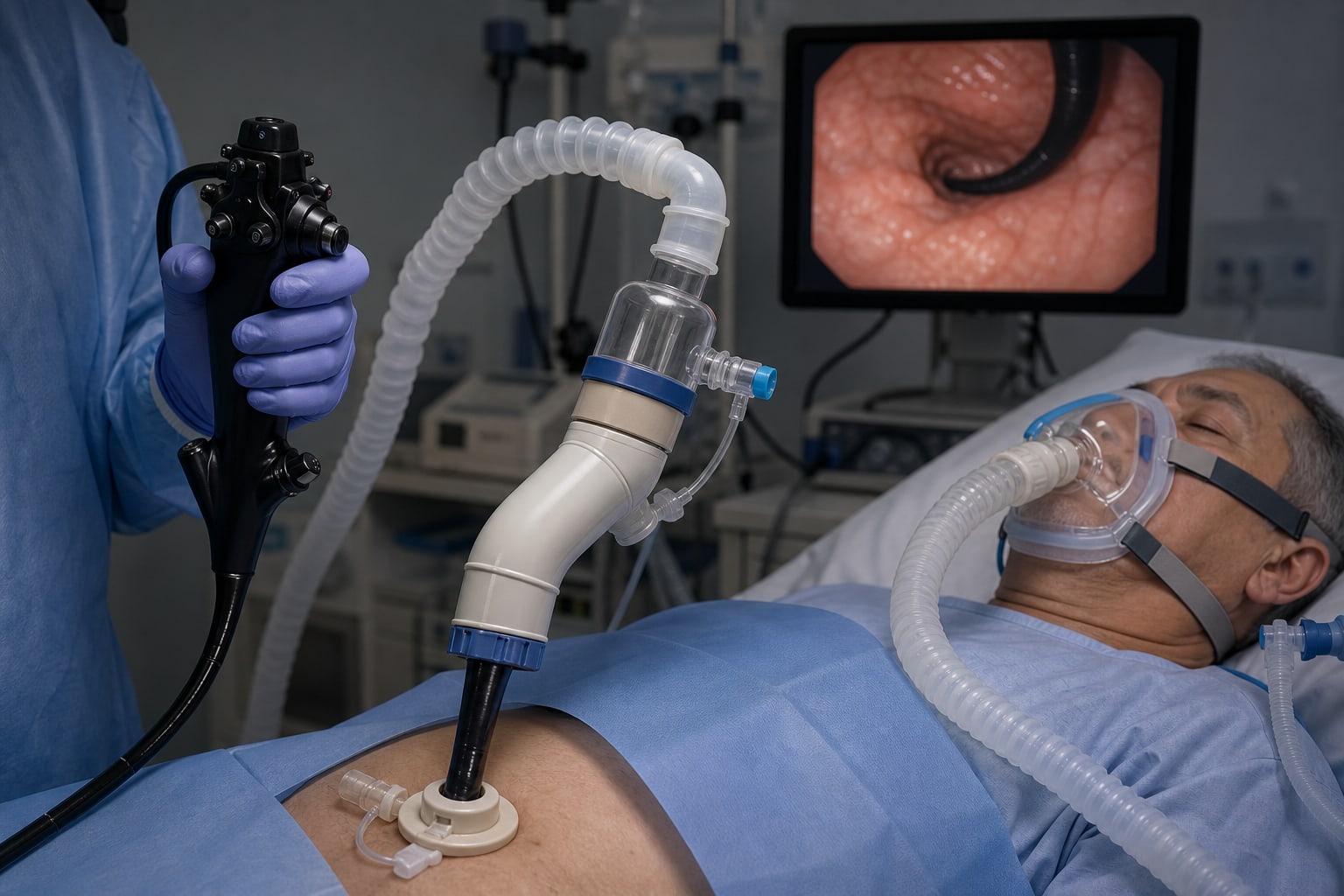
To evaluate the outcomes of a novel technique for PEG placement using an endoscopy elbow (EE) in patients with neuromuscular diseases (NMD) who are dependent on non-invasive ventilation (NIV).
Approach:
Technique: Introduction of the EE device to facilitate PEG placement under sedation while using NIV.
Key Findings:
Successful transition from PEGs under general anaesthesia to PEGs with sedation and NIV.
Statistically significant reduction in respiratory complications and critical care admissions.
Improved six-month survival in patients with motor neurone disease.
No improvement in time from referral to procedure or length of hospital stay.
Interpretation:
The EE technique shows promise in reducing respiratory complications during PEG placement in NIV-dependent NMD patients.
Limitations:
Retrospective design may introduce bias.
Single-center study limits generalizability.
Conclusion:
The EE provides a novel technique with improved outcomes for respiratory complications and critical care admissions in PEG placement for NMD patients.