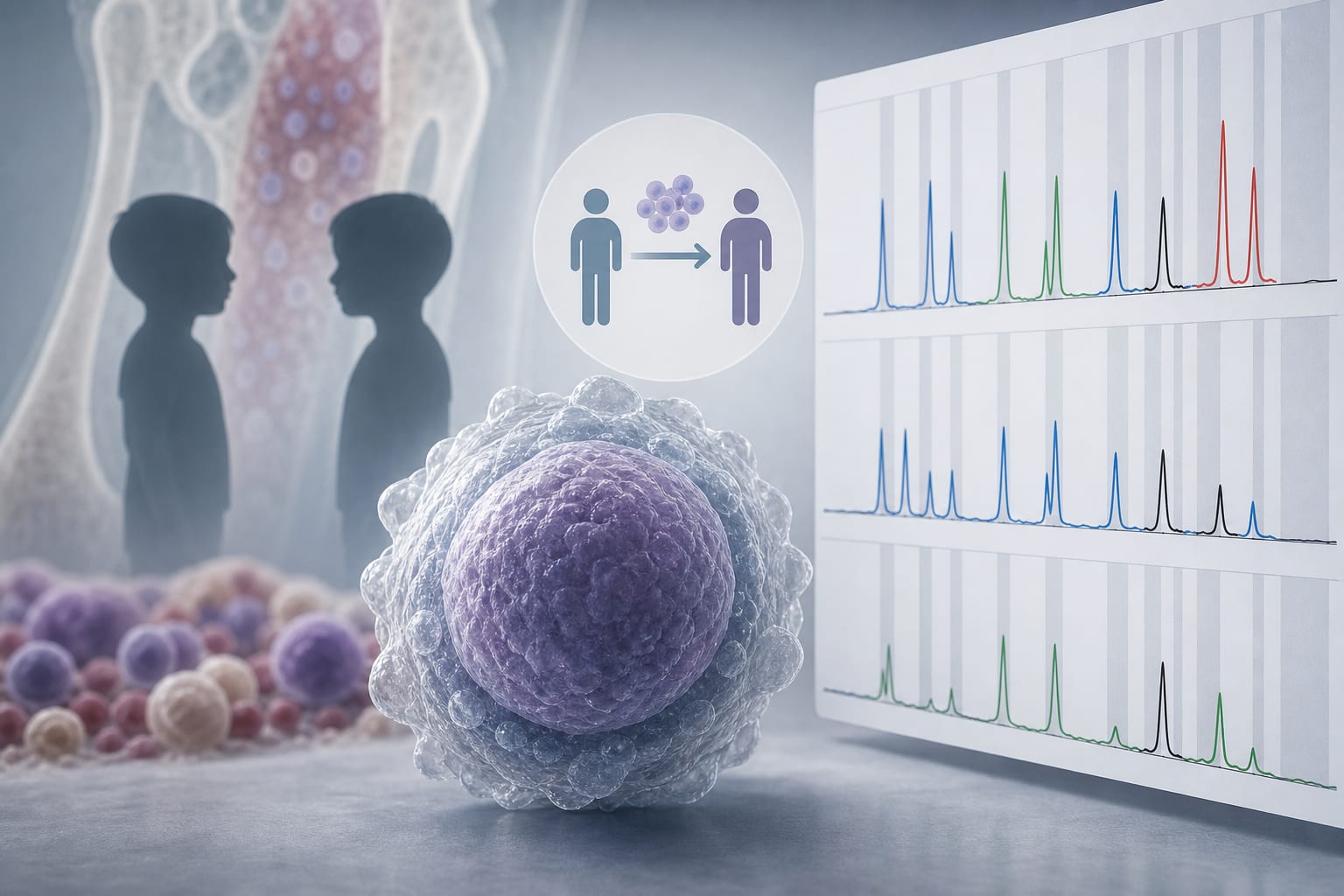
To characterize the analytical implications for STR-based chimerism monitoring under conditions of single-locus informativity in a pediatric patient with Fanconi anemia following allo-HSCT, specifically addressing the challenges posed by high genetic concordance.
Approach:
Key Findings:
The patient achieved neutrophil engraftment on day +13 and sustained trilineage recovery through day +1376, demonstrating the effectiveness of the transplant despite analytical challenges.
Only one informative autosomal locus (D13S317) was available for chimerism tracking due to high genetic concordance between donor and recipient, complicating monitoring efforts.
This case highlights the challenges of STR-based chimerism monitoring in populations with high consanguinity, necessitating alternative strategies.
Interpretation:
The findings emphasize the need for pre-transplant verification of donor–recipient STR informativity and consideration of high-resolution alternatives, such as digital PCR or next-generation sequencing, when fewer than two informative loci are identified.
Limitations:
The study is limited by the reliance on a single informative locus for chimerism assessment, which may not provide a comprehensive view of donor engraftment.
The implications of high consanguinity in genetic profiling may not be generalizable to all populations, suggesting a need for further research in diverse genetic backgrounds.
Conclusion:
This case illustrates the complexities of chimerism assessment in pediatric patients with high genetic concordance and suggests a need for improved methodologies in such scenarios, particularly in consanguineous populations.