Integrating AI into undergraduate medical education: an exploration of learner-centered approaches through AI - Summary - MDSpire

Integrating AI into undergraduate medical education: an exploration of learner-centered approaches through AI

  • By

  • Laura Carucci

  • Rita Nocerino

  • Elena Cantone

  • Francesco Berni Canani

  • Margherita Licito

  • Luciano La Marca

  • Margherita Farnetano

  • Antonio Masino

  • Franca Oglio

  • Dario Marziali

  • Serena Coppola

  • Roberto Berni Canani

  • May 22, 2026

  • 0 min

Share

Objective:

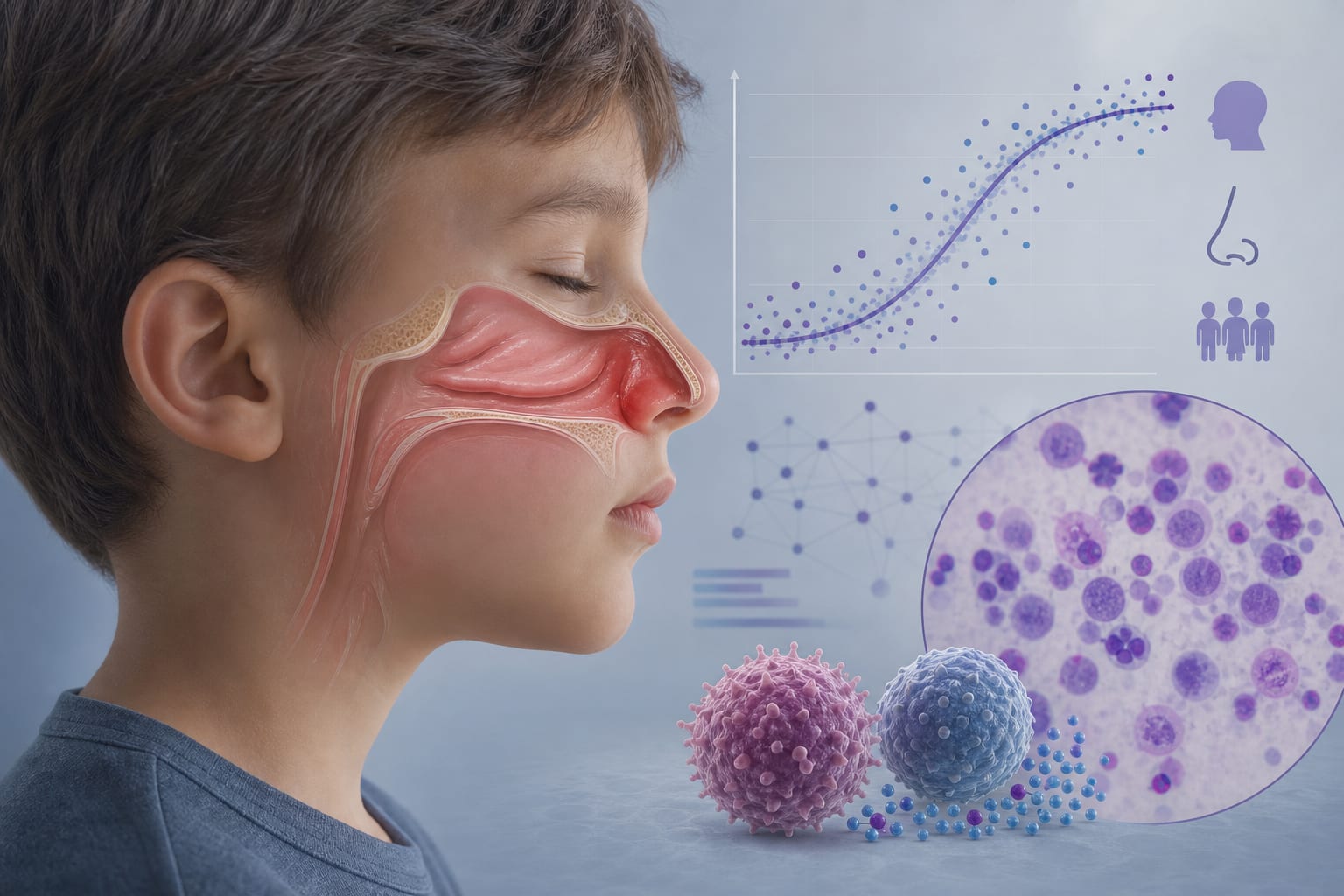
To investigate the relationship between nasal septum deviation (NSD) and allergic rhinitis (AR) specifically in children.

Key Findings:
  • Higher prevalence of AR in NSD+ children (66.7%) compared to NSD− children (36.2%; p < 0.0001).
  • NSD was independently associated with AR (aOR 3.51; 95% CI 1.65–7.47; p = 0.001).
  • NSD+ children had more severe AR symptoms and lower nasal peak inspiratory flow values.
Interpretation:

The findings suggest that NSD may negatively influence the disease course of AR in children, highlighting the need for clinical awareness.

Limitations:
  • The study is observational and does not establish causality, which may introduce biases.
  • Sample size may limit the generalizability of the findings.
Conclusion:

Early identification and management of NSD may improve AR outcomes; further longitudinal studies are needed to confirm causality and explore preventive strategies.

Original Source(s)

Related Content