To characterize flavor-related chemicals in five edible bolete species and assess whether spectroscopy and machine learning could support rapid screening.
Approach:
Samples: Researchers analyzed 82 fruiting bodies collected in southwest China, combined into 30 samples with six biological replicates per species.
Chemical analysis: Liquid chromatography–tandem mass spectrometry measured amino acids and organic acids; headspace solid-phase microextraction gas chromatography–mass spectrometry measured volatile compounds.
Additional analyses: The team compared compound levels with published taste and odor thresholds, modeled possible odor-receptor binding, and tested infrared spectroscopy with machine learning.
Key Findings:
The analysis identified 68 amino acids and related metabolites, 57 organic acids, and 773 volatile compounds; chemical profiles separated the five species.
Glycine, arginine, aspartic acid, lysine, and fumaric acid were among the compounds distinguishing taste profiles. Sweet and umami amino acids contributed most.
Six volatile compounds were proposed as aroma markers, spanning pyrazines, an ester, an aldehyde, and a furanone associated with varied odor descriptions.
Pathway analysis linked chemical differences to the tricarboxylic acid and urea cycles, but these relationships were not experimentally confirmed.
Computer modeling predicted that several aroma compounds could bind to OR1A1; this did not establish how people perceive the aromas.
The strongest infrared spectroscopy and machine-learning model predicted selected flavor-compound concentrations with coefficients of determination of at least 0.95.
Interpretation:
The authors report that chemical profiling distinguished the species and that infrared spectroscopy with machine learning showed potential for faster initial screening, while mass spectrometry provided detailed chemical measurements.
Limitations:
The study included a limited number of samples and collection sites.
Habitat differences may have influenced the chemical profiles.
Metabolic pathway relationships and predicted receptor binding were not experimentally confirmed.
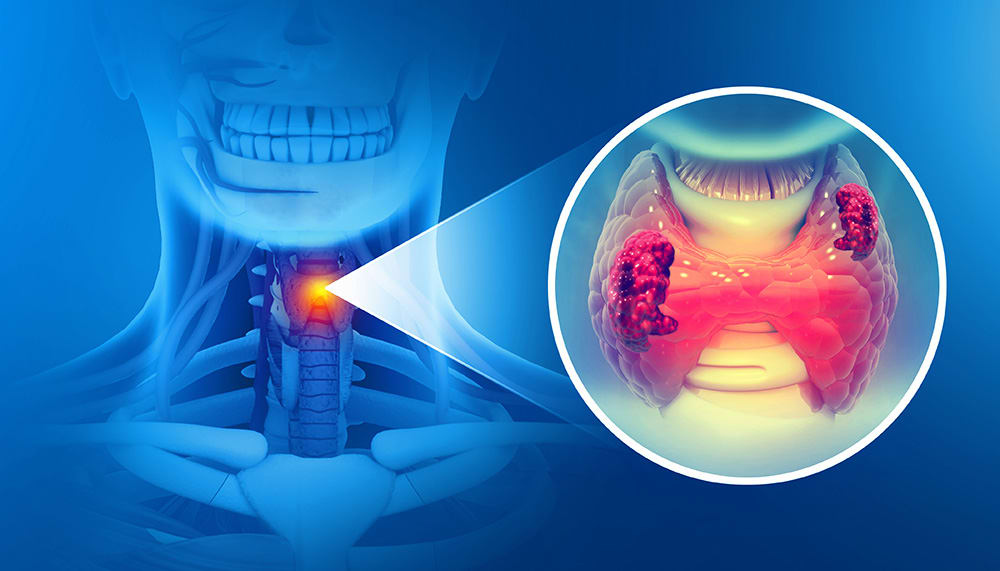
Thyroid cancer is usually a highly treatable malignancy with overall five-year survival rates over 98%. Many patients with thyroid cancer go on to live for several decades after their disease is cured.