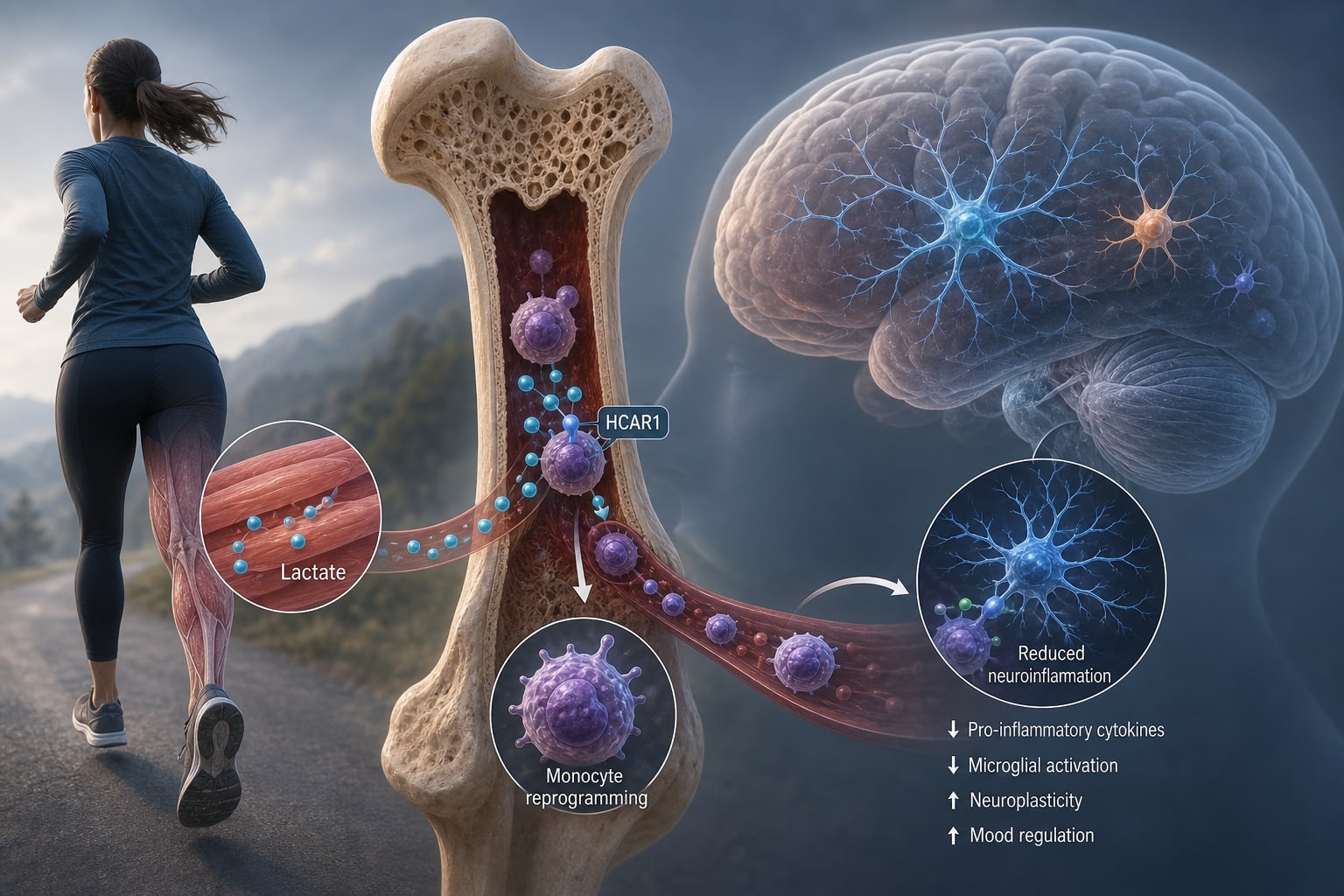
The lactate–HCAR1 axis in exercise psychiatry: a candidate mechanism linking bone marrow–brain immunity to inflammation-related depression - Summary - MDSpire
Advertisement
The lactate–HCAR1 axis in exercise psychiatry: a candidate mechanism linking bone marrow–brain immunity to inflammation-related depression
To explore the biological mechanisms underlying the antidepressant effects of exercise, focusing on the lactate-HCAR1 pathway and its potential connection to inflammation-related depression.
Approach:
Review of Mechanisms: The review discusses conventional brain-centered mechanisms of exercise-induced antidepressant effects, including BDNF signaling and monoaminergic modulation, and introduces the lactate-HCAR1 axis as a potential link to inflammation-related depression.
Key Findings:
Exercise-induced lactate acts as a dynamic immunometabolic signal rather than merely a metabolic byproduct.
The lactate-HCAR1 pathway may connect exercise metabolism to immune regulation and inflammation-related depressive symptoms, though evidence supporting its components varies.
Interpretation:
The review frames lactate-informed exercise prescription as a testable hypothesis, suggesting future studies should investigate various biological responses to exercise in depression.
Limitations:
Some components of the lactate-HCAR1 pathway are inferential and require validation.
The framework does not establish definitive biomarker-defined subtypes of depression.
Conclusion:
If validated, the proposed framework may help identify which patients benefit from exercise and how exercise can be studied as an immunometabolic intervention.