Research progress on the neural mechanism of light therapy improving cognitive function in depression: from retinal projections to neuroplasticity - Summary - MDSpire
Advertisement
Research progress on the neural mechanism of light therapy improving cognitive function in depression: from retinal projections to neuroplasticity
To synthesize clinical and preclinical evidence delineating the mechanistic pathway of Light Therapy (LT) from the reception of peripheral light signals to the remodeling of central brain functions.
Approach:
Clinical Efficacy: Summarizes the clinical efficacy of LT, including its parameter dependence and application in various forms of depression.
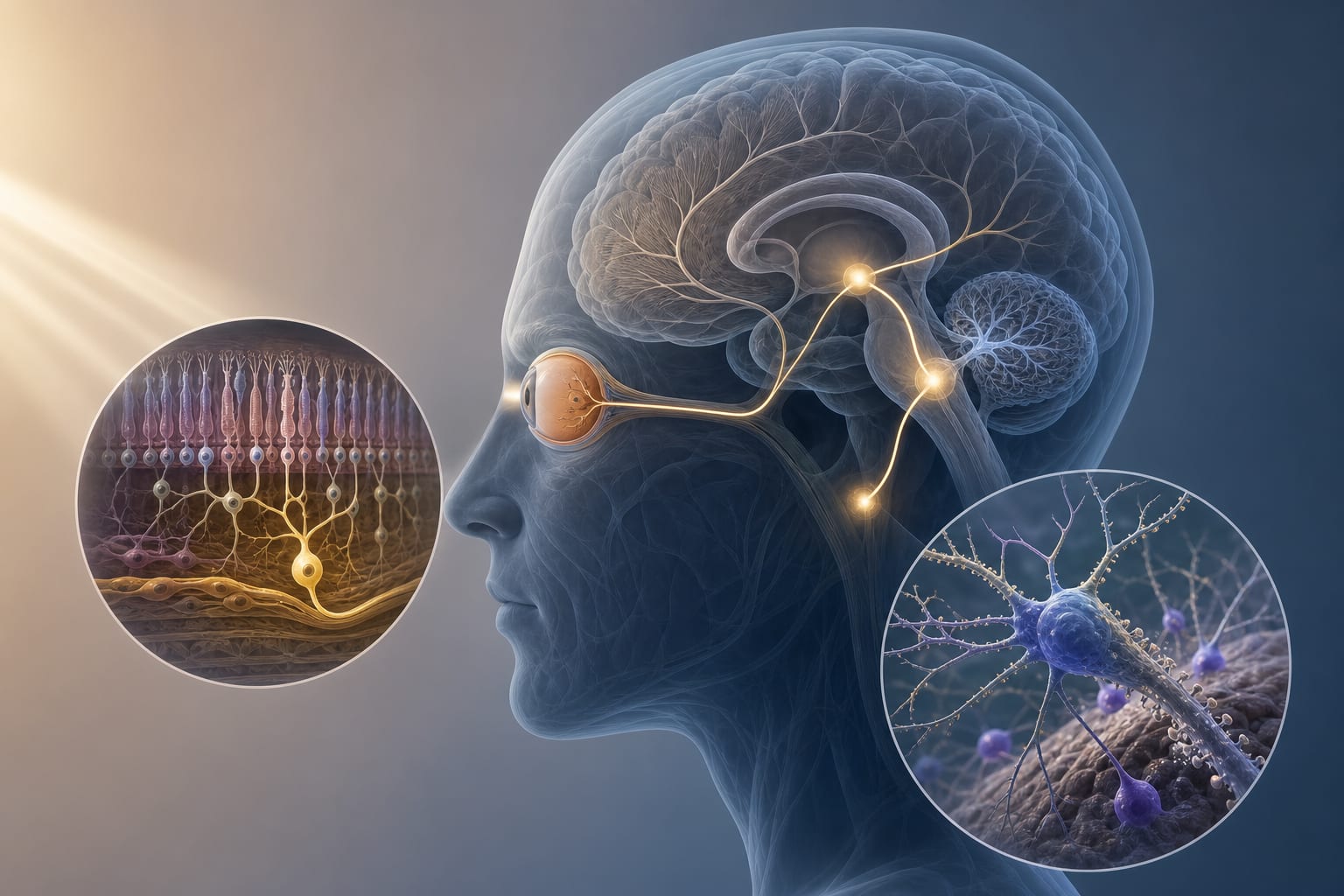
Neural Pathways: Details retinofugal projections via intrinsically photosensitive retinal ganglion cells (ipRGCs) to key brain regions such as the suprachiasmatic nucleus, limbic system, and thalamus.
Neuroplastic Changes: Elucidates how these pathways induce neuroplastic changes, including hippocampal neurogenesis and synaptic remodeling.
Integrative Model: Proposes a 'peripheral input-central processing-functional output' model for understanding LT's brain regulation.
Key Findings:
Cognitive impairment in depression is linked to long-term patient prognosis and functional recovery.
Light Therapy (LT) is a non-invasive method that shows promise in improving cognitive function in depression.
LT's mechanisms extend beyond circadian rhythm regulation to include neuroplastic changes in the brain.
Interpretation:
This review provides a framework for understanding how LT can lead to cognitive improvements in depression through specific neural pathways and neuroplasticity.
Limitations:
Current understanding of LT mechanisms is limited and requires further high-quality randomized controlled trials.
Existing studies may not fully capture the complexity of the neural circuitry involved.
Conclusion:
This review integrates clinical and basic research evidence to clarify the pathway from retinal projections to neuroplasticity in the context of LT and cognitive function in depression.